A Technical Analysis of the G133I1-L01 for Industrial System Longevity
G133I1-L01: 13.3″ WXGA Display for Industrial Systems
Introduction and Core Features
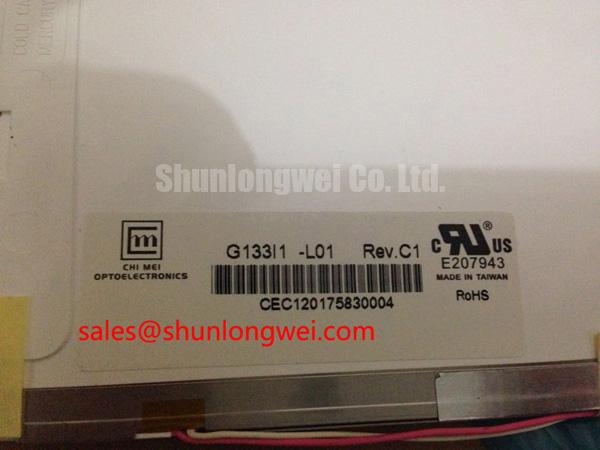
The Innolux G133I1-L01 is a 13.3-inch a-Si TFT-LCD module engineered for longevity and consistent performance in industrial applications. This display provides a robust solution for the sustainment and repair of existing equipment, featuring a standard WXGA resolution and a conventional LVDS interface that facilitates straightforward integration into legacy systems. It offers a practical path for extending the operational life of deployed assets without requiring extensive redesign.
- Core Specifications: 13.3″ WXGA (1280×800) | 400 cd/m² Brightness | LVDS Interface.
- Key Engineering Advantages: Standardized panel design for simplified replacement and a proven CCFL backlight system.
- Primary Use Case: Optimized as a service component for existing industrial Human-Machine Interfaces (HMIs), test equipment, and control panels.
Access the G133I1-L01 Datasheet (PDF)

Technical Analysis for System Integration
The G133I1-L01 features a 1-channel, 6-bit LVDS interface, a widely adopted standard in industrial systems from its era. This common interface simplifies the process of replacing a failed display, as engineers can often utilize existing cabling and controllers with minimal to no modification. This focus on backward compatibility is essential for maintaining equipment where a full system redesign is not feasible. The display’s adherence to established interface standards reduces validation time and technical risks during repair or refurbishment projects. For further reading on ensuring signal integrity, explore our guide on rugged connectivity solutions.
With a typical brightness of 400 cd/m² and a contrast ratio of 500:1, the G133I1-L01 delivers the visual clarity required for most indoor industrial environments. The brightness level is sufficient for readability in typical factory floor or control room lighting. The contrast ratio can be visualized as the difference between a dark charcoal gray and a true black; it ensures that text, numbers, and graphical elements in a user interface are distinct and easily readable. The panel’s CCFL backlight is a mature technology, and its performance characteristics are well-documented, providing a predictable and reliable illumination source. More on this topic can be found in our article on managing backlight lifespans.

Optimized Application Scenarios
The G133I1-L01 is specified for applications where reliability and compatibility are the primary engineering drivers.
- Legacy Industrial HMI Panels: Its standard form factor and LVDS interface make it a direct-fit replacement for aging screens in manufacturing control systems, extending the life of the machinery.
- Test and Measurement Equipment: An ideal service part for benchtop or cart-based diagnostic tools where the original 13.3″ WXGA panel has failed.
- Medical Information Systems: Suitable for the repair of non-diagnostic systems like patient registration kiosks or administrative terminals that were built around CCFL-backlit displays.
- Fixed-Mount Kiosks: For indoor information points or process control stations, the panel’s specifications provide a dependable and cost-effective maintenance solution.
Its specifications make the G133I1-L01 a prime candidate for the cost-effective sustainment of systems built with 13.3-inch WXGA CCFL displays.
Key Specifications of the G133I1-L01
| Panel Characteristics | |
|---|---|
| Manufacturer | Innolux (Formerly CMO) |
| Model | G133I1-L01 |
| Screen Size | 13.3 inches |
| Resolution | 1280(RGB) x 800 (WXGA) |
| Panel Technology | a-Si TFT-LCD, Normally White |
| Optical & Electrical Performance | |
| Brightness | 400 cd/m² (Typ.) |
| Contrast Ratio | 500:1 (Typ.) |
| Interface Type | LVDS (1 channel, 6-bit), 20 pins |
| Backlight System | 1 pcs CCFL (Requires separate inverter) |
| Supply Voltage (Logic) | 3.3V (Typ.) |
| Environmental and Mechanical | |
| Operating Temperature | 0 to 50 °C |
| Storage Temperature | -20 to 60 °C |
| Weight | 450/465g (Typ./Max.) |
Engineer’s Frequently Asked Questions (FAQ)
- Is the G133I1-L01 a good replacement for older industrial panels?
- Yes. Its standard 13.3″ WXGA form factor, 1280×800 resolution, and conventional LVDS interface make it a strong candidate for replacing physically and electrically similar panels, particularly those from the same manufacturing era. This minimizes the need for mechanical or software adjustments.
- What is required to power the CCFL backlight on this display?
- The G133I1-L01 contains a Cold Cathode Fluorescent Lamp (CCFL) that requires a separate, external high-voltage inverter to operate. This is unlike modern WLED-backlit panels that often integrate the driver. When retrofitting, you must ensure the system’s existing inverter is compatible or source a new one that meets the lamp’s voltage and current requirements.
- What is the specified operating temperature range for the G133I1-L01?
- The official operating temperature range is documented as 0°C to 50°C. This makes the panel suitable for indoor applications such as control rooms, laboratories, and other climate-controlled industrial settings. It is not specified for outdoor use or in environments with extreme temperatures.
- Can this 6-bit display be driven by an 8-bit LVDS signal?
- While an 8-bit signal source is electrically different, it is often possible. The system’s graphics controller must be configured to handle the 6-bit destination. This is typically done through a process called dithering, which simulates the in-between colors. If not configured correctly, the two least significant bits per color channel will simply be ignored, potentially leading to color banding. For more insights on display components, see our articles on LCD core technology.
Enabling System Longevity
For engineers tasked with maintaining the operational readiness of valuable capital equipment, the G133I1-L01 provides a technically sound and reliable path to extend its service life. Its adherence to established standards ensures that it serves as a predictable and effective component for repair and sustainment strategies.