SKD33/16 Rectifier: A Technical Analysis for Reliable Industrial Power Systems
SKD33/16 | 1600V 33A Three-Phase Bridge Rectifier Module
Introduction and Core Highlights
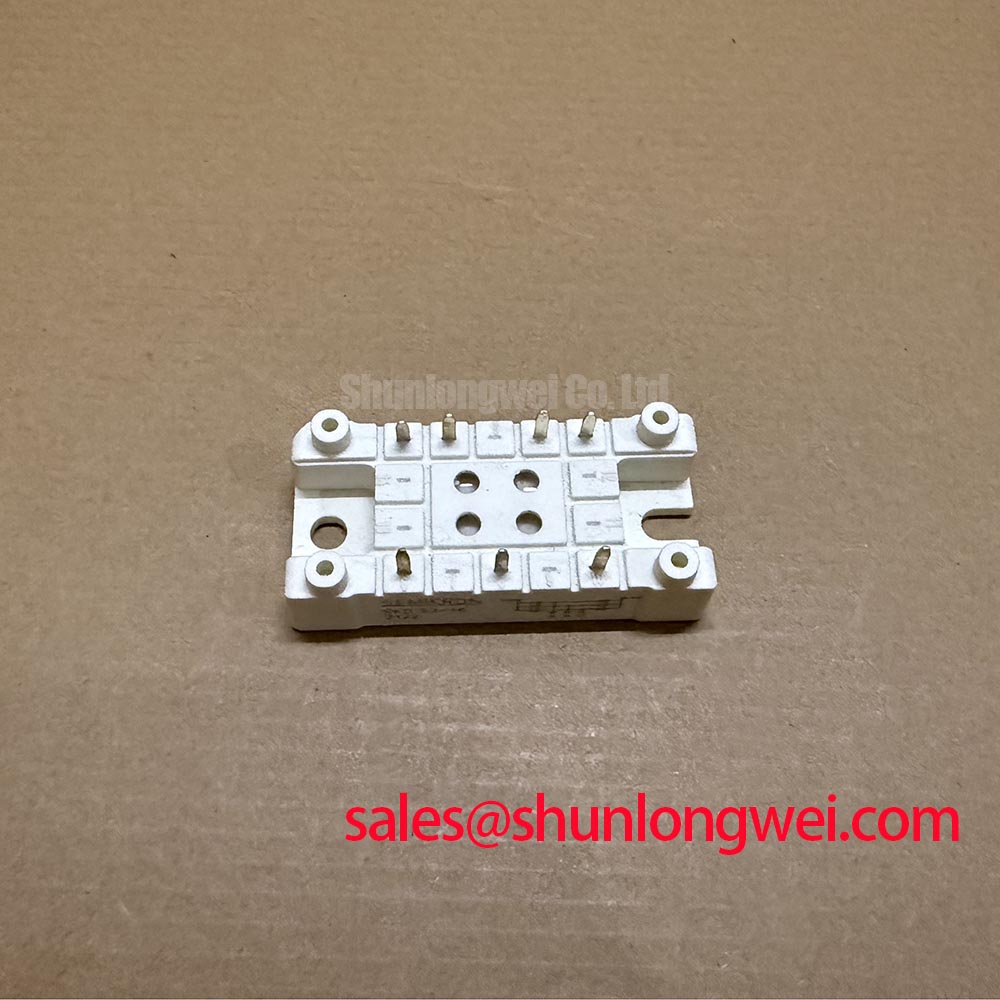
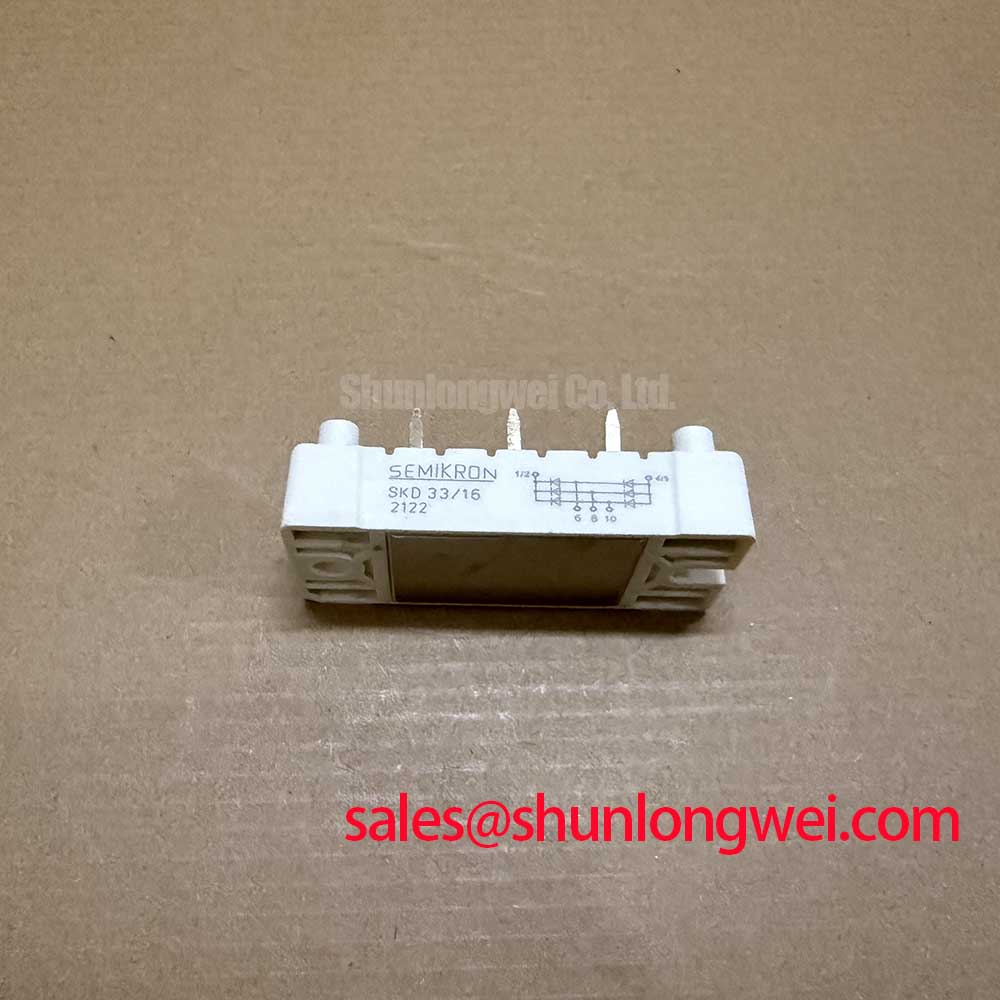
The SEMIKRON SKD33/16 is a three-phase bridge rectifier that delivers robust AC-to-DC conversion through a combination of high electrical isolation, efficient thermal management, and a ruggedized package. It provides a reliable power foundation for demanding industrial systems. This module is particularly well-suited as a front-end rectifier for inverter-based applications, including variable frequency drives.
- Core Specifications: 1600V VRRM | 33A Id | 3000V Isolation
- Key Advantages: High reliability in electrically noisy environments, efficient heat transfer to the heatsink.
Download Official Datasheet (PDF)
Technical Analysis for System Reliability
A key parameter for system safety and reliability is the high isolation voltage (Visol) of 3000V. This rating, tested for one minute, confirms a substantial dielectric strength between the electrical terminals and the isolated metal baseplate. For engineers designing systems in industrial settings, this high isolation provides a crucial barrier against voltage transients and ground loop currents. It helps ensure the safety of downstream components and personnel while maintaining signal integrity in adjacent control circuits.
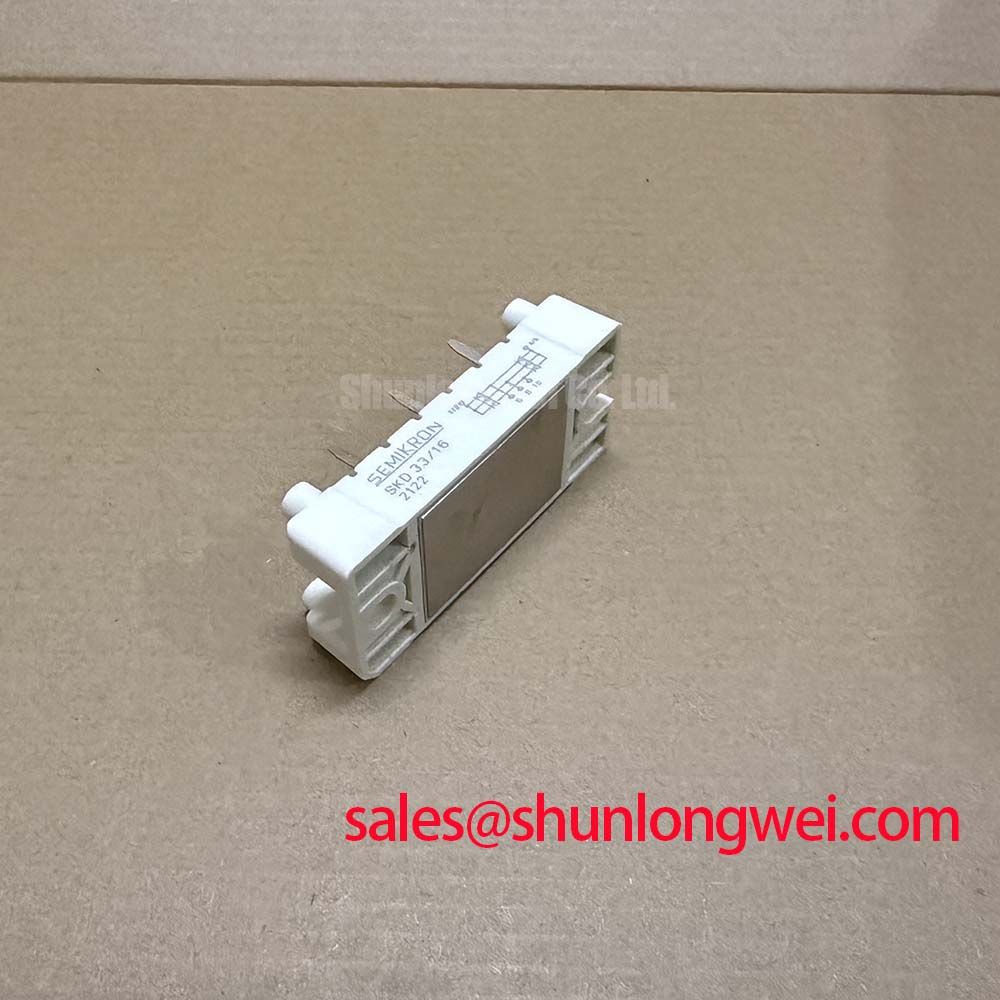
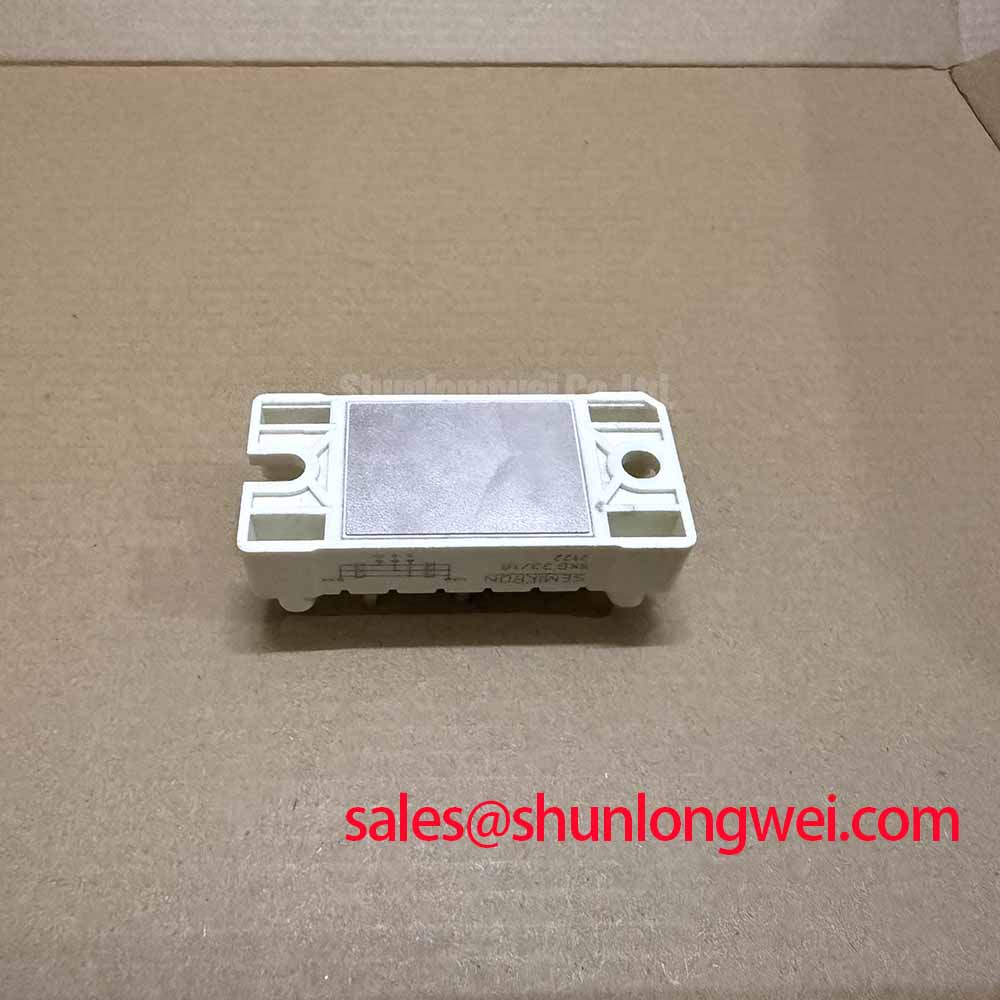
Effective thermal management is fundamental to the longevity of any power component. The SKD33/16 features a Direct Copper Bonded (DCB) aluminum baseplate, a structure that provides both excellent thermal conductivity and high electrical isolation. The junction-to-case thermal resistance (Rth(j-c)) is specified at a maximum of 1.2 K/W per diode. Think of thermal resistance like the width of a drainpipe. A lower value means a wider pipe, allowing heat to flow away from the silicon die more easily, preventing the device from exceeding its maximum junction temperature of 150°C.

Optimized Application Scenarios
The SKD33/16 is specified for several core industrial power conversion tasks. Its features make it a strong candidate for the following systems:
- Input Rectifiers for Variable Frequency Drives (VFDs): Its 1600V repetitive peak reverse voltage provides a significant safety margin on 400V/480V three-phase mains, and the 270A surge current rating handles inrush currents during startup.
- Industrial Power Supplies: The 33A continuous DC output current (at a case temperature of 100°C) allows for the design of compact and reliable power sources for a range of industrial equipment.
- DC Motor Field Supplies: Provides a straightforward and robust method for creating the DC field voltage required for DC motor operation, a common requirement in legacy and specialized machinery.
- Battery Charger Rectifiers: The module’s steady current handling and thermal efficiency are beneficial for high-capacity industrial battery charging stations where consistent performance is necessary.
This module’s balance of voltage, current, and thermal performance makes it ideal for industrial VFD front-ends and general-purpose power supply applications.
Key Specifications of the SKD33/16
| Absolute Maximum Ratings (Tc = 25°C unless otherwise noted) | |
|---|---|
| Repetitive Peak Reverse Voltage (VRRM) | 1600 V |
| DC Output Current (Id) | 33 A (at Tc = 100 °C) |
| Surge Forward Current (IFSM) | 270 A (10 ms, Tj = 25 °C) |
| I²t Value | 370 A²s (10 ms, Tj = 25 °C) |
| Electrical Characteristics (Tj = 25°C unless otherwise noted) | |
| Forward Voltage (VF) | max. 1.6 V (at IF = 45 A) |
| Reverse Current (IR) | max. 0.2 mA (at VRRM, Tj = 25°C) |
| Thermal and Mechanical Characteristics | |
| Thermal Resistance, Junction to Case (Rth(j-c)) | max. 1.2 K/W (per diode) |
| Isolation Test Voltage (Visol) | 3000 V~ (50 Hz, 1 min.) |
| Mounting Torque | 1.5 Nm (for M4 screws) |
Note: These parameters are sourced from the official SKD33/16 datasheet. Engineers must consult the full document for comprehensive data, including performance graphs and derating curves.
Engineer FAQ
- What is the correct mounting procedure for the SKD33/16 to ensure proper thermal contact?
- The datasheet specifies that the module should be mounted to a heatsink using M4 screws with a torque of 1.5 Nm. It is critical to apply a thin, even layer of thermal compound (with a typical thermal resistance Rth(c-s) of 0.1 K/W) between the module’s baseplate and the heatsink to minimize thermal resistance and ensure efficient heat dissipation.
- How do I calculate the approximate power dissipation per diode in the SKD33/16?
- Power dissipation can be estimated using the formula P = VF0 * IFAV + rf * I²FRMS. The datasheet provides the threshold voltage (VF0 = 0.8 V) and slope resistance (rf = 18 mΩ). By calculating the average and RMS current through each diode for your specific load, you can determine the total power loss for accurate thermal design.
- What does the I²t value of 370 A²s signify?
- The I²t rating indicates the module’s ability to withstand a non-repetitive, short-duration surge current, typically for coordinating with a protective fuse. A higher value implies greater ruggedness against fault conditions. This rating is essential for selecting the correct fuse to protect the semiconductor without nuisance tripping.
- Is the SKD33/16 suitable for single-phase applications?
- While it is a three-phase module, it can be used in single-phase bridge applications by utilizing two of the three AC input terminals. However, doing so would not leverage the full capability of the device, and a dedicated single-phase bridge may be more cost-effective depending on system requirements.
Enabling Resilient Power System Design
The SKD33/16 provides a durable, electrically isolated, and thermally sound foundation for medium-power AC-to-DC rectification. Its construction and specifications empower engineers to build resilient power systems that can operate reliably in demanding industrial environments. The combination of high isolation and a thermally efficient package simplifies system integration and enhances long-term operational stability.