Sharp LM64C142: A Robust and Serviceable Industrial VGA Display
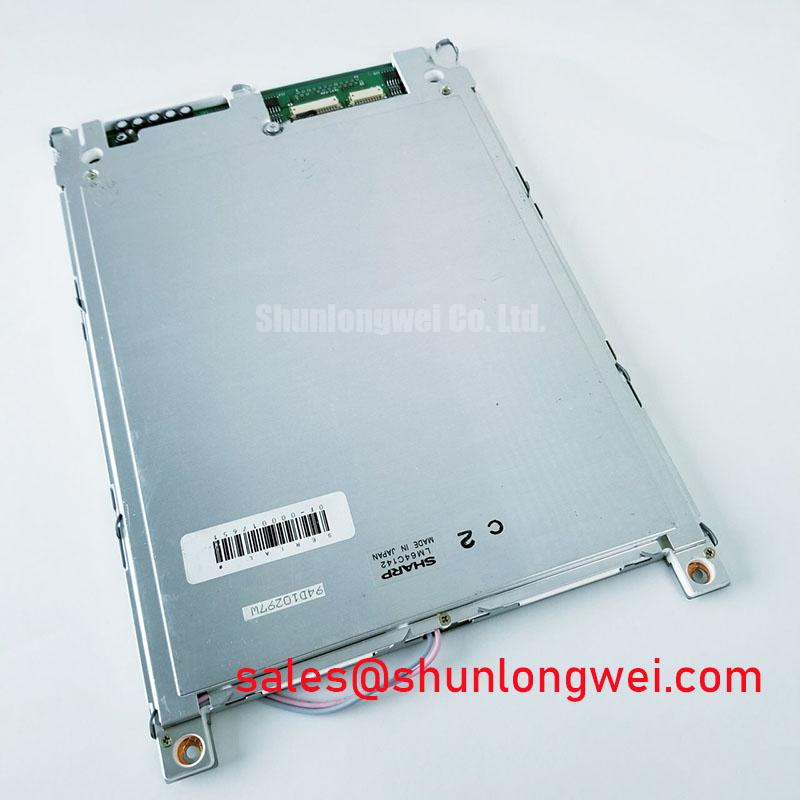
Sharp LM64C142 9.4-inch 640×480 Color STN-LCD Module
Introduction and Core Highlights
The Sharp LM64C142 is a 9.4-inch passive-matrix Color STN (CSTN) LCD module engineered for reliability in industrial human-machine interfaces (HMIs) and control systems. Its primary value proposition is its robust construction and serviceable design, featuring a single, edge-lit CCFT backlight that is replaceable, ensuring long-term operational viability for capital equipment. This display provides a straightforward and durable solution for presenting critical system data with clarity.
- Core Specifications: 640×480 VGA | 18:1 Contrast Ratio | 8-bit Parallel Data Interface.
- Key Advantages: Serviceable CCFT backlight extends operational life. Standard VGA resolution simplifies integration with legacy systems.
- User Intent Answered: This module uses a 25-pin parallel data connector, a common interface for industrial controllers of its era, simplifying direct system integration.
Download Official Datasheet (PDF)



Technical Analysis for System Integration
The engineering value of the LM64C142 is rooted in its practical design for industrial environments. The 640×480 VGA resolution on a 9.4-inch active area (192 x 144 mm) results in a pixel pitch of 0.30 x 0.30 mm, which is well-suited for displaying numerical data, status indicators, and simple graphical interfaces with good readability from a typical operator distance. The 8-bit parallel data interface, while a legacy standard, provides a direct and deterministic connection to embedded controllers, avoiding the complexities of modern serial protocols. This makes the LM64C142 a suitable candidate for maintaining or upgrading existing systems without extensive hardware redesign.
A standout feature is its service-oriented construction. The Cold Cathode Fluorescent Tube (CCFT) backlight, with a typical brightness of 80 cd/m², is a field-replaceable component. Think of the backlight like a specialized fluorescent bulb in a factory lighting fixture; its finite lifespan doesn’t necessitate replacing the entire fixture. This design philosophy allows maintenance engineers to restore display brightness after prolonged use by simply swapping the backlight assembly, a critical advantage for minimizing downtime and extending the life of the host equipment. Explore our insights on proactive management of industrial LCD backlight lifespan for more context.
Optimized Application Scenarios
The specifications of the LM64C142 align it with applications where long-term reliability and serviceability are primary decision drivers.
- Industrial Control Panels: Its robust mechanical structure and standard VGA format are ideal for HMIs on CNC machines and manufacturing equipment. The 18:1 contrast ratio is sufficient for clear data presentation in controlled factory lighting.
- Test and Measurement Equipment: The display’s direct parallel interface ensures low-latency data updates, suitable for oscilloscopes, spectrum analyzers, and other diagnostic tools.
- Medical Monitoring Systems: For patient monitors and diagnostic machines where color-coded data needs to be clear and consistent, the STN technology provides adequate performance.
- Legacy System Sustainment: Its compatibility with 5V logic and a parallel interface makes it a direct replacement part for aging systems, preventing costly redesigns.
This display is a best match for systems requiring a durable VGA interface with a focus on long-term field serviceability over high-fidelity color reproduction.
Key Specifications of the LM64C142
| Parameter | Specification | Notes |
|---|---|---|
| Display Characteristics | ||
| Display Type | CSTN-LCD, Normally Black | Passive Matrix Color |
| Screen Size | 9.4 inches (23.8 cm) | 4:3 Aspect Ratio |
| Resolution | 640(RGB) × 480 (VGA) | |
| Active Area | 192.0(W) × 144.0(H) mm | |
| Brightness | 80 cd/m² (Typ.) | |
| Contrast Ratio | 18:1 (Typ.) | |
| Response Time | 210ms (Tr), 90ms (Td) (Typ.) | |
| Electrical & Interface | ||
| Logic Supply Voltage (VDD) | 5.0V (Typ.) | |
| Interface | 8-bit Parallel Data | 25-pin Connector |
| Power Consumption (Panel) | 529 mW (Typ.) | |
| Mechanical & Environmental | ||
| Outline Dimensions | 266.4(W) × 182.3(H) × 10.0(D) max mm | |
| Weight | 540g (Typ.) | |
| Operating Temperature | 0°C to 40°C | |
| Storage Temperature | -25°C to 60°C | |
Engineer’s FAQ
1. What is the interface protocol for the Sharp LM64C142?
The LM64C142 utilizes an 8-bit parallel RGB data interface. It requires signals such as a dot clock (XCK), horizontal sync (LP), and vertical sync (YD) for operation, typical of digital display interfaces from its manufacturing period.
2. Can the CCFT backlight be replaced in the field?
Yes, the datasheet specifies the module is constructed with a single CCFT backlight that is designed to be a replaceable part. This allows for maintenance to restore original brightness levels after extended use without replacing the entire LCD module.
3. How should thermal management be handled for this display?
The panel’s power consumption is typically 529.2 mW, and the backlight consumes around 2.5W. While this is relatively low, designs must ensure the operating temperature remains between 0°C and 40°C. Adequate ventilation around the unit is necessary to prevent heat buildup, especially in sealed enclosures. For further reading, see our guide on thermal management for display reliability.
4. What is the typical lifetime of the CCFT backlight?
The official datasheet indicates a backlight lifetime, which is a critical parameter for maintenance planning. Engineers should consult the document for the specific hour rating and plan for eventual replacement in long-life applications.
Enabling Long-Term System Viability
The Sharp LM64C142 provides a durable and serviceable display solution for industrial equipment. Its adherence to the standard VGA resolution and a parallel data interface ensures compatibility and straightforward integration, particularly in sustaining legacy systems. The design focus on a replaceable backlight directly addresses the need for long-term operational reliability, allowing engineers to maintain system performance and minimize total cost of ownership over the equipment’s lifecycle.