Fuji 2MBI400TC-060 IGBT: A Technical Deep Dive into High-Current Performance
Fuji Electric 2MBI400TC-060 IGBT Module Technical Review
High-Current Performance with Optimized Conduction and Switching Losses
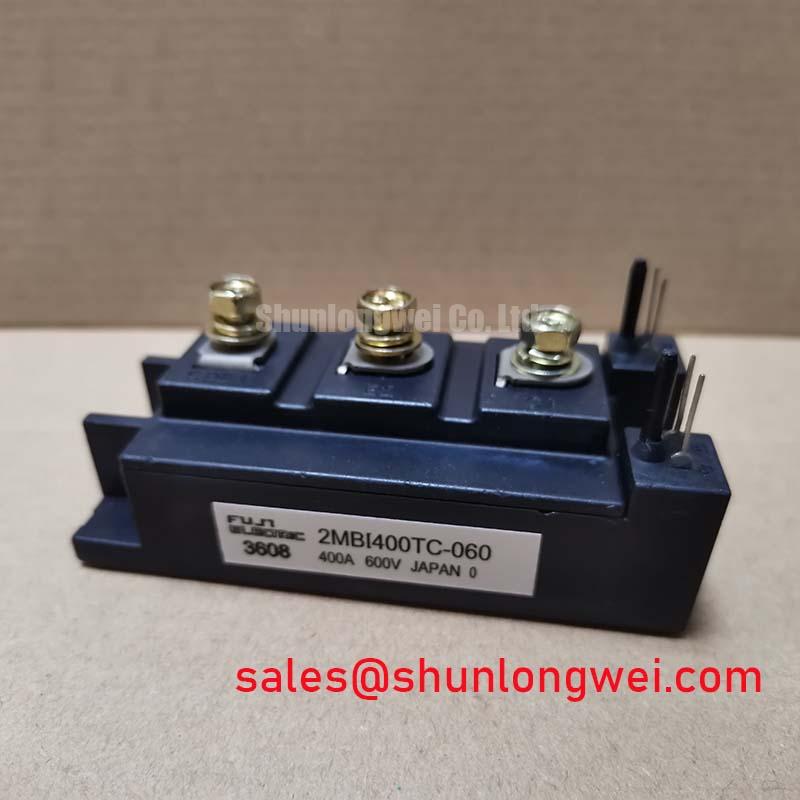
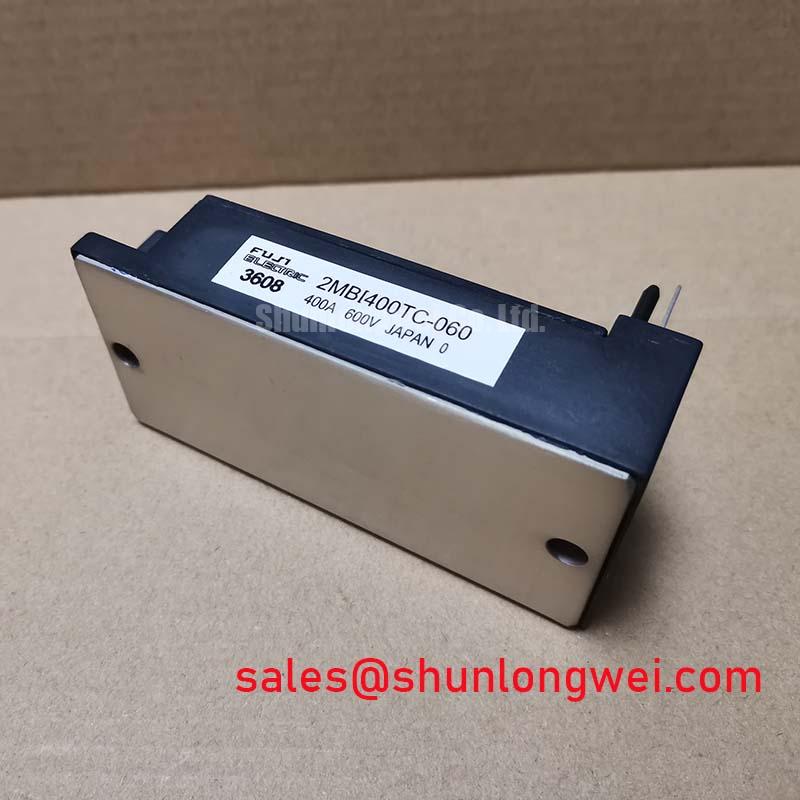
The Fuji Electric 2MBI400TC-060 is a high-current IGBT module delivering a robust 600V, 400A rating in a standard half-bridge configuration. This module’s core value proposition is its balanced performance, achieved through Fuji Electric’s Trench Gate and Field-Stop (FS) technology. This design approach yields a low collector-emitter saturation voltage (VCE(sat)), which directly minimizes conduction losses and improves thermal efficiency in high-power systems. The module is engineered for power conversion systems where reliability and efficient power handling are critical operational requirements.
- Core Specifications: 600V | 400A | VCE(sat) of 2.7V (max)
- Key Advantages: Reduces thermal load on cooling systems; ensures high reliability under fault conditions with a 10µs short-circuit withstand time.
- Engineering Value: The combination of high current capacity and low on-state voltage makes it possible to increase power density without compromising system longevity.
Download Official Datasheet (PDF)

Technical Analysis for System Integration
The engineering behind the 2MBI400TC-060 centers on Fuji’s advanced silicon technology. The Trench Gate structure, combined with a Field-Stop (FS) layer, is instrumental in achieving a low collector-emitter saturation voltage (VCE(sat)), specified with a maximum value of 2.7V at a nominal current of 400A. This low on-state voltage drop directly reduces the power dissipated as heat during conduction phases. For design engineers, this translates into lower heatsink requirements, more compact system designs, and improved overall energy efficiency. This focus on efficiency is a core tenet of modern power semiconductor design.
Reliability under adverse conditions is another critical aspect addressed by this module’s design. It features a short-circuit withstand time (tsc) of at least 10µs. This specification guarantees that the device can survive a direct short-circuit event for a sufficient duration, allowing the system’s protection circuitry to detect the fault and safely shut down the drive. This level of ruggedness is essential for preventing catastrophic failures in industrial environments. Efficiently removing heat is key to leveraging this performance. The module’s thermal resistance (Rth(j-c)) of 0.085 K/W per IGBT is a vital parameter for thermal modeling. You can think of thermal resistance as the width of a pipe for heat flow; a lower value means a wider pipe, allowing heat to move easily from the active chip to the heatsink and preventing overheating.
Optimized Application Scenarios
The specifications of the 2MBI400TC-060 make it a strong fit for several high-power applications:
- High-Power Inverters and Converters: Its 400A current rating and low VCE(sat) are ideal for the main power stage, maximizing efficiency.
- Welding Power Supplies: The module’s proven ability to handle high current pulses and its robust short-circuit protection are essential for the demanding, cyclical loads in welding.
- Industrial Motor Drives: In large Variable Frequency Drives (VFDs), its high current capacity and thermal efficiency enable precise control of large induction motors while maintaining system reliability.
- Uninterruptible Power Supplies (UPS): The high efficiency reduces cooling requirements and improves the operational lifespan of critical power backup systems.
Its blend of high current handling, low conduction losses, and verified ruggedness makes it a prime candidate for demanding power conversion systems.
Key Specification Parameters
| Absolute Maximum Ratings (Tc=25°C) | ||
|---|---|---|
| Collector-Emitter Voltage | VCES | 600V |
| Continuous Collector Current (Tc=80°C) | IC | 400A |
| Peak Collector Current | ICP | 800A |
| Total Power Dissipation (per IGBT) | PC | 1560W |
| Electrical & Thermal Characteristics (Tj=25°C unless otherwise noted) | ||
| Collector-Emitter Saturation Voltage (IC=400A, VGE=15V) | VCE(sat) | 2.1V (Typ), 2.7V (Max) |
| Gate-Emitter Threshold Voltage (IC=400mA, VCE=20V) | VGE(th) | 5.5V to 7.5V |
| Input Capacitance (VCE=10V, VGE=0V, f=1MHz) | Cies | 58nF (Typ) |
| Thermal Resistance (Junction to Case, per IGBT) | Rth(j-c) | 0.085 K/W (Max) |
Engineer’s FAQ
1. What is the recommended mounting torque for the 2MBI400TC-060 to ensure optimal thermal contact?
According to the official datasheet, the recommended mounting torque for the M6 screws is between 4.0 and 5.0 Nm. Applying the correct torque is critical for minimizing the thermal resistance between the module’s baseplate and the heatsink, a key factor in effective IGBT thermal management.
2. How does the integrated Free-Wheeling Diode (FWD) perform in inductive load applications like motor control?
The co-packaged FWD is optimized for motor drive applications. It features a low forward voltage (VEC max of 2.7V at 400A) to reduce losses during freewheeling periods. Its soft recovery characteristic is designed to minimize voltage overshoot and electromagnetic interference (EMI), which simplifies snubber circuit design and improves overall system reliability.
3. What is the maximum operating junction temperature for this module?
The datasheet specifies a maximum operating junction temperature (Tj) of 150°C. Designs should include a sufficient thermal margin to ensure this limit is not exceeded under worst-case operating conditions to guarantee long-term reliability.
4. Is this module suitable for parallel operation to achieve higher current output?
Yes, parallel operation is feasible. The module’s positive temperature coefficient for VCE(sat) helps to ensure a degree of self-balancing between parallel devices. However, for reliable current sharing, it is essential to ensure symmetrical layout of the busbars to minimize stray inductance and to use gate drivers with a common source, as discussed in best practices for IGBT paralleling.
Enabling Efficient and Reliable Power Designs
The Fuji Electric 2MBI400TC-060 provides a technically sound component for developing high-power converters and inverters. Its foundation of low-loss Trench Gate technology, combined with robust short-circuit protection and a thermally efficient package, empowers engineers to design systems that are not only more efficient but also more resilient under demanding industrial conditions.