Infineon FZ2400R17HP4_B2: A 2400A IGBT Module for Megawatt Power Systems
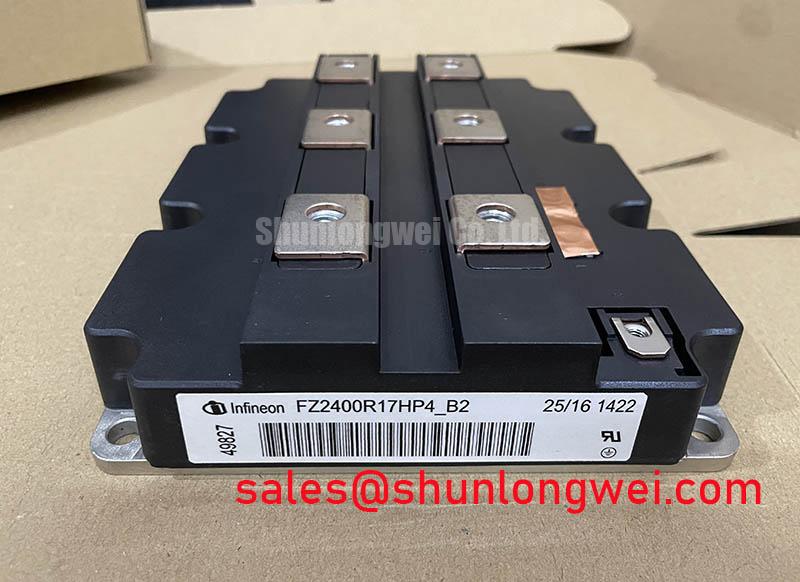
Infineon FZ2400R17HP4_B2 1700V 2400A High Power IGBT Module
Introduction and Core Highlights
This Infineon IGBT module is engineered for extreme current handling in megawatt-scale power conversion systems. Its core value proposition lies in delivering a nominal current of 2400 A within a standard IHM-B industrial housing, a design that facilitates high power density and thermal stability. By leveraging proven Trench/Fieldstop IGBT4 technology, the FZ2400R17HP4_B2 provides a robust foundation for high-power inverters where reliability is paramount. This high current capacity directly addresses the primary requirement for developing more compact and efficient megawatt-class converters.
- Core Specifications: 1700V | 2400A | Tvj op 150°C
- Key Advantages: Enables high power density, ensures reliable operation under continuous heavy loads.
Download the Official Datasheet (PDF)
Technical Analysis for High-Power Systems
The standout characteristic of the FZ2400R17HP4_B2 is its nominal DC collector current (ICnom) of 2400 A, with a repetitive peak rating of 4800 A. This level of current handling allows system designers to maximize the power output per module, which can simplify the overall inverter architecture and reduce the need for complex module paralleling. This capability is based on Infineon’s robust Trench/Fieldstop IGBT4 technology, which offers a well-established balance between performance and ruggedness for industrial applications. Effective liquid cooling for megawatt converters is often essential to fully utilize this capacity.

Effective thermal management is fundamental to reliability in high-current modules. This device specifies a maximum operating junction temperature (Tvj op) of 150°C, providing significant thermal headroom for demanding load cycles. This is complemented by a low thermal resistance from junction-to-case (RthJC) of 0.009 K/W per IGBT. Think of thermal resistance as the narrowness of a pipe carrying heat away. The low RthJC value of this module acts like a very wide pipe, allowing waste heat to be transferred efficiently from the silicon chip to the heatsink. This performance is critical for maintaining system stability and longevity when operating under continuous high-current conditions.
Optimized Application Scenarios
The specifications of the FZ2400R17HP4_B2 are tailored for specific high-power industrial and renewable energy applications:
- High-Power Converters: Its 2400 A rating simplifies the power stage design for systems in the megawatt class, reducing mechanical complexity.
- Wind Turbines: The 1700V blocking voltage and high current capability are well-suited for the main inverter stage in multi-megawatt wind power generation systems.
- Industrial Motor Drives: The module’s thermal capacity and the robustness of the Trench/Fieldstop IGBT4 technology make it suitable for heavy-duty drives for motors, traction, and industrial machinery.
- Large-Scale Solar & Energy Storage: High efficiency and power density are critical for maximizing energy harvest and minimizing footprint in utility-scale solar farms and battery storage systems.
Its combination of extreme current handling and proven thermal performance makes it a primary choice for megawatt-class power systems requiring high operational availability.
Key Specification Parameters
| Absolute Maximum Ratings | ||
|---|---|---|
| Collector-Emitter Voltage (VCES) | 1700 V | Tvj = 25°C |
| Continuous DC Collector Current (IC nom) | 2400 A | TC = 100°C |
| Repetitive Peak Collector Current (ICRM) | 4800 A | tP = 1 ms |
| Operating Junction Temperature (Tvj op) | -40 to +150 °C | |
| IGBT & Diode Characteristic Values | ||
| Collector-Emitter Saturation Voltage (VCEsat) | 2.20 V | IC = 2400A, VGE = 15V, Tvj = 125°C |
| Gate Threshold Voltage (VGE(th)) | 5.8 V | IC = 96.0 mA, Tvj = 25°C |
| Diode Forward Voltage (VF) | 1.90 V | IF = 2400A, VGE = 0V, Tvj = 125°C |
| Thermal & Mechanical Characteristics | ||
| Thermal Resistance, Junction-to-Case (RthJC) | 0.009 K/W | Per IGBT |
| Isolation Voltage (Visol) | 4.0 kV | AC, 1 min |
Engineer’s FAQ
- How is the total junction-to-heatsink thermal resistance calculated for the FZ2400R17HP4_B2?
- The datasheet provides the junction-to-case thermal resistance (RthJC) as 0.009 K/W per IGBT. To find the total thermal resistance to the heatsink (RthJH), you must add the thermal resistance of the case-to-heatsink interface (RthCH), which depends on the thermal interface material (TIM) used. The formula is: RthJH = RthJC + RthCH.
- What are the specified mounting torque values for this module?
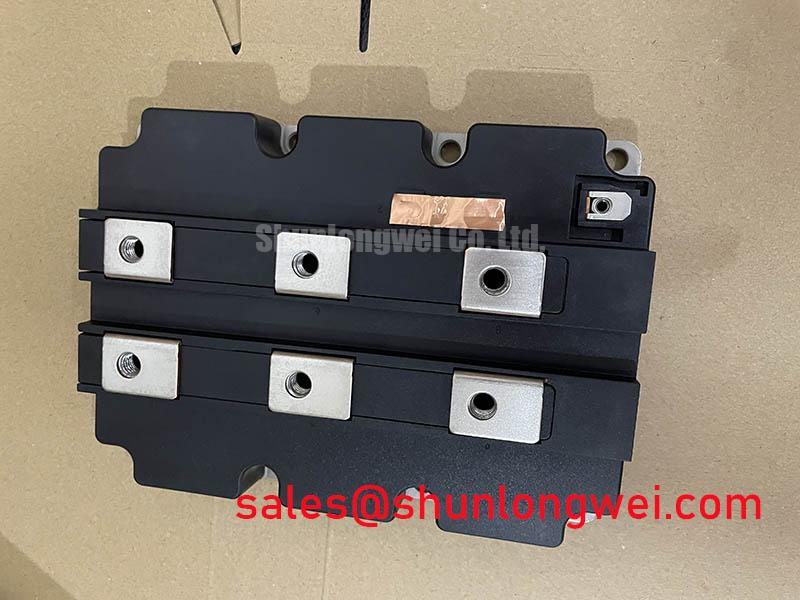
- According to the datasheet, the recommended torque for the M8 mounting screws is 10 – 12 Nm. For the M8 main electrical terminals, the torque is also 10 – 12 Nm, and for the M4 auxiliary terminals, it is 1.2 – 1.5 Nm. Applying the correct torque is critical for ensuring low thermal resistance and reliable electrical connections. You can learn more about the importance of IGBT terminal torque.
- What is the maximum continuous operating junction temperature?
- The FZ2400R17HP4_B2 is rated for a continuous operating junction temperature (Tvj op) of up to 150°C. Operating within this limit requires an appropriately designed thermal management system capable of dissipating the generated heat effectively.
- Can this IGBT module be used in a parallel configuration?
- Yes, the module’s design is suitable for parallel operation. The IGBTs exhibit a positive temperature coefficient for VCEsat, which helps promote balanced current sharing between modules. However, for successful IGBT paralleling, a symmetrical mechanical and electrical layout of the busbars is essential to minimize stray inductance and ensure even current distribution during switching transients.
Enabling High-Density Power Conversion
This module provides the high-current capability and thermal robustness necessary for designing efficient and reliable megawatt-scale power electronics. The FZ2400R17HP4_B2 empowers engineers to achieve greater power density in demanding industrial and renewable energy applications by delivering exceptional current capacity in a standardized, high-reliability package.