Mitsubishi CM300HA-24H IGBT: A Technical Review for High-Power Applications
Mitsubishi CM300HA-24H IGBT Module: A Technical Review
Robust 1200V, 300A Performance for High-Power Industrial Systems
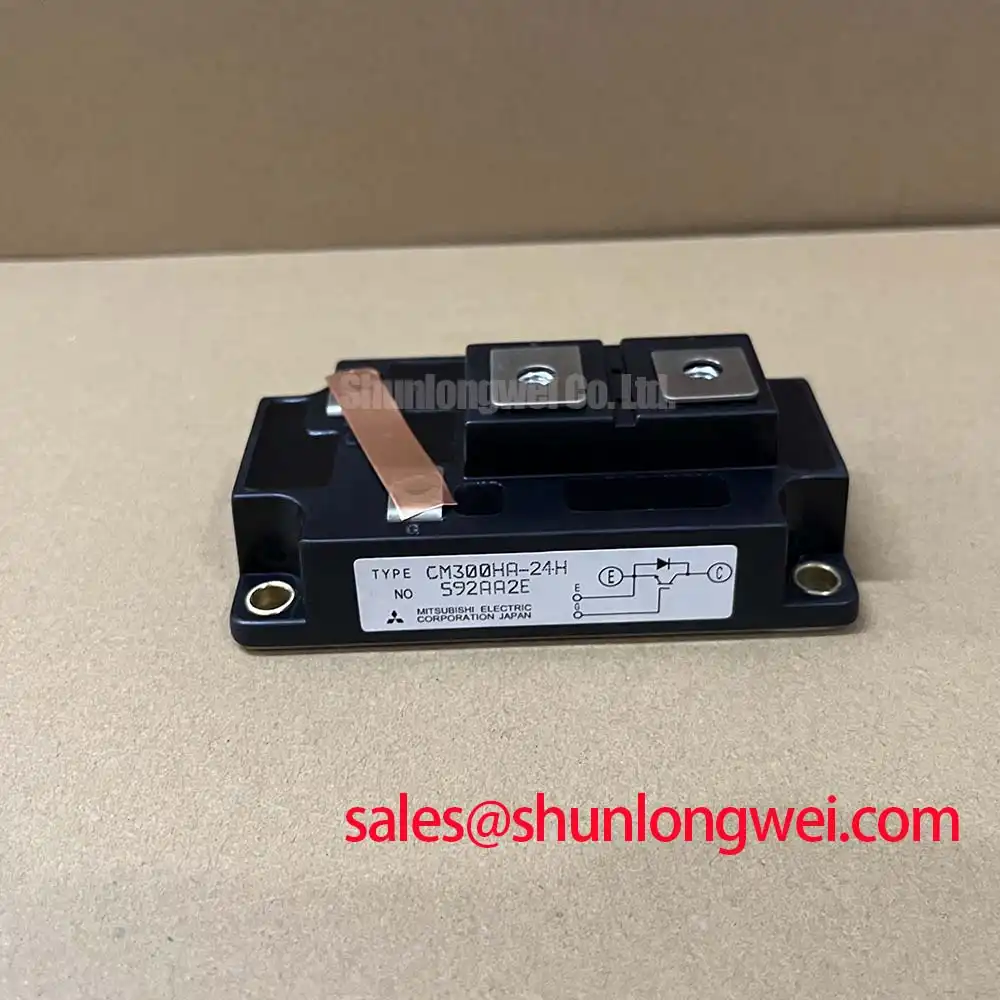
The Mitsubishi CM300HA-24H is an N-channel Insulated Gate Bipolar Transistor (IGBT) module engineered for high-power switching applications. Its core value proposition lies in delivering a robust balance of high voltage and current handling with efficient thermal dissipation, making it a dependable component for demanding industrial power conversion systems. With an isolated baseplate, this module simplifies thermal design by ensuring electrical isolation from the heatsink, a critical factor in high-voltage system assembly.
- Core Specifications: 1200V | 300A (DC) | VCE(sat) 2.7V (typ)
- Key Advantages: High power density in a standard package, effective heat transfer due to low thermal resistance.
Download the Official CM300HA-24H Datasheet (PDF)

Technical Analysis for System Integration
The performance of any high-power system is directly tied to managing losses. The CM300HA-24H specifies a typical collector-emitter saturation voltage (VCE(sat)) of 2.7V at its nominal 300A current rating. This parameter is a primary determinant of conduction losses—the heat generated while the device is in its ‘on’ state. A controlled VCE(sat) at high currents ensures predictable thermal behavior, allowing engineers to design more efficient and reliable systems without oversizing cooling hardware. For engineers working on high-frequency inverters, managing these losses is fundamental to achieving performance targets.
Effective heat extraction is critical for reliability. This module features a low thermal resistance from junction to case (Rth(j-c)) of 0.083°C/W for the IGBT. Think of thermal resistance as the width of a pipe for heat flow; a lower value signifies a wider pipe, allowing heat to escape the semiconductor junction more easily. This efficient heat transfer capability is crucial for maintaining the junction temperature within safe operating limits, especially under continuous high-current conditions. It directly contributes to the module’s longevity and the overall robustness of the end application. Understanding this parameter is key to mastering IGBT thermal design.

Optimized Application Scenarios
The electrical and thermal characteristics of the CM300HA-24H make it well-suited for several specific high-power industrial applications:
- Industrial Motor Drives: Its 300A continuous current rating provides the necessary power to control large AC induction motors with precision and reliability.
- Uninterruptible Power Supplies (UPS): The 1200V blocking voltage offers a sufficient safety margin for inverters in high-capacity UPS systems, ensuring dependable operation during power fluctuations.
- Welding Power Supplies: The module’s ability to handle pulsed currents up to 600A makes it a robust choice for the demanding, cyclical load conditions found in industrial welding equipment.
- General Purpose Inverters: A combination of high voltage, high current, and an industry-standard package makes it a versatile building block for various power conversion systems.
This module is an optimal match for systems requiring proven, high-current switching performance with straightforward thermal management design.
Key Specifications of the CM300HA-24H
| Absolute Maximum Ratings (Tj = 25°C unless otherwise noted) | |
|---|---|
| Collector-Emitter Voltage (VCES) | 1200V |
| Gate-Emitter Voltage (VGES) | ±20V |
| Collector Current (IC) | 300A (DC), 600A (Pulsed) |
| Maximum Power Dissipation (PC) | 1500W |
| Operating Junction Temperature (Tj) | -40 to +150°C |
| Isolation Voltage (Visol) | 2500V (AC, 1 minute) |
| Electrical & Thermal Characteristics (Tj = 25°C) | |
| Collector-Emitter Saturation Voltage (VCE(sat)) | 2.7V (typ) / 3.3V (max) at IC = 300A |
| Gate-Emitter Threshold Voltage (VGE(th)) | 5.5V (typ) |
| Collector Cut-off Current (ICES) | 1mA at VCE = 1200V |
| Thermal Resistance (Rth(j-c)) IGBT | 0.083°C/W |


Engineer’s FAQ
What is the recommended mounting torque for the CM300HA-24H, and why is it important?
The datasheet specifies a mounting torque of 3.5 to 4.5 N·m for the main terminals (M8) and 3.5 to 4.5 N·m for the mounting screws (M6). Applying the correct torque is critical. Insufficient torque leads to high thermal and electrical resistance, causing overheating. Excessive torque can warp the module’s baseplate, creating gaps that impair heat transfer and potentially causing mechanical stress on the substrate. A proper connection ensures both electrical integrity and effective cooling.
How does the low Rth(j-c) of the CM300HA-24H benefit my thermal design?
The specified 0.083°C/W thermal resistance for the IGBT means that for every watt of power dissipated as heat, the junction temperature will only rise 0.083°C above the case temperature. This low resistance facilitates easier and more efficient heat removal, allowing for the use of more compact heatsinks or operation at higher ambient temperatures without exceeding the maximum junction temperature of 150°C. This is a core aspect of designing for long-term IGBT reliability.
What is the short-circuit withstand time (tsc) of this module, and what does it signify?
The CM300HA-24H has a specified short-circuit withstand time of 10 microseconds (µs) under specific conditions (Vcc=600V, VGE=15V, Tj=125°C). This rating defines the maximum duration the IGBT can survive a direct short-circuit event before catastrophic failure. It is a critical safety parameter that allows the system’s protection circuitry, such as the gate driver, enough time to detect the fault and safely shut down the device.
Design Enablement
The Mitsubishi CM300HA-24H provides a proven foundation for high-power conversion systems. Its straightforward design, built on established IGBT technology, offers a reliable solution for engineers developing industrial-grade inverters and motor drives. The module’s capacity to efficiently manage thermal loads under high-current conditions empowers the design of robust power stages that meet demanding operational requirements.