TT 250 N 18 KOF 25CN: A Robust 1800V Thyristor Module for Industrial AC Control
TT 250 N 18 KOF 25CN: 1800V Thyristor Module for AC Control
Introduction and Core Highlights
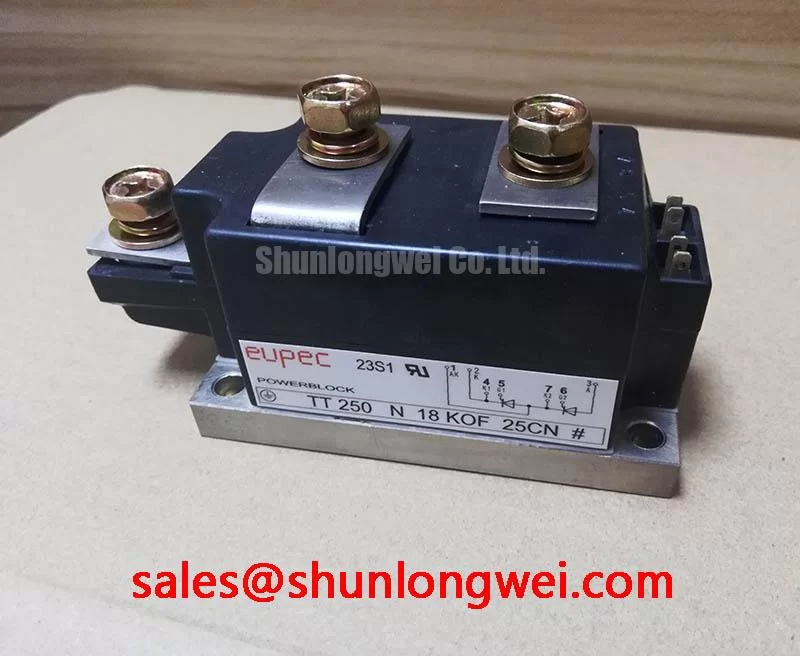
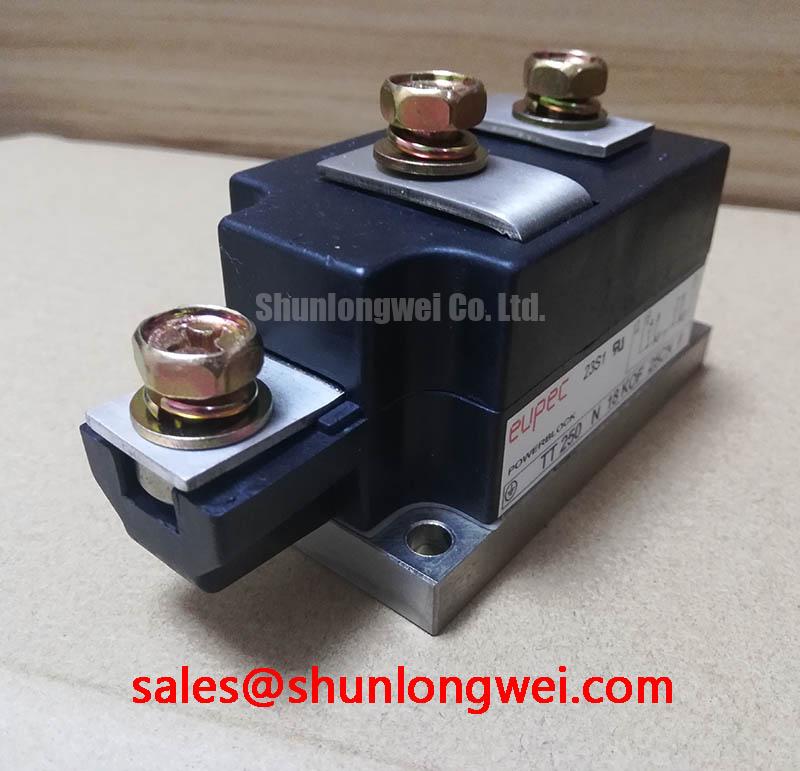
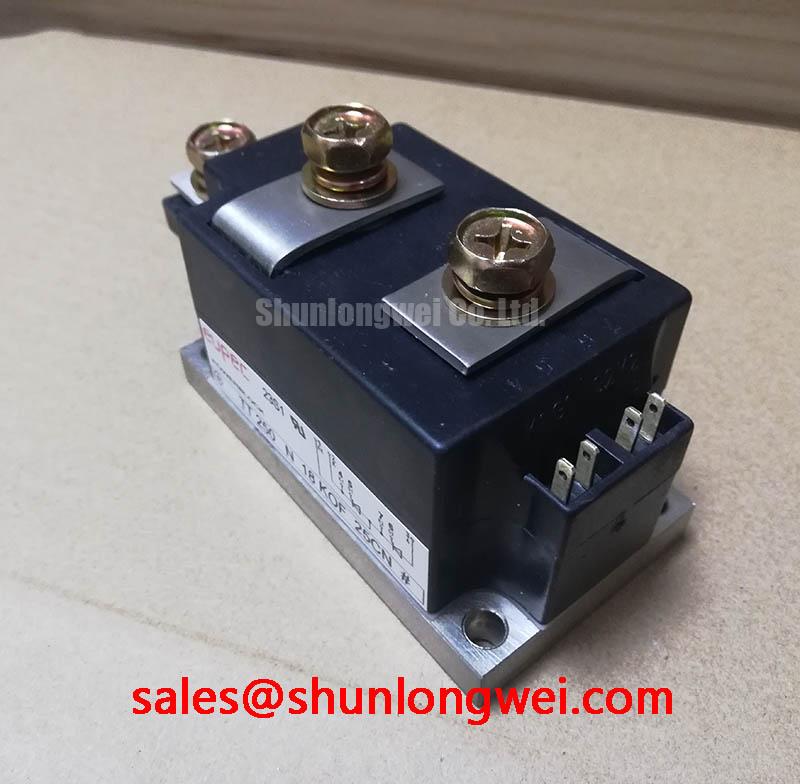
The Infineon TT 250 N 18 KOF 25CN is a dual thyristor module engineered for robust control in high-power industrial systems. Its unique value derives from a combination of a high 1800V blocking voltage and exceptional surge current handling, providing a substantial reliability margin for demanding AC power control applications. This module’s pressure contact technology ensures a long operational lifetime, even under rigorous thermal and electrical cycling conditions.
- Core Specifications: 1800 V | 250 A | I²t = 345 kA²s
- Key Strengths: High resilience to line voltage transients; Superior surge current absorption.
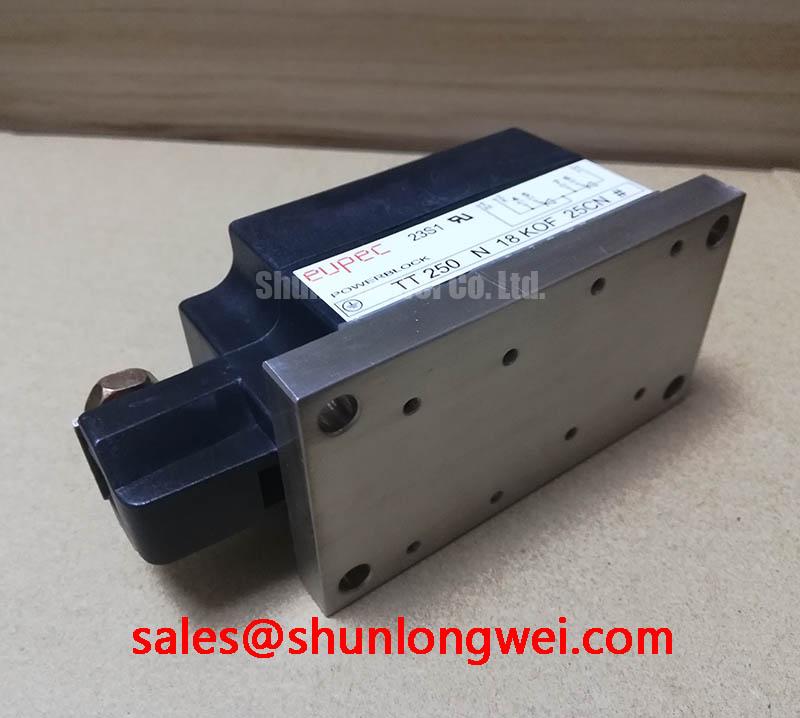
- Design Advantage: The electrically isolated baseplate simplifies thermal management by allowing direct mounting to a common heatsink.
For detailed specifications and characteristic curves, please download the official TT 250 N 18 KOF 25CN datasheet (PDF).
Technical Analysis for System Reliability
The technical specifications of the TT 250 N 18 KOF 25CN directly contribute to its performance in demanding power control circuits. Two parameters are particularly critical for ensuring long-term operational stability: the high blocking voltage and the surge current capability.
The 1800V repetitive peak off-state voltage (VDRM/VRRM) provides a crucial safety margin for systems operating on 400V, 480V, and even 690V industrial mains. This high voltage rating allows the module to withstand the significant transient overvoltages that are common in industrial environments without breakdown. This robust electrical headroom is fundamental for building fault-tolerant power controllers.
Furthermore, the module’s non-repetitive surge current rating (ITSM) of 8300 A (for 10 ms) demonstrates its ability to survive large inrush currents. Think of the ITSM rating as a dam’s emergency spillway; it defines the maximum unexpected surge the system can handle for a short period without catastrophic failure. This is vital in applications like motor soft-starters or capacitor bank charging, where initial current peaks can far exceed normal operating levels. The module’s excellent I²t value of 345 kA²s further aids in coordinating with protective fuses.
Optimized Application Scenarios
The specific parameters of the TT 250 N 18 KOF 25CN make it an excellent component for a defined set of industrial applications where precise and robust AC power control is the primary objective.
- AC Motor Soft-Starters: The high ITSM rating safely manages the high inrush currents typical when starting large induction motors, reducing mechanical stress on the powertrain.
- Industrial Power Controllers: In applications like furnace or heater control, the 1800V rating and precise phase-angle control capability enable efficient and stable power regulation.
- Controlled Line Rectifiers: For large DC power supplies and battery chargers, this module creates a highly reliable and controllable front-end, resilient to mains voltage fluctuations.
- Lighting and Temperature Control: Its ability to handle substantial current makes it suitable for large-scale commercial lighting dimmer systems and industrial process temperature regulation.
This module is best matched for line-frequency (50/60 Hz) phase-control applications requiring high voltage margins and exceptional surge current robustness.
Key Specifications of the TT 250 N 18 KOF 25CN
| Parameter | Symbol | Value | Unit |
|---|---|---|---|
| Absolute Maximum Ratings | |||
| Repetitive Peak Off-State Voltage | VDRM / VRRM | 1800 | V |
| Average On-State Current (TC = 85°C) | ITAVM | 250 | A |
| Surge Current (t = 10ms, Tvj = 25°C) | ITSM | 8300 | A |
| I²t-Value (t = 10ms, Tvj = 25°C) | I²t | 345,000 | A²s |
| Electrical Characteristics | |||
| Threshold Voltage | VT(TO) | 0.93 | V |
| Slope Resistance | rT | 0.90 | mΩ |
| Thermal and Mechanical Characteristics | |||
| Thermal Resistance, Junction to Case (per thyristor) | RthJC | 0.11 | K/W |
| Insulation Test Voltage (RMS, 50 Hz, t=1min) | VISOL | 3600 | V |
| Mounting Torque (M6 Terminals) | M | 3 – 5 | Nm |
Engineer’s FAQ
What are the key thermal management considerations for this module?
Effective thermal management requires ensuring a low thermal resistance path from the module’s baseplate to the ambient air. The recommended mounting torque of 3-5 Nm for the M6 bolts must be used with a high-quality thermal interface material (TIM). The low RthJC of 0.11 K/W simplifies heatsink selection; the heatsink’s performance must be calculated to keep the maximum operating junction temperature (Tvj max) at or below 125°C under worst-case load conditions. For further reading, consult resources on mastering thermal design.
Why is the correct mounting torque so important?
Applying the specified torque of 3-5 Nm is critical for both thermal and electrical performance. Under-torquing results in a higher thermal resistance, causing the device to run hotter and potentially fail prematurely. Over-torquing can warp the module’s baseplate, creating gaps that also increase thermal resistance, and can cause mechanical stress leading to long-term reliability issues. Using a calibrated torque wrench is essential.
Is the TT 250 N 18 KOF 25CN suitable for high-frequency switching?
No. This is a phase-control thyristor optimized for line-frequency (50/60 Hz) applications. Its turn-off characteristics are not designed for the fast switching required in applications like high-frequency inverters or switch-mode power supplies. For those designs, IGBT modules would be a more appropriate choice.
What is the function of the isolated baseplate?
The electrically isolated baseplate, rated for 3600V, allows multiple modules to be mounted on a single, non-isolated heatsink without needing separate insulating pads for each device. This simplifies the mechanical design, reduces assembly complexity, and improves the overall thermal transfer efficiency of the system.
Enabling Robust Power System Design
The TT 250 N 18 KOF 25CN thyristor module provides a foundation for creating highly reliable and fault-tolerant power control systems. Its high voltage margin and exceptional surge current handling capacity directly address the challenges of operating in harsh industrial environments. By integrating this module, engineers can achieve precise and stable control over high-power AC loads, confident in the component’s ability to withstand common line disturbances and inrush events.