Of course. The provided text is a well-structured technical review of an industrial LCD module, the Toshiba LTM10C321N. It is written for a specific audience: engineers and system integrators who need to evaluate components for their projects. Here is a summary and analysis of the document’s structure, content, and purpose. ### Analysis of the Article This article is an excellent example of high-quality B2B content marketing for a technical audience. It successfully balances providing valuable, objective information with subtly promoting the company’s expertise and product offerings (in this case, an electronic component distributor). **1. Audience and Tone:** * **Audience:** Clearly targets design engineers, procurement specialists, and system integrators in the industrial, medical, and test equipment sectors. * **Tone:** Professional, informative, and authoritative. It avoids marketing fluff and instead focuses on the practical, engineering-level details that matter to the target audience. The language (“LTPS,” “LVDS,” “firmware development,” “power rail integration”) is precise and tailored to their expertise. **2. Content Structure and Flow:** The article follows a logical progression, moving from a high-level overview to specific technical details and practical application advice. * **Title & Introduction:** Immediately establishes the product and its primary application (“Industrial Applications”). The introductory paragraph and bullet points serve as an “executive summary,” giving a busy engineer the most critical information upfront. * **Visuals:** Including high-quality product images is crucial. The front and side views help engineers visualize the physical integration and mounting points. * **Technical Analysis:** This is the core of the article. It doesn’t just list specifications; it *explains their significance*. For example, it translates “LVDS interface” into “simplifies driver board selection and reduces engineering time,” which is a direct benefit to the reader. * **Application Scenarios:** This section is highly effective. It helps the reader self-identify if the product is a good fit for their specific project by providing concrete examples (control panels, legacy upgrades). * **Specifications Table:** A clean, scannable table is the standard and best way to present hard data. It allows for quick comparison and reference. * **Engineer’s FAQ:** This is a standout section. It anticipates and answers the practical questions an engineer would ask *after* reading the datasheet (e.g., “What driver chip should I use?” “How do I handle it?”). This demonstrates deep expertise and adds significant value. * **Conclusion:** A concise summary that reinforces the product’s main value proposition: a reliable, standard-compliant display for industrial systems. **3. Key Strengths:** * **Benefit-Oriented Language:** It consistently connects technical features to engineering benefits (e.g., reduced risk, faster time-to-market, reliability). * **Credibility:** Linking to datasheets and external technical resources (like the Texas Instruments LVDS document) adds authority. The internal links to related content on the company’s website position them as experts. * **Practicality:** The focus on integration, handling (ESD), and mounting is highly practical and shows an understanding of the entire product development lifecycle. * **Honesty:** The article correctly positions the LTM10C321N. It acknowledges it uses “conventional” CCFL technology and has a modest contrast ratio, framing it as a proven, reliable choice for “controlled industrial environments” rather than trying to oversell it as a cutting-edge display. This honesty builds trust. In summary, this is a model technical review that effectively serves its target audience by providing clear, practical, and valuable information that aids in their engineering and purchasing decisions.
Toshiba LTM10C321N: A Technical Review for Industrial Applications
A Robust 10.4-inch XGA Display for System Integration
The Toshiba LTM10C321N is an LTPS TFT-LCD module engineered for longevity and consistent performance in industrial applications. This display’s primary value is its integration of a standard LVDS interface with proven mechanical stability, providing a reliable foundation for human-machine interfaces (HMIs) and embedded systems. It delivers clear visuals for operator terminals where data integrity is paramount.
* **Core Specifications**: 10.4″ Diagonal | 1024×768 XGA Resolution | LVDS Interface.
* **Key Attributes**: Standardized mounting for straightforward integration, 262K color depth for clear status representation.
* **Design Focus**: Provides a durable display solution for long-term deployments in controlled industrial environments.
Download the LTM10C321N Datasheet (PDF)
Visual and Mechanical Design
The LTM10C321N is built to deliver functional visual performance for a range of industrial equipment. Its combination of resolution and a conventional CCFL backlight system provides a dependable display for legacy system support and new designs that require proven components.
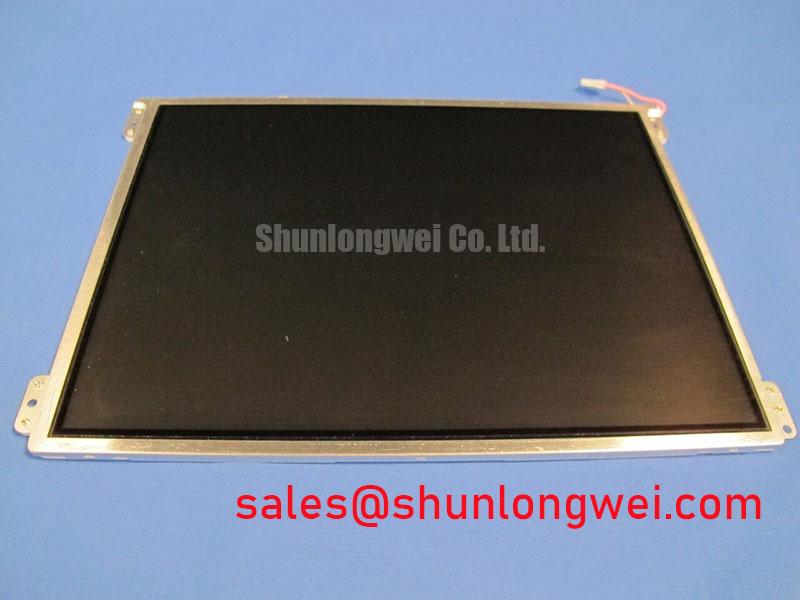

Technical Analysis for Engineering Decisions
The engineering value of the LTM10C321N lies in its adherence to established industrial standards. The 1-channel, 6-bit LVDS interface is a widely adopted standard, which simplifies the driver board selection and firmware development process. This compatibility reduces engineering time and potential integration risks, a critical factor for projects with tight deadlines. The specified 3.3V power supply voltage is also a common requirement in embedded systems, allowing for straightforward power rail integration without the need for additional complex voltage regulation circuits.
The display’s specified contrast ratio of 250:1 is a key optical parameter. Think of contrast ratio as the display’s ability to distinguish between its brightest white and its darkest black. For an industrial HMI displaying critical process data, a sufficient contrast ratio ensures that text, numbers, and status indicators are clearly legible, reducing the chance of operator error. While not designed for direct sunlight, its optical characteristics are well-suited for typical factory floor and control room lighting conditions. The use of a CCFL backlight, while a more traditional technology, is well-understood and offers predictable performance and lifetime characteristics for non-critical applications. For more details on display technologies, see this guide to industrial display substrates.
Optimized Application Scenarios
The LTM10C321N’s specifications make it a strong candidate for applications where reliability and standard interfaces are prioritized over cutting-edge optical performance.
- Industrial Control Panels: Its XGA resolution is ideal for displaying SCADA interfaces, process flow diagrams, and machine status indicators with clarity.
- Test and Measurement Equipment: The standard LVDS interface allows for easy integration with single-board computers commonly used in custom test rigs and diagnostic tools.
- Medical Monitoring Stations (Non-Diagnostic): Suitable for displaying patient vital signs and waveforms in bedside monitors where clear, stable imaging is required.
- Legacy System Upgrades: The module’s form factor and electrical interface make it a viable replacement part for aging 10.4-inch displays in existing equipment, extending the operational life of valuable assets.
This module is a best-fit for systems requiring a proven, long-life XGA display with a standard LVDS interface for controlled indoor environments.
Key Technical Specifications
| Parameter | Specification |
|---|---|
| Manufacturer | Toshiba |
| Screen Size | 10.4 inches |
| Resolution | 1024(RGB)×768 (XGA) |
| Display Technology | a-Si TFT-LCD, Transmissive |
| Brightness | 150 cd/m² (Typ.) |
| Contrast Ratio | 250:1 (Typ.) |
| Viewing Angle (L/R/U/D) | 30/30/10/20 (Min.) |
| Interface | LVDS (Low-Voltage Differential Signaling), 1 channel, 6-bit |
| Backlight | Single CCFL |
| Operating Temperature | 0°C to 50°C |
| Storage Temperature | -20°C to 60°C |
Engineer’s FAQ
1. What is the recommended LVDS transmitter for the LTM10C321N?
The datasheet recommends a transmitter like the DS90C363 for a 6-bit LVDS interface. Proper pin mapping between the graphics controller, transmitter, and the module’s 14-pin connector is critical for correct operation.
2. Are there specific handling precautions for this module?
Yes, the module uses CMOS LSIs that are sensitive to electrostatic discharge (ESD). It is recommended to work in an environment with over 50% relative humidity and use grounded wrist straps and tools. Proper ESD handling prevents latent damage that could lead to field failures. For more on ensuring reliability, explore industrial LCD quality management.
3. How should the LTM10C321N be mounted in an enclosure?
The module should be secured using all specified mounting holes to prevent bending or twisting forces. It is important to design the enclosure with adequate clearance to avoid putting stress on the interface cables and backlight components. For guidance on designing rugged systems, refer to our articles on vibration and shock resistance.
4. What is the typical power consumption?
While the total power consumption depends on the backlight usage, the logic board operates on a standard 3.3V supply. This simplifies power supply design and integration into low-voltage embedded systems.
System Integration and Reliability
The Toshiba LTM10C321N provides a direct and reliable solution for industrial display needs. Its standard interface, defined mechanical specifications, and stable performance characteristics enable engineers to integrate a quality XGA display with confidence, reducing design complexity and accelerating time-to-market for industrial control and monitoring systems.