Optrex F-51430NFU-FW-AA: An Integration-Focused Technical Review
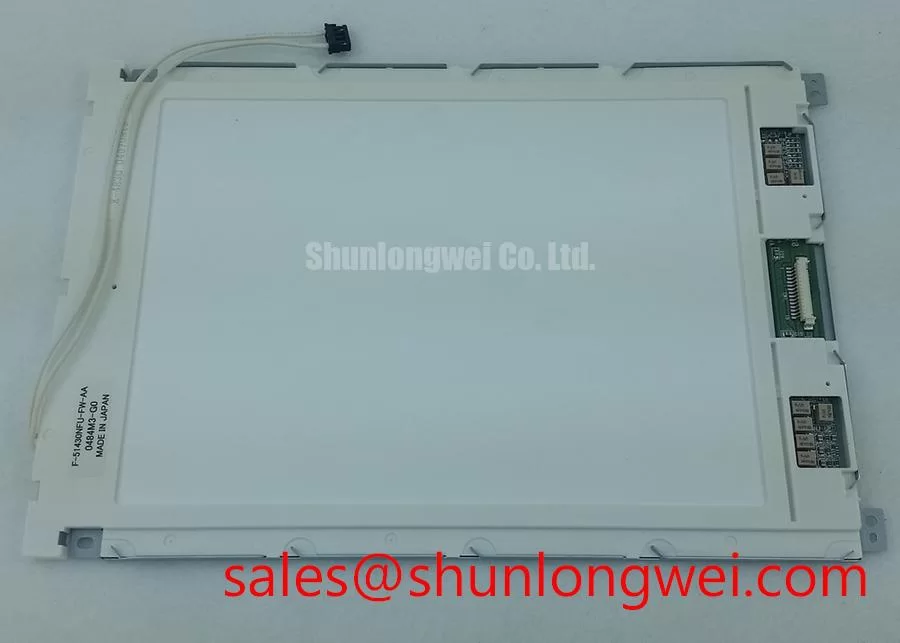
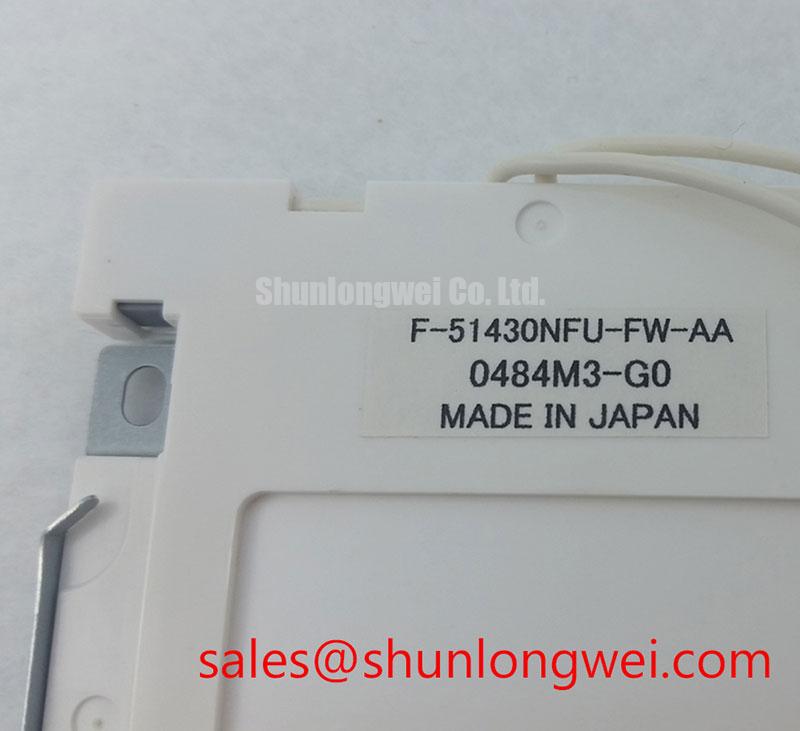
## Optrex F-51430NFU-FW-AA 128×64 Graphic LCD Module
The Optrex F-51430NFU-FW-AA is a monochrome Liquid Crystal Display Module engineered for streamlined integration into industrial and instrumentation applications. Its primary value proposition is the onboard Toshiba T6963C controller, which manages all display functions, significantly reducing the host microcontroller’s workload. This integration, combined with a single +5V logic supply requirement, simplifies both hardware and software design cycles.
* **Core Specifications**: 128 x 64 Dots | F-STN (Negative) | Integrated T6963C Controller
* **Key Engineering Value**:
* Simplified firmware via high-level command set.
* Reduced BOM cost and complexity with a single +5V power rail.
* **Interface**: The module utilizes a straightforward 8-bit parallel interface, allowing for easy connection to a wide range of microcontrollers.
Download Official Datasheet (PDF)
### Technical Analysis for System Integration
The design of the F-51430NFU-FW-AA centers on efficient system integration. The built-in T6963C controller is a significant feature, acting as a dedicated graphic coprocessor. It incorporates display RAM, a character generator, and a command set that handles text, graphics, and mixed-display modes independently. For an engineer, this means the host system is freed from the intensive task of pixel-level screen management. Instead of constantly refreshing the screen, the main CPU can issue high-level commands like “draw line” or “display character,” allowing it to focus on core application tasks. This architecture is particularly beneficial in measurement devices or control systems where processing resources are at a premium.
Another key design element is the simplified power supply architecture. The module operates from a single +5V logic supply (VDD). The negative voltage (VEE) required for the LCD drive is generated internally from this supply. Think of this feature as a built-in power converter for the display panel itself; it removes the need for an external negative voltage regulator and its associated passive components. This not only saves physical board space but also simplifies the overall thermal management and power distribution design, accelerating the prototyping and production phases.

### Optimized Application Scenarios
The specific feature set of the F-51430NFU-FW-AA makes it a strong candidate for several applications:
* **Industrial Control Panels:** The integrated controller simplifies firmware, making it easier to display machine status, alerts, and user menus without bogging down the main PLC or controller.
* **Test and Measurement Instruments:** The module’s ability to mix text and graphics is ideal for showing numerical readouts alongside waveforms or data plots in portable or benchtop equipment.
* **Medical Diagnostic Devices:** The clear, high-contrast F-STN display ensures unambiguous readability of critical patient data or device settings, a key requirement in medical environments.
* **Legacy System Sustainment:** Due to the long-standing use of the T6963C controller, this module can serve as a form-fit-function replacement for aging displays in existing equipment, extending product lifecycles.
Its integrated controller and single-supply operation make it a best-fit for embedded systems requiring a straightforward, reliable graphic interface.
### Key Specifications of the F-51430NFU-FW-AA
| Mechanical & Display Specifications | |
|---|---|
| Display Type | F-STN LCD, Negative, Transmissive |
| Resolution | 128 x 64 dots |
| Viewing Area | 60.0 mm (W) x 32.5 mm (H) |
| Outline Dimensions | 85.0 mm (W) x 58.0 mm (H) x 12.0 mm (D) max. |
| Backlight | CCFL (Cold Cathode Fluorescent Lamp) |
| Electrical & Environmental Characteristics | |
| Controller IC | Toshiba T6963C or equivalent |
| Logic Supply Voltage (VDD) | 5.0V ±5% |
| Supply Current (IDD) | 8.0 mA (Typ) |
| Operating Temperature Range | 0°C to +50°C |
| Storage Temperature Range | -20°C to +60°C |
### Engineer’s FAQ
**1. How do I interface with the F-51430NFU-FW-AA’s T6963C controller?**
The controller uses a standard 8-bit parallel interface. You will connect the 8 data lines (D0-D7) to a GPIO port on your microcontroller. Control is managed with signals such as Chip Enable (CE), Read (/RD), Write (/WR), and Command/Data (C/D) to manage data flow and instruction execution as detailed in the official datasheet.
**2. What is required to power the CCFL backlight?**
The CCFL backlight requires a separate high-voltage AC source, which must be provided by an external inverter. The datasheet explicitly recommends using an inverter such as the TDK CXA-L0505-VJL. The inverter connects to the dedicated backlight connector on the module.
**3. How is display contrast adjusted on this module?**
The contrast is a function of the LCD driving voltage (VEE). This voltage level is adjusted via an external variable resistor connected between the VDD, VSS, and V0 pins. The datasheet provides a circuit diagram illustrating the typical connection for a 10kΩ to 20kΩ variable resistor to fine-tune readability. For more on display quality, see our guide on perfecting LCD uniformity.
**4. What are the primary mounting considerations for this display?**
The F-51430NFU-FW-AA module includes four mounting holes with a diameter of 2.6mm, positioned at the corners of the PCB. The official datasheet contains a mechanical drawing with precise dimensions for panel cutouts and mounting points to ensure proper alignment and secure installation. Careful consideration of its 12.0mm maximum depth is important for enclosures with tight tolerances.
### Design Enablement
The F-51430NFU-FW-AA provides a robust and self-contained graphic display solution. By integrating the T6963C controller and simplifying the power supply design, it allows engineering teams to focus on application-level development rather than low-level display management. This architecture enables faster time-to-market for instrumentation and industrial HMI that demand clear, reliable information display.