Sharp LJ64EU34 EL Display: A Technical Review for Industrial Applications
Sharp LJ64EU34 EL Display | 640×350 for Industrial HMIs
Introduction and Core Highlights
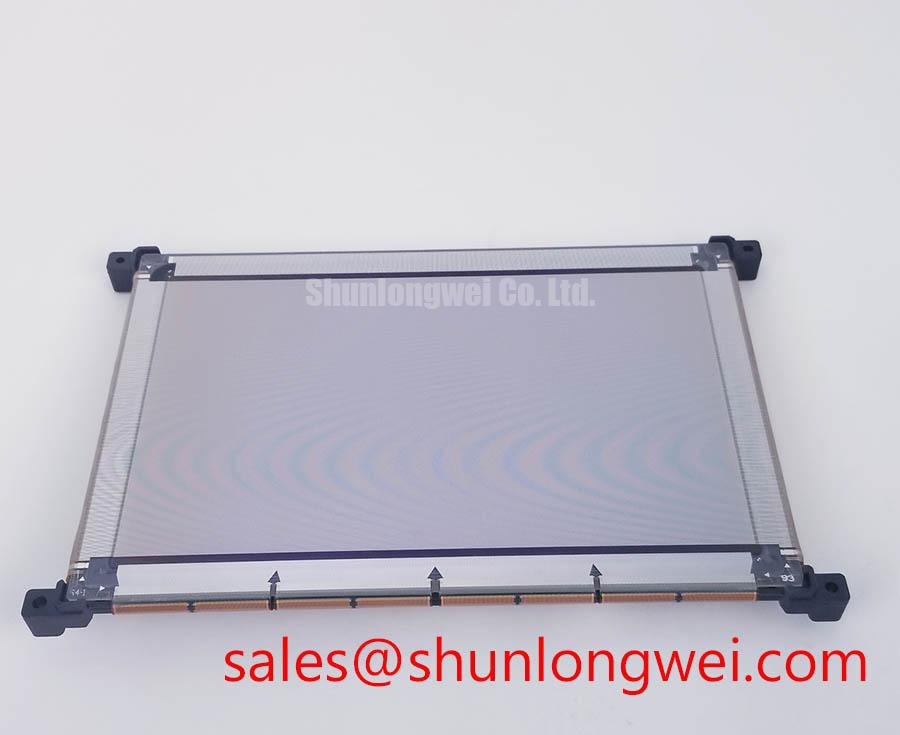
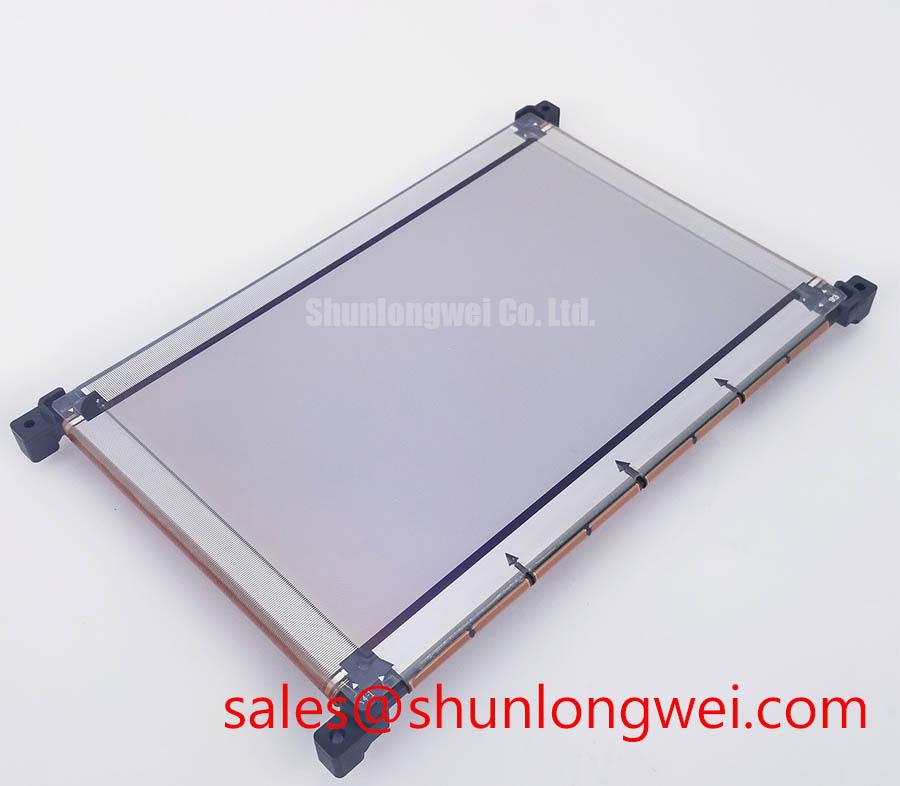
The Sharp LJ64EU34 is an 8.9-inch Electroluminescent (EL) display module engineered for applications demanding absolute visual clarity and long-term operational reliability. Its defining value is the emissive, high-contrast performance inherent to EL technology, which delivers exceptional readability from virtually any viewing angle. This makes it a superior choice for sustaining legacy industrial controls and medical devices where data integrity is critical. Unlike traditional LCDs, each pixel is its own light source, ensuring that information is presented with unparalleled sharpness without a backlight.
- Core Specifications: 640 x 350 Dot Resolution | 50 cd/m² Minimum Luminance | 4-bit Parallel Interface
- Key Advantages: Exceptional contrast and nearly 180° viewing angle, fast response time suitable for moving data.
- Application Focus: Ideal for retrofitting or maintaining older industrial equipment that requires a robust, EGA-compatible display.
Download Official Datasheet (PDF)
Technical Analysis for System Integration
The engineering value of the LJ64EU34 lies in its fundamental display technology. As an Electroluminescent (EL) panel, it generates its own light, a characteristic that provides a significant advantage over backlit LCDs, especially in industrial settings. Its contrast ratio is naturally high because an “off” pixel emits no light, creating a true black. This can be compared to a star in the night sky versus a gray shape on a lit screen; the self-emissive nature creates a level of clarity that is difficult for liquid crystal technology to replicate. This ensures that critical data, warnings, and schematics are unambiguously readable under a wide range of ambient lighting conditions.
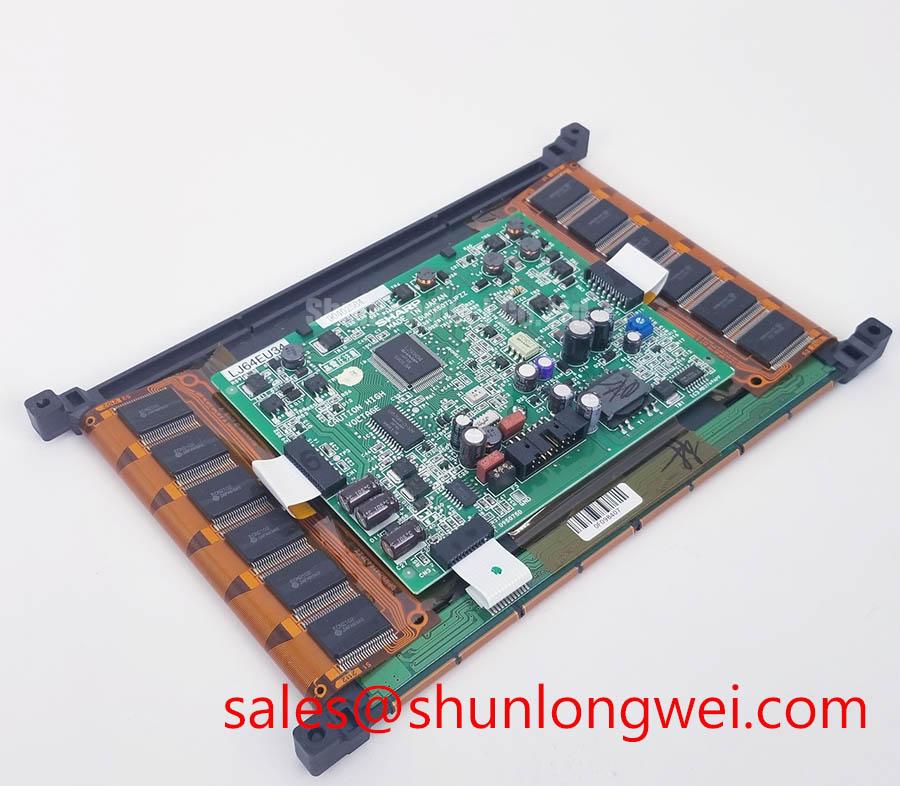
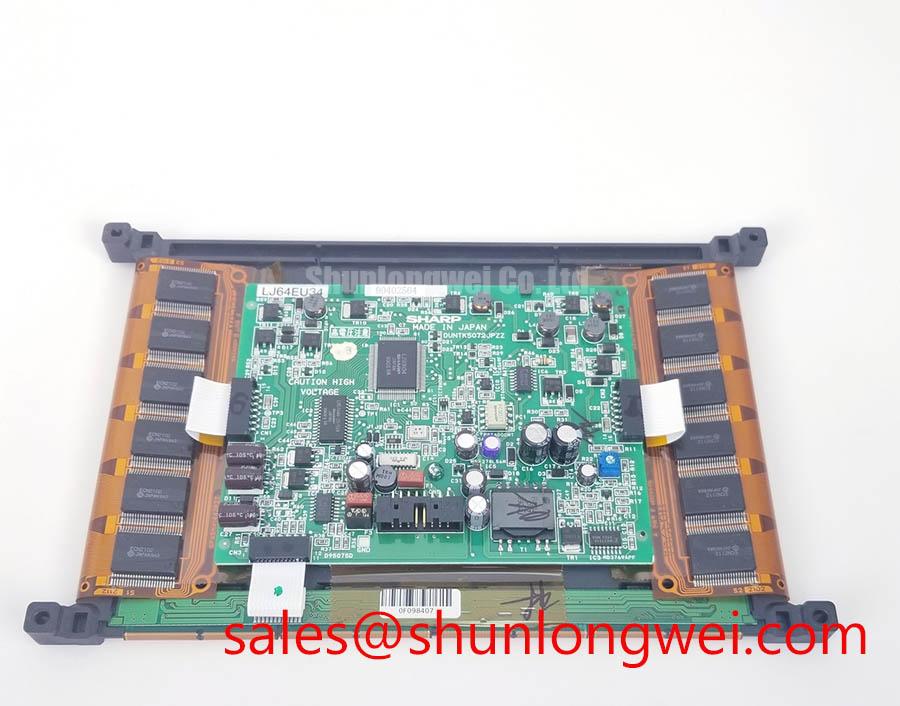
For system integrators and engineers maintaining legacy hardware, the interface of the LJ64EU34 is a key feature. It uses a straightforward logic-level interface requiring a +5V for logic and +12V for the drive circuitry. The 4-bit parallel data input, along with clock (CK), load (L), and frame (F) signals, simplifies the driver design significantly compared to modern displays that rely on complex, high-speed serial interfaces like LVDS or eDP. This makes the panel an excellent candidate for drop-in repairs or upgrades where redesigning the host controller is not feasible.

Optimized Application Scenarios
The LJ64EU34 is well-suited for several specific industrial and commercial applications:
- Legacy Industrial HMI Terminals: Its 640×350 resolution is a perfect match for older systems based on the EGA graphics standard. The panel’s inherent robustness and simple digital interface allow for direct replacement of aging CRT or early-generation LCD screens.
- Test and Measurement Equipment: The extremely fast response time of EL technology ensures that rapidly changing numerical values and waveforms are displayed without motion blur or ghosting, a critical requirement for oscilloscopes and spectrum analyzers.
- CNC Machinery and Process Controllers: On a factory floor, readability from a distance and at sharp angles is essential. The wide viewing angle and high contrast of the LJ64EU34 ensure operators can monitor machine status without being directly in front of the screen.
- Medical Monitoring Devices: The sharp, clear presentation of vital signs and data is non-negotiable. This display provides the visual fidelity needed for patient monitoring systems and diagnostic instrument readouts.
Given its specifications, this display is best matched for sustaining critical systems where visual performance and reliability outweigh the need for color or high resolution.
Key Specifications of the LJ64EU34
| Mechanical & Optical Specifications | |
|---|---|
| Display Technology | Electroluminescent (EL) Display |
| Active Area | 191.9 x 119.9 mm |
| Dot Format (Resolution) | 640 x 350 dots |
| Luminance (Brightness) | 50 cd/m² (Min), 70 cd/m² (Typ) |
| Weight | 480g (Max) |
| Electrical & Environmental Ratings | |
| Logic Supply Voltage (Vcc) | 5.0 V (±5%) |
| Driver Supply Voltage (Vdd) | 12.0 V (±5%) |
| Power Consumption | 11 W (Typ) |
| Operating Temperature | 0°C to +50°C |
| Storage Temperature | -25°C to +70°C |
| Interface | 16-pin connector (4-bit parallel data) |
Engineer’s Frequently Asked Questions
- Is the LJ64EU34 a suitable replacement for older EGA monitors in industrial machines?
- Yes, its 640×350 resolution and standard logic-level interface make it a strong candidate for replacing failed EGA-based displays in legacy CNC, PLC, and other industrial control systems, often with minimal modification to the driving electronics.
- What are the main power supply requirements for the LJ64EU34?
- The display requires a dual-voltage supply. A stable +5V DC (±5%) is needed for the logic circuits, and a +12V DC (±5%) supply is required for the panel’s high-voltage driver. The typical total power consumption is approximately 11 watts.
- How does an EL display like the LJ64EU34 differ from a standard monochrome LCD?
- The primary difference is that EL is an emissive technology, where each pixel generates its own light. This results in superior contrast and viewing angles compared to a transmissive or reflective LCD, which requires an external backlight and modulates light passing through it. For more on display technologies, explore LCD Core Technology.
- What are the key vibration and shock limitations for this panel?
- The datasheet specifies a vibration resistance of 10 to 55 Hz with a 0.5 G acceleration and a shock resistance of up to 40 G. This level of durability is suitable for most stationary industrial equipment but should be reviewed against the specific environment’s requirements. Learn more about vibration and shock resistance for industrial displays.
Enabling Clarity in Demanding Environments
The Sharp LJ64EU34 provides a dependable solution for engineers who need to ensure maximum visual uptime and readability. Its self-emissive technology and robust construction deliver a high-contrast image that remains clear and consistent, even in challenging industrial conditions. This focus on fundamental performance makes it a valuable component for extending the life of critical systems.