Hitachi LMG7135PNL: Technical Overview of the 240×128 STN Monochrome Graphic LCD Module
LMG7135PNL Hitachi 240×128 STN Monochrome Graphic LCD Module
Empowering Legacy Systems with Robust Visual Performance
The LMG7135PNL is a highly reliable monochrome graphic LCD module, originally developed by Hitachi and widely utilized across demanding industrial sectors. This 240×128 dot matrix display is built upon STN (Super-Twisted Nematic) technology, ensuring high contrast and clarity for text and basic graphics. Its defining technical advantage is the integration of the industry-standard T6963C controller, which simplifies hardware interfacing and reduces the processing burden on the host microcontroller. This combination of integrated control and mechanical stability makes the LMG7135PNL a cornerstone component for long-term industrial equipment maintenance.
- Core Specifications: 240 x 128 Dots | Built-in T6963C Controller | STN Monochrome
- Key Engineering Benefits: Lower CPU overhead via integrated timing control and simplified power management requirements.
- Design Reliability: Optimized for consistent performance in legacy industrial interfaces where mechanical compatibility is critical.
Download Official LMG7135PNL Datasheet (PDF)

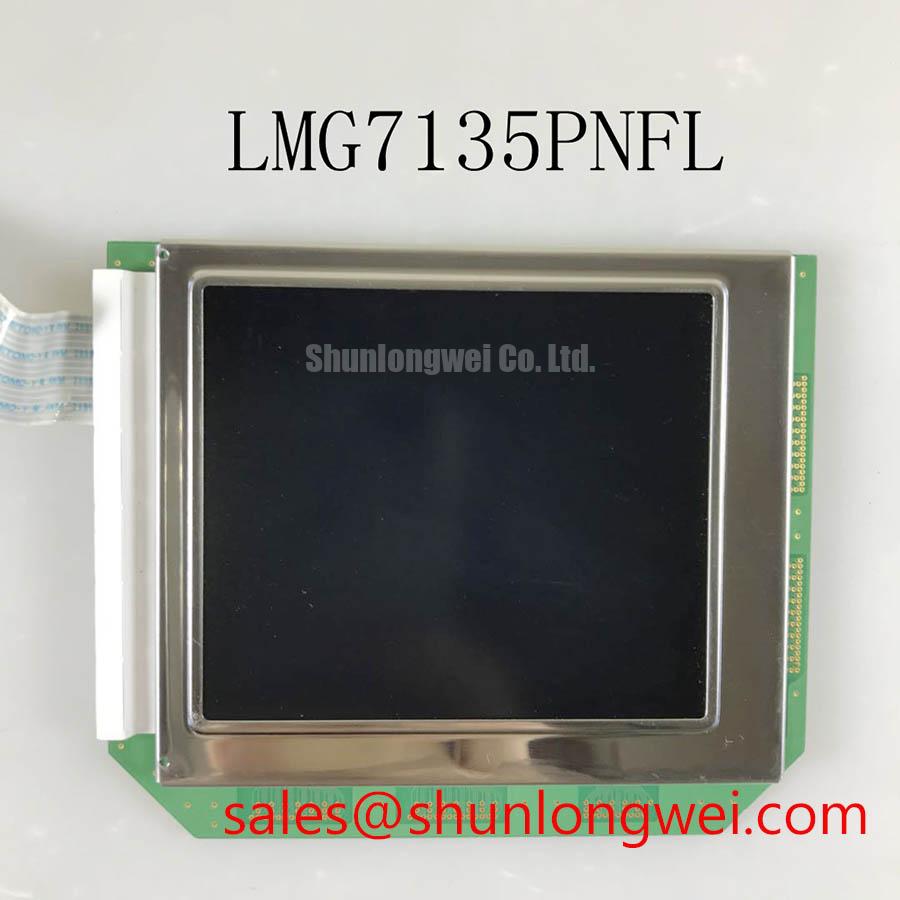
Technical Analysis: Integration and Thermal Stability
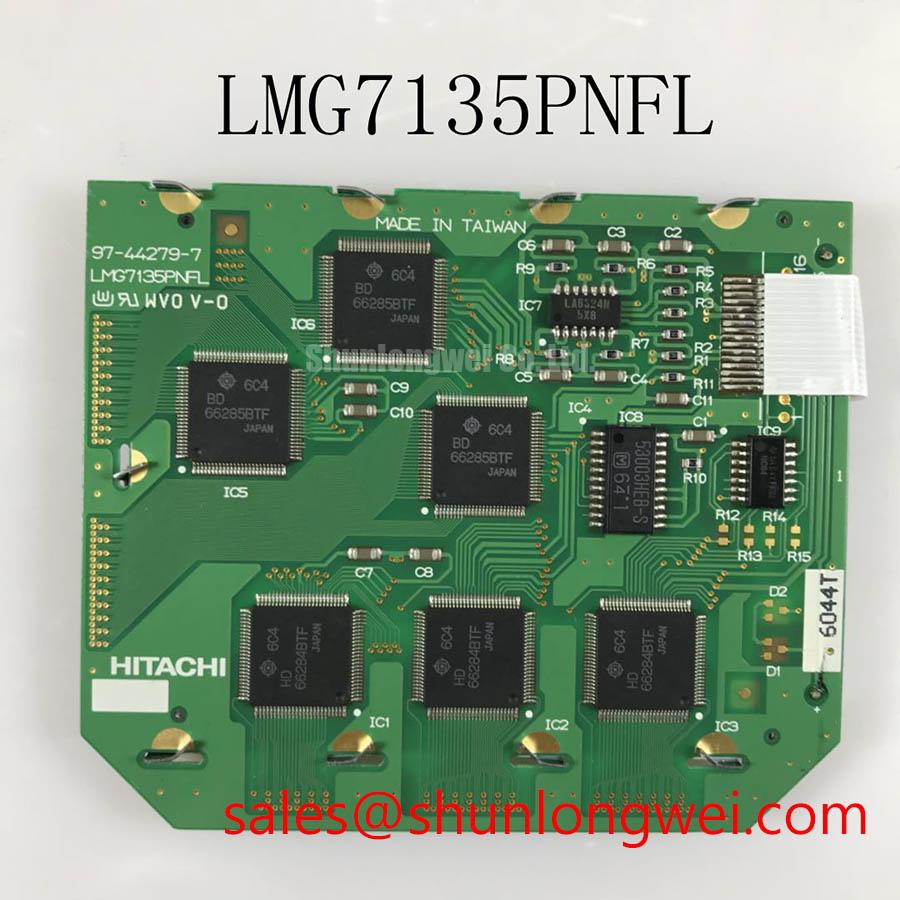
In industrial display engineering, the efficiency of the data bus is paramount. The LMG7135PNL utilizes an 8-bit parallel interface that communicates directly with the built-in T6963C controller. This integration is crucial because it abstracts the complex pixel-mapping logic away from the system’s main processor. Think of the built-in controller as a dedicated local assistant for the display; it handles the monotonous task of refreshing the screen data dozens of times per second, allowing the central processor to focus entirely on machine logic and safety protocols.
Furthermore, the STN technology employed in the LMG7135PNL offers a wider operating temperature range compared to standard TN displays. This is achieved through a higher twist angle of the liquid crystal molecules, which results in a sharper electro-optical threshold. For engineers, this translates to improved contrast stability even when the ambient environment fluctuates. When managing industrial LCD backlight lifespan, it is important to note that the CCFL (Cold Cathode Fluorescent Lamp) used in this model requires a high-voltage inverter, necessitating careful attention to electromagnetic interference (EMI) shielding in the system layout.
Optimized Application Scenarios
The LMG7135PNL is particularly suited for environments where high-resolution color is unnecessary, but reliability and long-term availability are non-negotiable. It is frequently the preferred choice for seamless legacy system upgrades in older manufacturing plants.
- CNC Control Units: Its high-contrast monochrome output remains legible under harsh factory lighting, which is essential for operator safety and precision.
- Medical Diagnostic Equipment: The predictable behavior of the STN cell ensures that critical data points are displayed without ghosting or artifacts common in lower-grade panels.
- Industrial Weighing Scales: Low power consumption in the logic circuit makes it ideal for stationary equipment requiring 24/7 uptime.
- Marine Instrumentation: Robust mechanical construction allows it to withstand the vibrations inherent in maritime engine room monitoring.
Best match conclusion: The LMG7135PNL is the optimal solution for sustaining legacy industrial HMIs requiring the specific 240×128 resolution and T6963C control architecture.
M5: Key Specifications Table
| Parameter Group | Specification Details | Value |
|---|---|---|
| Physical Dimensions | Module Size (W x H x D) | 159.4 x 101.0 x 11.0 mm |
| Effective Viewing Area | 114.0 x 64.0 mm | |
| Resolution | 240 x 128 Dots | |
| Electrical Characteristics | Supply Voltage (Logic) | 5.0V (Typical) |
| Supply Voltage (LCD Drive) | Vee -15.0V to -19.0V | |
| Interface Type | 8-bit Parallel (T6963C) | |
| Optical & Backlight | Backlight Technology | CCFL (Cold Cathode) |
| Display Mode | STN Transmissive / Blue Mode |
Engineer FAQ: Interfacing and Maintenance
Question: Can the LMG7135PNL be directly driven by a 3.3V microcontroller?
Answer: The LMG7135PNL logic supply (Vdd) is typically rated for 5V. If using a 3.3V host, level shifters are required for the 8-bit data bus and control signals (RD, WR, CE) to ensure reliable communication with the T6963C controller and to prevent latch-up conditions.
Question: How can I optimize the contrast ratio for varying viewing angles?
Answer: The display contrast is highly dependent on the negative voltage supplied to the Vo pin. Engineers should implement a software-controlled or manually adjustable potentiometer for the Vee supply to compensate for temperature drift and to align the contrast with the specific viewing angle of the installation.
Question: What is the typical failure mode for these CCFL-based modules?
Answer: The most common failure mode is backlight degradation, characterized by a pinkish hue or flickering. Ensuring high-quality component production standards for the external CCFL inverter and avoiding excessive power cycles can significantly extend the usable life of the module.
Sustainable Design Strategy
The LMG7135PNL represents a critical link in the maintenance lifecycle of high-value industrial assets. By providing a stable, well-documented platform with integrated control, it allows engineers to bypass the complexities of modernizing entire interface architectures while ensuring continued operational uptime. Its mechanical robustness and the maturity of the T6963C instruction set remain invaluable for maintaining the integrity of mission-critical displays in demanding environments.