TT61N16KOF-K 1600V 61A Thyristor Module: Technical Analysis and Industrial Applications
TT61N16KOF-K High-Reliability Thyristor/Thyristor Pressure Contact Module
M2: Technical Introduction and Core Highlights
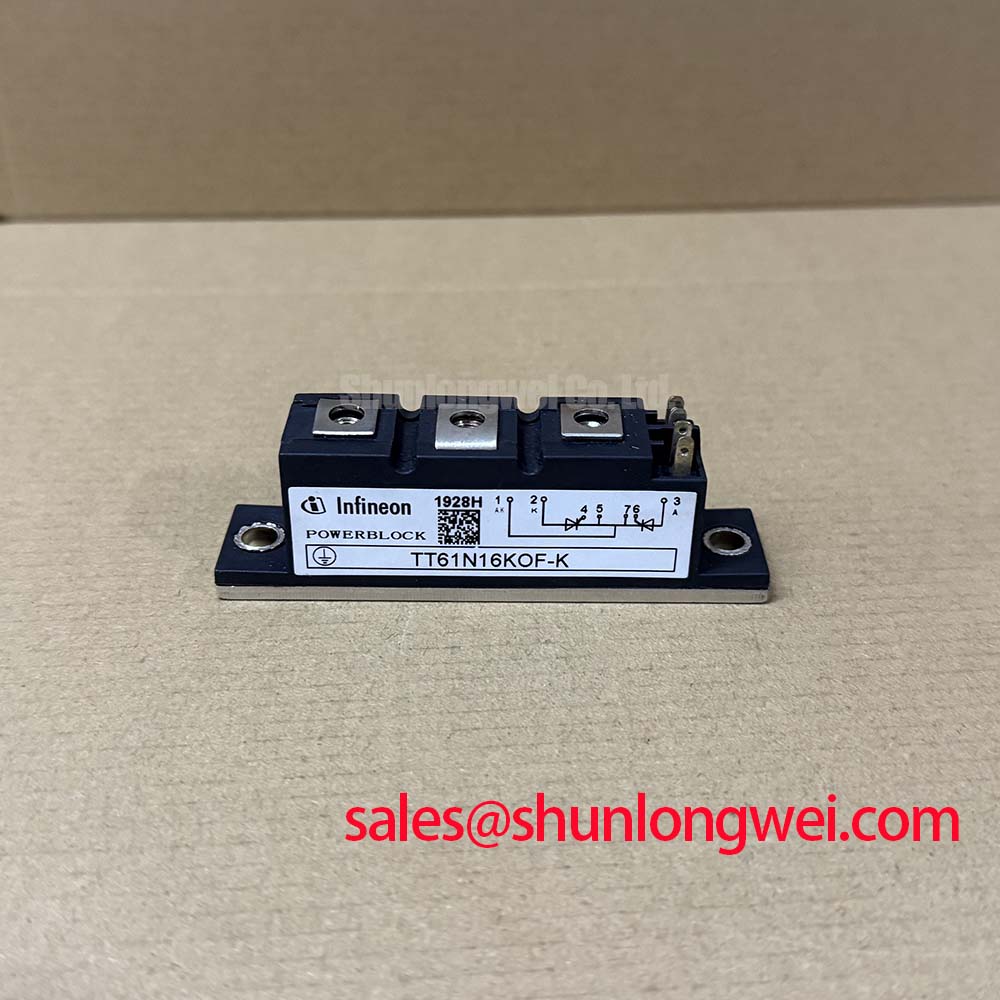
The TT61N16KOF-K is a high-performance thyristor-thyristor (SCR-SCR) module engineered with pressure contact technology, providing a robust solution for bipolar power conversion. Rated at 1600V and an average on-state current (I_TAV) of 61A at a case temperature of 85°C, this module is optimized for industrial phase control applications. By utilizing a pressure contact internal structure instead of traditional soldering, the TT61N16KOF-K offers enhanced power cycling capability and thermal fatigue resistance. This technical architecture is a primary factor in extending the operating life of the module under fluctuating load conditions.
- Core Specifications: 1600V Repetitive Peak Voltage | 61A I_TAV | 1100A Surge Current (I_TSM)
- Engineering Value: Superior power cycling endurance via pressure contact design; reduced thermal stress on internal components.
- Design Intent: Engineers often ask how pressure contact affects reliability; this design specifically mitigates the risk of solder fatigue, which is a leading cause of failure in high-load industrial environments.
Download Official TT61N16KOF-K Datasheet (PDF)

M3: Technical Analysis of Bipolar Pressure Contact Architecture
The engineering merit of the TT61N16KOF-K lies in its mechanical and electrical integration. Unlike conventional power semiconductors that rely on solder layers to connect the silicon die to the substrate, this module employs a dry pressure contact system. This interface effectively eliminates the thermal expansion coefficient (CTE) mismatch between the silicon and the baseplate that typically leads to solder joint degradation over time. For engineers focusing on root cause analysis of power component failures, the move toward pressure contact is a strategic step in fortifying system uptime.
Thermal management is equally critical in high-voltage bipolar devices. The TT61N16KOF-K features a maximum junction-to-case thermal resistance (RthJC) of 0.45 K/W. To understand the significance of this value, one can use a simple analogy: think of thermal resistance as the diameter of a drainage pipe. A smaller resistance value represents a wider pipe, allowing heat to flow away from the sensitive silicon die much faster. This rapid heat dissipation prevents local hotspots and maintains the forward voltage drop (V_T) within its nominal range, even during peak current surges.


Furthermore, the surge current capability (I_TSM) of 1100A is highly relevant when calculating fuse coordination. In the event of a load-side short circuit, the module must withstand the transient energy until the protective device opens. The integration of high-reliability materials in the 20mm PB20 package ensures that the I²t rating remains sufficient to prevent catastrophic housing failure during extreme overcurrent events.
M4: Optimized Application Scenarios
The technical characteristics of the TT61N16KOF-K make it suitable for a variety of power electronics configurations where high-voltage blocking and current handling are required.
- Soft Starters for Induction Motors: The high I_TSM rating handles the high-inrush currents typical during motor startup without exceeding the safe operating area.
- Static Switches and HVAC Control: Reliable phase control allows for precise temperature regulation in heavy industrial heating systems.
- AC Motor Drives and Inverters: Primarily used in the rectification stage or for bypass switching where 1600V blocking is required for 400V/480V grid stability.
- Industrial Power Supplies (Uninterruptible): High reliability in the power path ensures steady DC conversion in industrial power systems.
Conclusion: The 1600V blocking voltage and pressure contact reliability make this module a standard match for 480V grid-connected industrial motor control systems.
M5: Key Technical Specifications
| Parameter Group | Specific Parameter | Value |
|---|---|---|
| Absolute Maximum Ratings | Repetitive Peak Voltage (V_DRM/V_RRM) | 1600 V |
| Average On-state Current (I_TAVM) | 61 A (Tc = 85°C) | |
| Surge On-state Current (I_TSM) | 1100 A | |
| Electrical Characteristics | Gate Trigger Current (I_GT) | max. 120 mA |
| Gate Trigger Voltage (V_GT) | max. 1.4 V | |
| Peak On-state Voltage (V_T) | max. 1.73 V (at 180A) | |
| Thermal & Mechanical | Thermal Resistance (RthJC) | 0.45 K/W (per arm) |
| Max. Junction Temperature (T_vj max) | 125 °C |
M6: Engineer’s Frequently Asked Questions
1. Why is pressure contact superior for the TT61N16KOF-K in power cycling applications?
Pressure contact technology avoids the metallurgical fatigue associated with solder layers. In applications where the load cycles frequently—causing the module temperature to rise and fall—the mechanical pressure maintains consistent contact without the cracking or “voiding” that can occur in soldered modules, thus increasing long-term thermal reliability.
2. How should the mounting torque be managed for this PB20 package?
Consistent mounting torque is essential to maintain the rated thermal resistance. For the TT61N16KOF-K, the recommended mounting torque to the heatsink is typically 3 Nm, and 2 Nm for the electrical terminals. Incorrect torque can lead to insufficient thermal contact or mechanical stress on the terminals.
3. Can the TT61N16KOF-K be used in 690V AC systems?
Generally, 1600V blocking voltage provides an adequate safety margin for 400V and 500V AC lines. For 690V AC systems, where peak voltages can exceed 1000V and transients are common, a module with a higher blocking voltage (e.g., 1800V or 2200V) is often preferred to ensure safe operating headroom.
M7: Technical Summary
The TT61N16KOF-K represents a specialized balance between power density and industrial durability. By integrating pressure contact technology into a standard 20mm module footprint, it addresses the fundamental challenges of thermal fatigue and power cycling in AC control. For engineers designing power stages for motor soft starters or static switches, the datasheet parameters of this dual thyristor block provide the high-voltage blocking and surge current resilience necessary for stable, long-term operation in harsh industrial environments.