DMF-50174NFL-SFW-11: Technical Overview and Application Guide for the Optrex 5.7-inch Monochrome STN LCD
DMF-50174NFL-SFW-11 Optrex 5.7-inch 320×240 Monochrome STN LCD
M2: Technical Overview and Unique Value Proposition
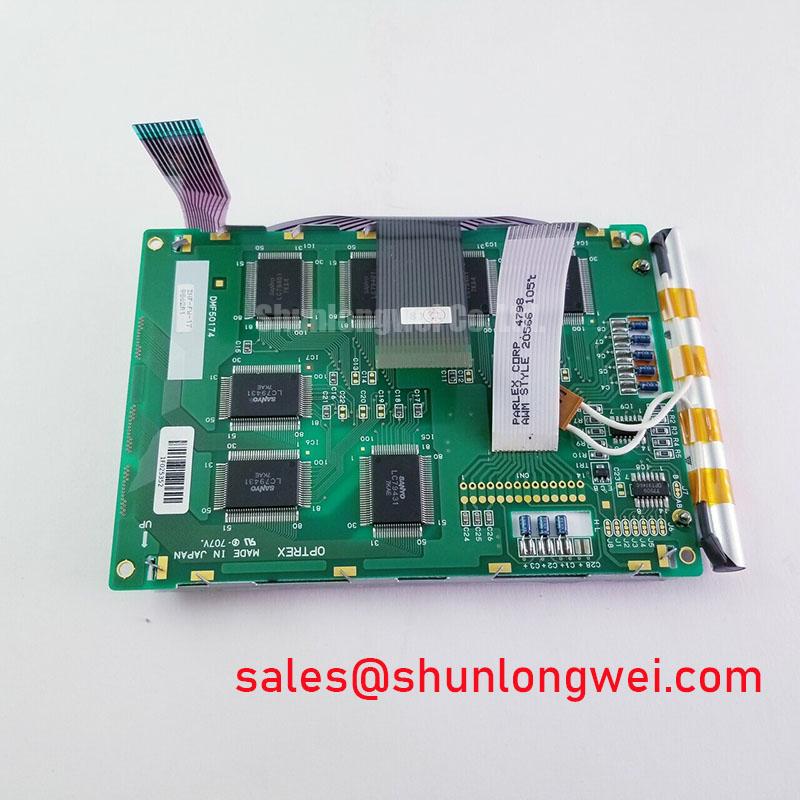
The DMF-50174NFL-SFW-11 is a high-reliability monochrome graphic LCD module utilizing Super-Twisted Nematic (STN) technology to deliver a 320 x 240 pixel resolution. Engineered for durability in stationary industrial environments, this 5.7-inch display features a transmissive negative mode, typically rendering light-colored characters against a deep blue background. This configuration provides superior readability in indoor control rooms where high-intensity backlighting is required to overcome ambient lighting without the washout common in lower-tier consumer panels.
- Core Specifications: 320 x 240 Pixels (QVGA) | 5.7-inch Diagonal | STN Transmissive Technology
- Key Advantage: Exceptional contrast for legacy HMI systems, ensuring long-term legibility.
- Key Advantage: Robust parallel interface design, facilitating stable data transmission in electrically noisy environments.
For engineers asking how to maintain visual consistency in legacy upgrades, the DMF-50174NFL-SFW-11 offers a drop-in replacement path for older Optrex or Kyocera modules, maintaining precise timing characteristics and dot pitch parameters.
Download Official Datasheet (PDF)
M3: Technical Analysis of STN Performance
The technical foundation of the DMF-50174NFL-SFW-11 rests on its STN driving method. By increasing the twist angle of the liquid crystal molecules, the display achieves a steeper electro-optical response curve compared to standard TN displays. This translates to higher multiplexing capabilities, allowing the 320×240 grid to maintain clear pixel definition without significant “ghosting.” In the context of LCD core technology, the transmissive nature of this module means it relies entirely on the integrated backlight unit, making it ideal for low-light industrial cabinets where ambient light reflection is insufficient for reflective displays.
To understand the engineering importance of the response time in this module, one can use the analogy of a water pipe’s valve. If the valve turns slowly, the flow change is sluggish; similarly, the liquid crystals in an STN panel have a specific “viscosity.” While slower than modern LTPS-TFT panels, the DMF-50174NFL-SFW-11 is optimized for static or slow-changing data typical of industrial sensors and system readouts. This slower transition actually helps dampen high-frequency flicker, which is a critical consideration in flicker-free industrial LCD design.
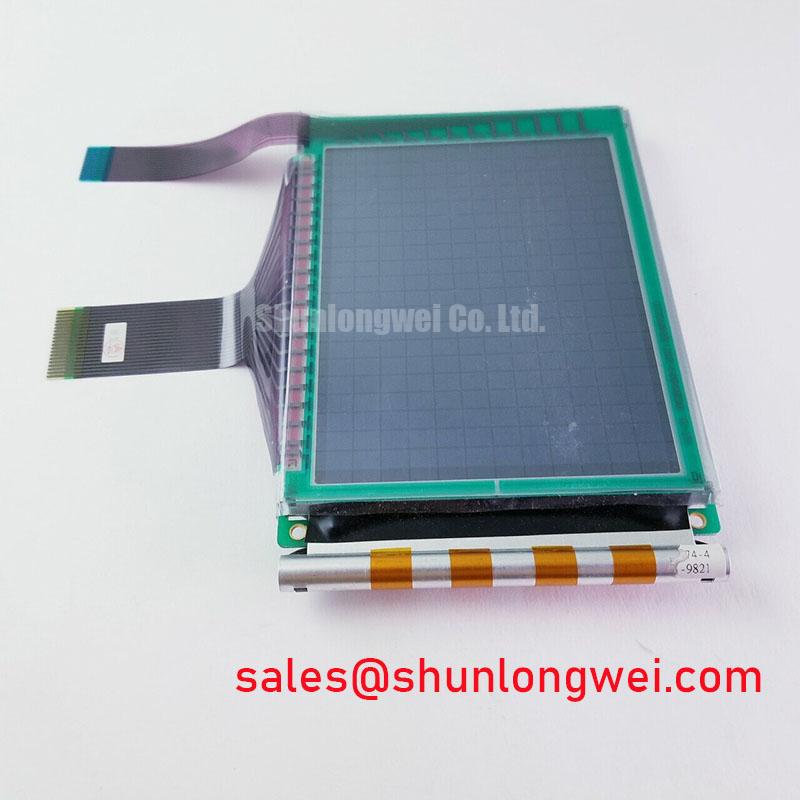
Furthermore, the dot pitch and aperture ratio are meticulously balanced to provide a clear, non-pixelated appearance at standard operator viewing distances. With a 1/240 duty cycle, the driving circuitry must manage precise voltage levels to maintain contrast uniformity across the 5.7-inch active area. Engineers must pay close attention to the VEE (LCD driving voltage) temperature compensation, as the fluid properties of the STN layer change with thermal fluctuations, a common challenge in thermal management for industrial displays.
M4: Optimized Application Scenarios
The DMF-50174NFL-SFW-11 is frequently integrated into several high-demand sectors due to its proven track record in legacy support and reliability:
- CNC Machinery Controllers: Its high contrast and blue-mode aesthetics are perfect for displaying complex G-code strings and toolpaths in machine shops.
- Medical Patient Monitors: The monochrome clarity ensures that vital signs are readable from various angles without the distractions of excessive color.
- Laboratory Instrumentation: Provides a stable interface for spectrometers and data loggers where numerical accuracy and legibility are paramount.
- Industrial Power Management: Used in UPS systems and grid monitoring HMIs to display load curves and fault status alerts.
Best Match Conclusion: This module is the optimal choice for legacy industrial systems requiring a high-contrast, monochrome QVGA interface with a verified parallel data bus.
M5: Key Specifications Parameter Table
| Category | Parameter | Value |
|---|---|---|
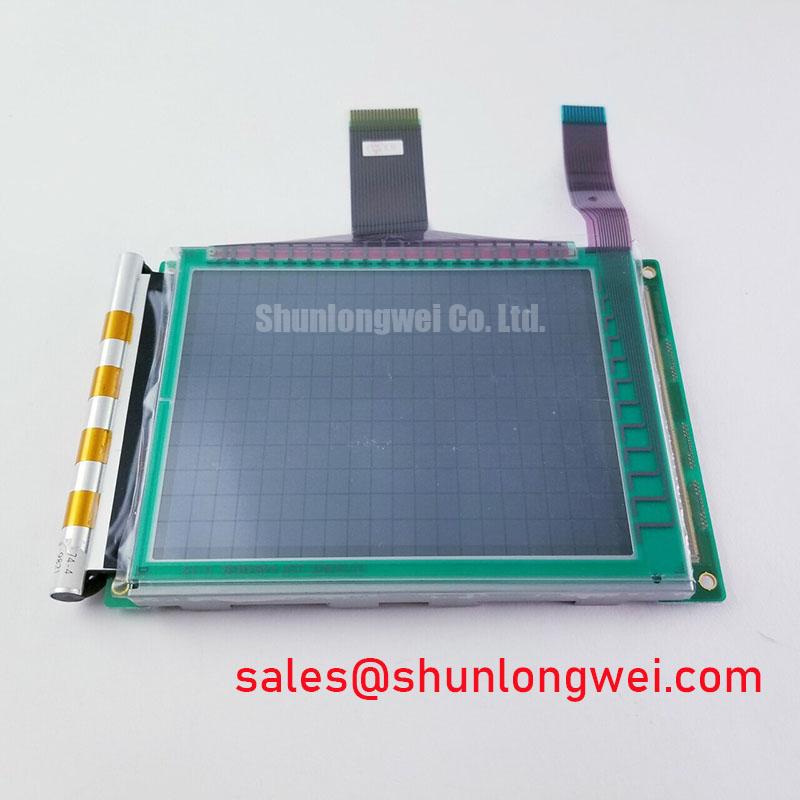
| Mechanical | Display Format | 320 x 240 Pixels |
| Diagonal Size | 5.7 inches | |
| Module Dimensions | 167.0 x 109.0 mm | |
| Electrical | Supply Voltage (Vdd) | 5.0V (Typical) |
| Interface Type | Parallel Data Bus | |
| Backlight Type | CFL / LED Support | |
| Optical | LCD Mode | STN / Blue Mode / Transmissive |
| Viewing Direction | 6:00 o’clock |
M6: Engineer’s FAQ
Q1: What is the recommended interface for driving the DMF-50174NFL-SFW-11?
A1: This module uses a standard parallel 4-bit or 8-bit data interface (depending on controller configuration). It is compatible with many legacy display controllers that provide the necessary clock (CP), latch (LOAD), and frame (FRM) signals.
Q2: How does temperature affect the contrast of this STN LCD?
A2: STN displays are sensitive to temperature changes which alter the threshold voltage. To maintain optimal contrast, engineers should implement an external temperature compensation circuit or use a controller with an integrated VOP adjustment feature to scale the LCD driving voltage accordingly.
Q3: Can the backlight be replaced or upgraded?
A3: The SFW-11 version often utilizes a CFL backlight. While the module is a sealed unit, high-reliability replacements often involve swapping the CFL lamp or utilizing LED conversion kits if the original inverter is no longer supported. Proactive management of backlight lifespan is recommended for continuous-operation systems.
Q4: Is the DMF-50174NFL-SFW-11 compatible with modern ARM-based microcontrollers?
A4: Yes, provided the microcontroller has enough GPIOs to emulate the parallel timing or features a dedicated LCD controller peripheral capable of driving monochrome passive-matrix displays.
M7: Final Considerations for System Integration
The DMF-50174NFL-SFW-11 remains a cornerstone for industrial legacy maintenance and specialized HMI design. Its combination of transmissive STN technology and a durable physical form factor ensures that critical data remains visible and reliable. By leveraging its established parallel interface and high-contrast negative mode, engineers can successfully extend the service life of complex machinery and medical equipment, fulfilling design goals focused on longevity and operational clarity.