Hitachi SP24V001 Industrial STN-LCD: Technical Specifications, Architecture, and Application Guide
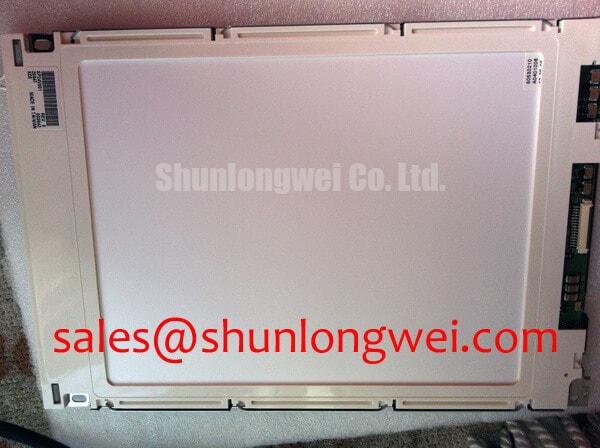
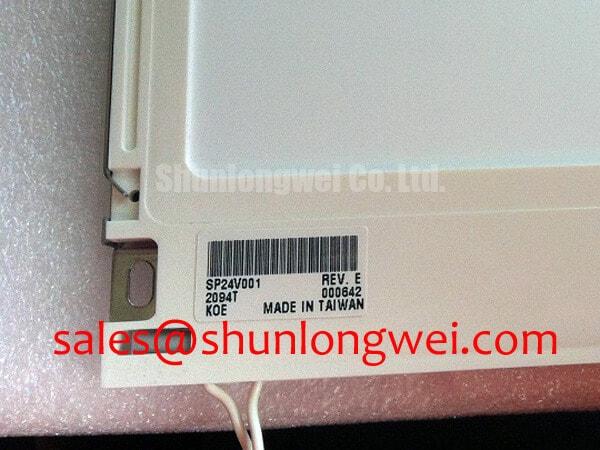
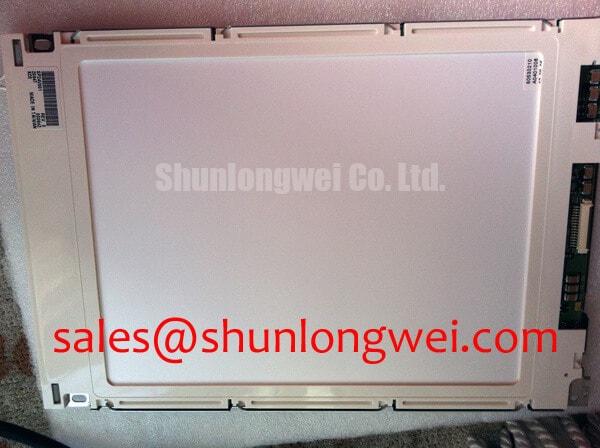
Hitachi SP24V001 Industrial STN-LCD Display Module
Introduction and Core Technical Highlights
The Hitachi SP24V001 is a specialized 9.4-inch monochrome STN-LCD module that serves as a cornerstone for maintaining and repairing legacy industrial control systems. Engineered for high-reliability environments, this module integrates a built-in controller, making it a robust solution for equipment that requires consistent alphanumeric and graphical visualization without the overhead of modern high-speed graphics processors. Its architectural focus on long-term stability ensures it meets the rigorous demands of CNC machinery and medical diagnostics where display failure is not an option.
- Core Specifications: 240 x 128 Pixels | 9.4-inch Diagonal | Built-in T6963C Controller
- Key Advantage 1: Simplified system integration via an 8-bit parallel interface, reducing the need for external LCD core technology complexity.
- Key Advantage 2: Optimized power consumption for logic and CCFL drive, facilitating easier thermal management in enclosed control cabinets.
Engineers often ask how to manage transitions when these legacy components face obsolescence. For a strategic approach, refer to our guide on navigating LCD and driver IC end-of-life.
Request Technical Documentation for SP24V001
Technical Analysis of the SP24V001 Architecture
The SP24V001 utilizes Super-Twisted Nematic (STN) technology, which offers a significantly higher contrast ratio and wider viewing angles compared to standard TN displays. At its core, the 240 x 128 resolution provides a clear field for complex industrial menus and data plotting. The integration of the T6963C controller is a critical feature; it manages the pixel mapping and refresh cycles autonomously. You can compare the integrated controller to a dedicated traffic warden; it manages the flow of visual data independently, freeing the main system processor to focus on real-time machine logic and sensor feedback.
Thermal management is another critical aspect defined in the datasheet. The module is designed to operate within a specific temperature range, but the longevity of the display is often tied to the backlight. For those utilizing the CCFL version of the SP24V001, understanding the lifespan of the illumination source is vital. We recommend reviewing our analysis on proactive management of industrial LCD backlight lifespan to maximize equipment uptime.
From an electrical perspective, the module requires a precise balance between the logic voltage (Vdd) and the LCD driving voltage (Vee). This differential is what determines the visual contrast and prevents ghosting. In industrial environments with high electromagnetic interference (EMI), the SP24V001’s design provides a level of inherent noise immunity, provided that the 8-bit bus is correctly shielded and decoupled.
Optimized Application Scenarios
The SP24V001 is most frequently identified in the following industrial contexts:
- CNC Machinery Control Panels: Used extensively in Mazak and Fanuc control units for real-time G-code visualization and coordinate tracking.
- Medical Diagnostic Equipment: Found in legacy ultrasound and patient monitoring systems where monochrome clarity is essential for waveform interpretation.
- Textile Industrial Logic: Utilized in large-scale weaving and knitting machines for pattern management and fault reporting.
- Injection Molding Systems: Provides the primary HMI for hydraulic pressure and temperature setting interfaces in plastic manufacturing.
Best Match: Ideal for 5V logic systems requiring 240×128 resolution and integrated TCON management for legacy industrial hardware maintenance.
Key Specifications and Parameters
| Category | Parameter | Value |
|---|---|---|
| Physical Dimensions | Screen Size | 9.4 Inches |
| Resolution | 240 x 128 Pixels | |
| Module Outline | Approx. 241.0 x 125.3 mm | |
| Electrical Data | Logic Voltage (Vdd) | 5.0V (Typical) |
| Interface Type | 8-bit Parallel | |
| Controller IC | T6963C (Integrated) | |
| Optical Performance | Display Mode | Monochrome STN Blue or Yellow |
| Backlight | CCFL (Cold Cathode Fluorescent Lamp) |
Engineer’s FAQ for SP24V001
Q1: What are the primary considerations for replacing a failing SP24V001 in a CNC machine?
A: The most critical factors are the mechanical dimensions and the logic interface. Ensure the replacement matches the 240×128 resolution and the specific pinout for the 8-bit parallel bus. Also, verify if your system uses an external inverter for the CCFL backlight, as this is a common point of failure alongside the LCD itself.
Q2: Can I upgrade the CCFL backlight to LED for better longevity?
A: While third-party LED conversion kits exist, they require bypassing the original high-voltage inverter. From a pure engineering standpoint, the SP24V001 is designed for CCFL; any modification must account for the different current draw and thermal profile of the new LED strip to avoid EMI issues with the T6963C controller.
Q3: How do I adjust the contrast if the screen appears washed out?
A: Contrast is controlled by the voltage differential between Vdd and Vo (contrast pin). In many industrial applications, a potentiometer is provided on the carrier board to fine-tune this voltage. As the display ages, the required Vee voltage may shift, necessitating a manual recalibration to maintain legibility.
The Hitachi SP24V001 remains a vital component for the sustainment of heavy industrial infrastructure. By adhering to the precise electrical and thermal specifications outlined in the manufacturer data, engineers can ensure continued operational integrity for legacy control systems. Its integrated control logic and proven STN performance make it a reliable choice for technical visualization in demanding fields.