Sharp LQ190E1LX77: High-Performance 19-Inch SXGA Industrial LCD with ASV Technology
Sharp LQ190E1LX77 19-inch SXGA Industrial LCD Panel
M2: Professional Visualization through ASV Technology
The Sharp LQ190E1LX77 is a premium 19.0-inch amorphous silicon TFT-LCD module engineered for high-performance industrial display systems. By integrating Sharp’s proprietary Advanced Super View (ASV) technology, this panel overcomes the traditional limitations of TN-based displays, offering wide viewing angles and high color fidelity. It is a robust solution for environments requiring precise data representation and long-term mechanical stability.
- Core Specifications: 1280 x 1024 SXGA | 300 cd/m² Brightness | 16.7M Colors
- Key Advantage 1: ASV technology eliminates grayscale inversion, ensuring image consistency from any perspective.
- Key Advantage 2: Dual-channel LVDS interface provides enhanced signal integrity in electrically noisy industrial environments.
A common inquiry for integration engineers is how the LQ190E1LX77 handles high-speed data. The dual-channel LVDS architecture effectively halves the clock frequency compared to single-channel variants, significantly reducing Electromagnetic Interference (EMI) and power consumption at the interface level.
Download Official Technical Interface Guide (PDF)
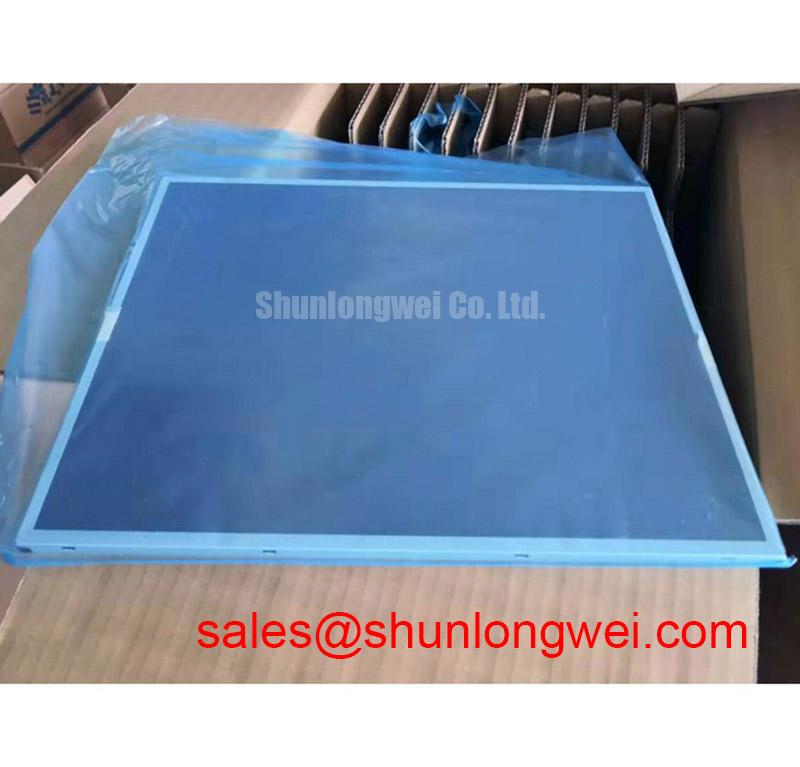
Front perspective of the Sharp LQ190E1LX77 showing the anti-glare protective surface coating.
M3: Technical Analysis of the LQ190E1LX77 UVP
The defining feature of the LQ190E1LX77 is its Advanced Super View (ASV) liquid crystal mode. Unlike standard Twisted Nematic (TN) panels, which suffer from drastic color shifts when viewed from below, ASV maintains a uniform chromatic profile. This technical superiority allows for a viewing angle of 170° in both horizontal and vertical axes. For an engineer, this means the panel can be mounted in portrait or landscape orientations without compromising the operator’s ability to read critical telemetry data.
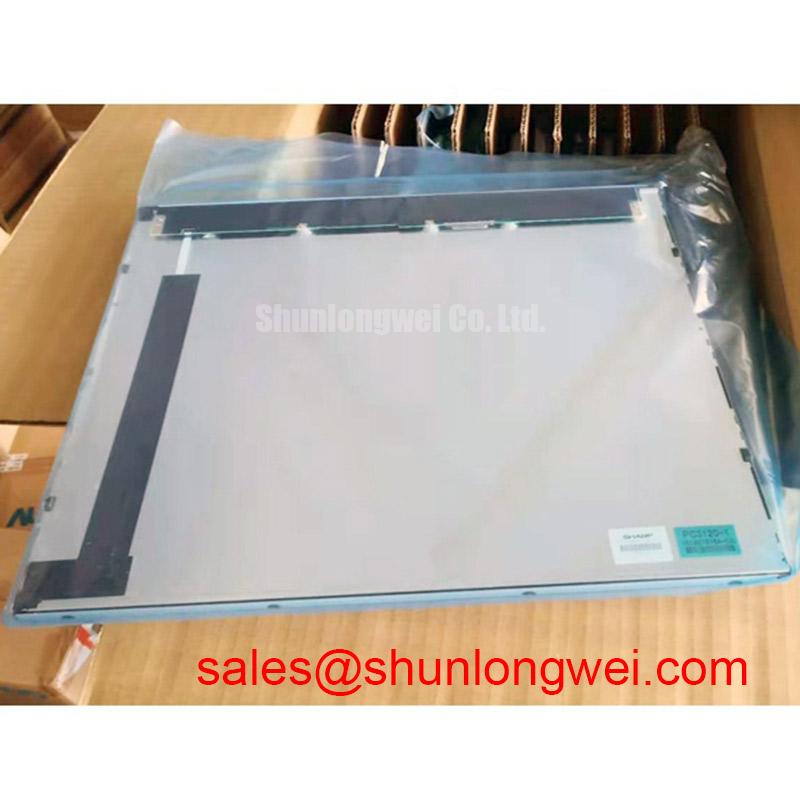
The 1280 x 1024 resolution provides a 5:4 aspect ratio, which is the standard for many legacy industrial software interfaces. The pixel pitch of 0.294 mm ensures that text remains sharp and legible even at a distance. Furthermore, the display utilizes an 8-bit color depth to render 16.7 million colors. You can visualize the color depth like the number of steps on a ladder; with 16.7 million steps, the transitions between shades are so smooth that the human eye perceives a seamless gradient rather than distinct bands of color. This is vital for medical imaging and precision CAD applications where subtle visual details are necessary for diagnostics.
M4: Optimized Application Scenarios
- Industrial HMI Consoles: The 300 cd/m² luminance and high contrast ratio are perfect for factory floor environments where ambient lighting can be unpredictable.
- Medical Diagnostic Displays: Wide viewing angles permit multiple practitioners to view the LQ190E1LX77 simultaneously without image distortion.
- Transportation Control Centers: The SXGA resolution allows for complex mapping and monitoring grids to be displayed with high motion clarity.
- Security Monitoring Systems: 24/7 reliability standards and a robust chassis make this panel suitable for continuous surveillance operations.
Best Match Conclusion: Ideal for high-reliability workstation upgrades requiring 5:4 aspect ratio consistency and superior off-axis visibility in professional industrial environments.
M5: Key Specifications and Ratings
| Parameter Category | Specification Description | Value |
|---|---|---|
| Display Physicals | Active Area Diagonal | 19.0 inches (48 cm) |
| Native Resolution | 1280 x 1024 (SXGA) | |
| Pixel Configuration | RGB Vertical Stripe | |
| Surface Treatment | Anti-glare (Hard coating 3H) | |
| Optical Performance | Luminance (White) | 300 cd/m² (Typical) |
| Viewing Angle (CR>10) | 170° Horizontal / 170° Vertical | |
| Contrast Ratio | 800:1 (Typical) | |
| Electrical Interface | Signal Interface | LVDS (2-ch, 8-bit) |
| Power Supply Voltage | 5.0V (Typical) |
M6: Engineer FAQ
Q1: What are the primary considerations for driving the 2-channel LVDS interface on the LQ190E1LX77?
A: Engineers must ensure that the timing controller (TCON) or scalar board is configured for “Dual” mode rather than “Single” mode. This splits the even and odd pixel data across two separate LVDS lanes, ensuring the bandwidth requirements for SXGA at 60Hz are met without signal degradation.
Q2: How does the ASV technology affect the thermal management of the module?
A: ASV itself is an alignment technology and does not significantly increase thermal load. However, maintaining consistent luminance requires managing the backlight lifespan. High operating temperatures can degrade CCFL or LED components, so adequate ventilation should be provided behind the display chassis to maintain internal temperatures within the specified operating range.
Q3: Is the front surface resistant to harsh industrial cleaning agents?
A: The panel features a 3H hard coating with anti-glare properties. While it is durable, cleaning should be limited to soft cloths with mild, non-abrasive detergents. Solvent-based cleaners may damage the polarizer or anti-glare layer over time.
M7: Final Engineering Statement
The Sharp LQ190E1LX77 remains a benchmark for industrial reliability, particularly for systems where viewing angle stability and chromatic accuracy are non-negotiable. By leveraging ASV technology and a robust LVDS interface, this panel provides engineers with a stable platform for mission-critical visualization. Its mechanical compatibility with legacy SXGA frameworks makes it a primary choice for long-term industrial life-cycle management.