Engineering Analysis of the MCC255-14io1 1400V 250A IXYS Thyristor Module
MCC255-14io1 IXYS Thyristor Module 1400V 250A Engineering Analysis
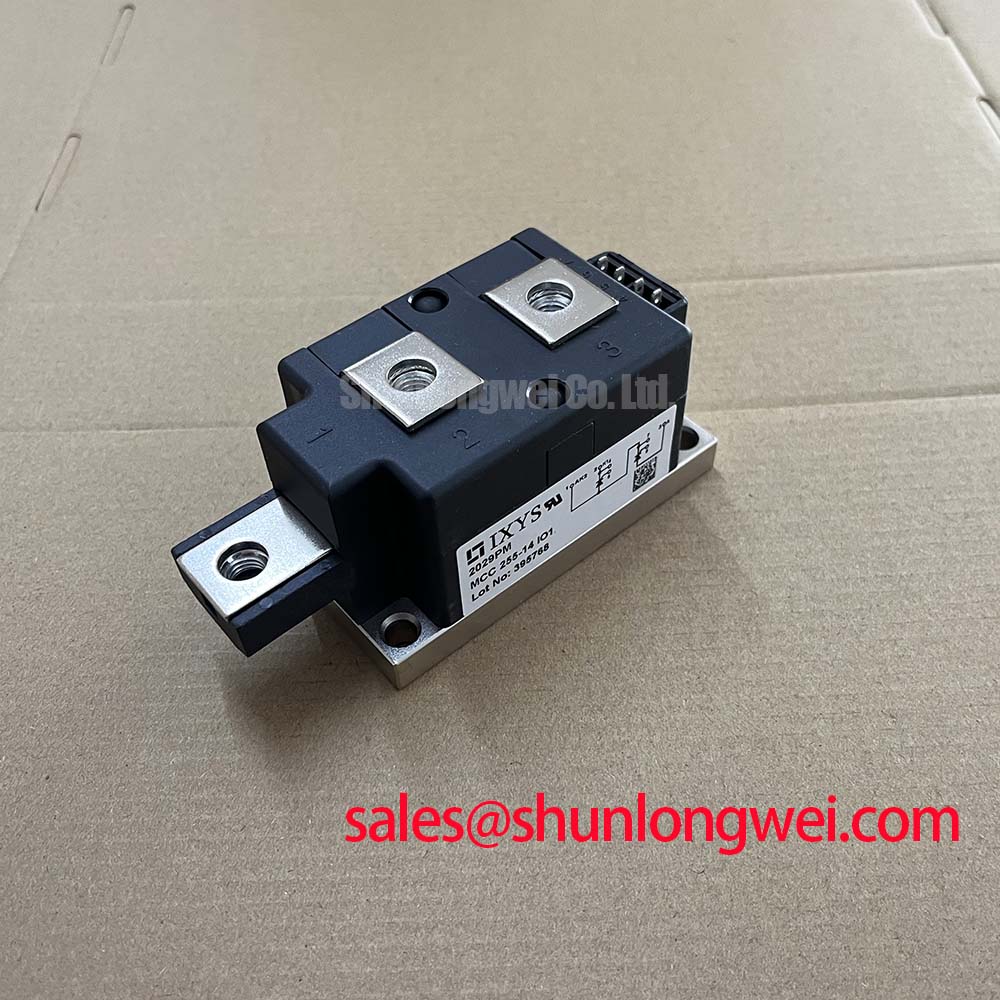
The MCC255-14io1 is a high-power planar passivated thyristor (SCR) module configured as a phase leg, engineered for high-current industrial power conversion. Utilizing a Direct Copper Bonded (DCB) ceramic baseplate, this module prioritizes thermal stability and electrical isolation in demanding environments. For engineers seeking robust switching performance, the MCC255-14io1 offers a refined balance of high surge current capability and low on-state voltage drop.
Core Specifications: 1400V | 250A ($I_{TAV}$ @ $T_C = 85^circ C$) | 450A ($I_{TRMS}$)
- High Surge Resilience: Rated for a non-repetitive surge current ($I_{TSM}$) of up to 9200A (10ms), providing a critical safety margin during fault conditions.
- Optimized Isolation: Features an isolated baseplate with a 3600V~ RMS isolation rating, simplifying multi-module mounting on a single heatsink.
- Intent Answer: To calculate the required heatsink for the MCC255-14io1, designers must consider the junction-to-case thermal resistance ($R_{thJC}$) of 0.139 K/W and ensure the total power dissipation does not exceed the junction temperature limit of $125^circ C$.
Download Official MCC255-14io1 Datasheet (PDF)
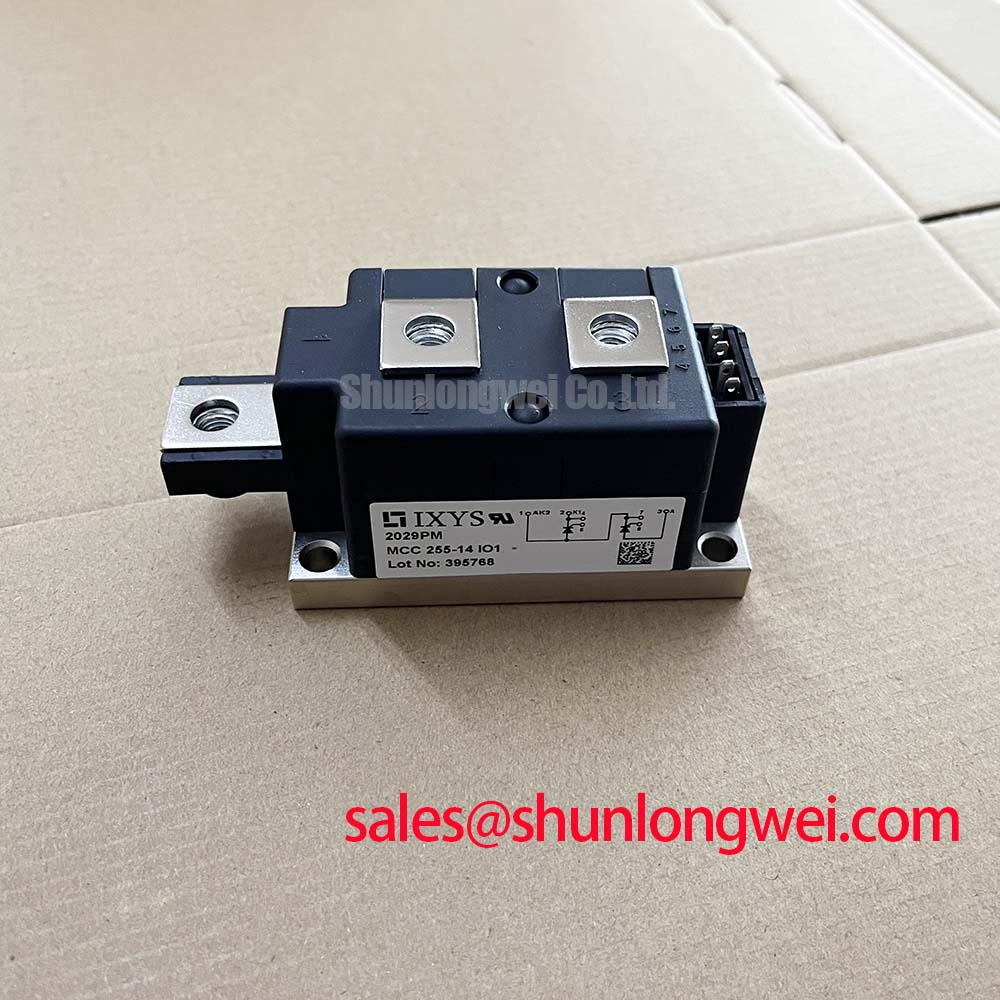
Technical Analysis: Precision Thermal Management and Surge Ruggedness
The MCC255-14io1 relies on its Direct Copper Bonded (DCB) ceramic isolation to manage the significant thermal output generated during 250A continuous operation. One can visualize the DCB substrate as a thermal “superhighway”; its high conductivity allows heat to flow rapidly from the silicon dies to the heatsink, minimizing the internal temperature gradient. This is fundamental to preventing localized hotspots that lead to premature semiconductor wear-out or catastrophic failure.
Furthermore, the 1400V repetitive peak reverse voltage ($V_{RRM}$) rating makes the MCC255-14io1 an appropriate choice for line-side rectification from 400V to 480V AC mains. The planar passivation technology used in the chip design ensures stable leakage current over the component’s entire lifecycle. In applications involving inductive loads, the module’s $I^2t$ rating of $423,000 A^2s$ is the primary metric for specifying the protective high-speed fuses required to safeguard the semiconductor during a short-circuit event.
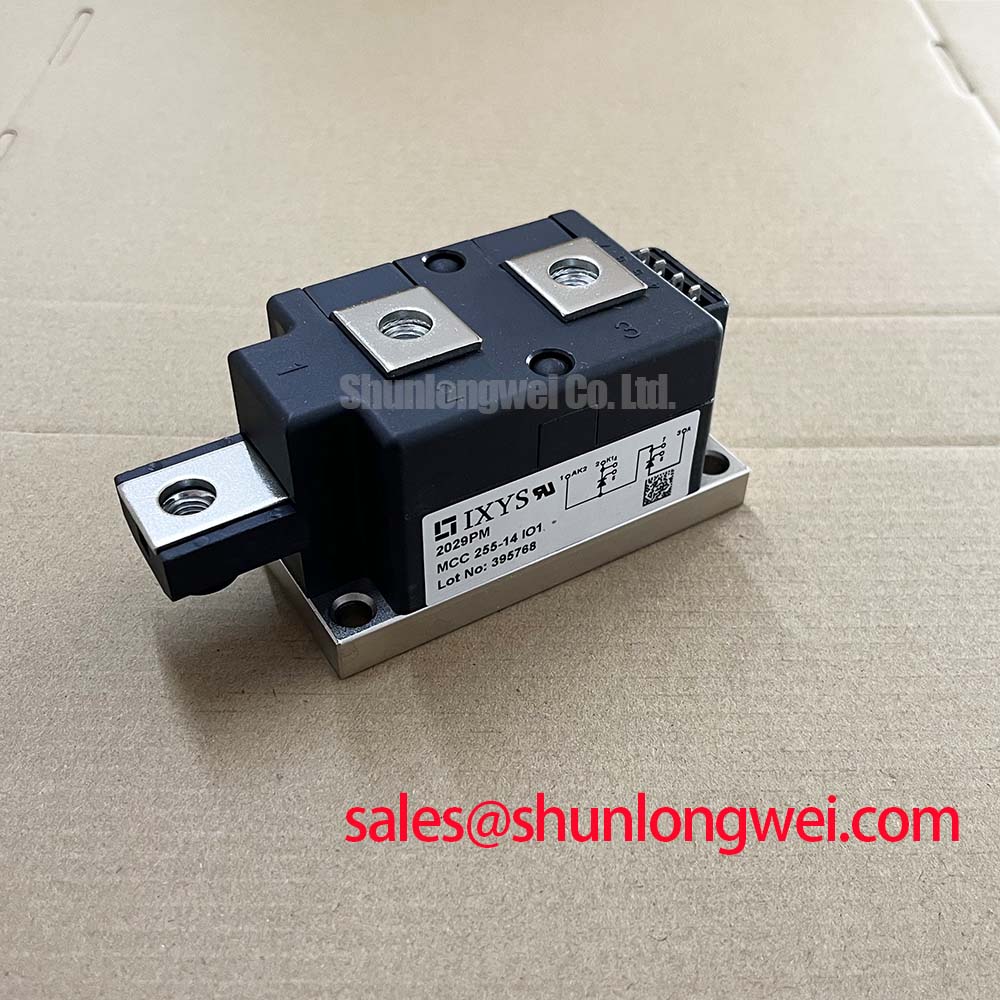
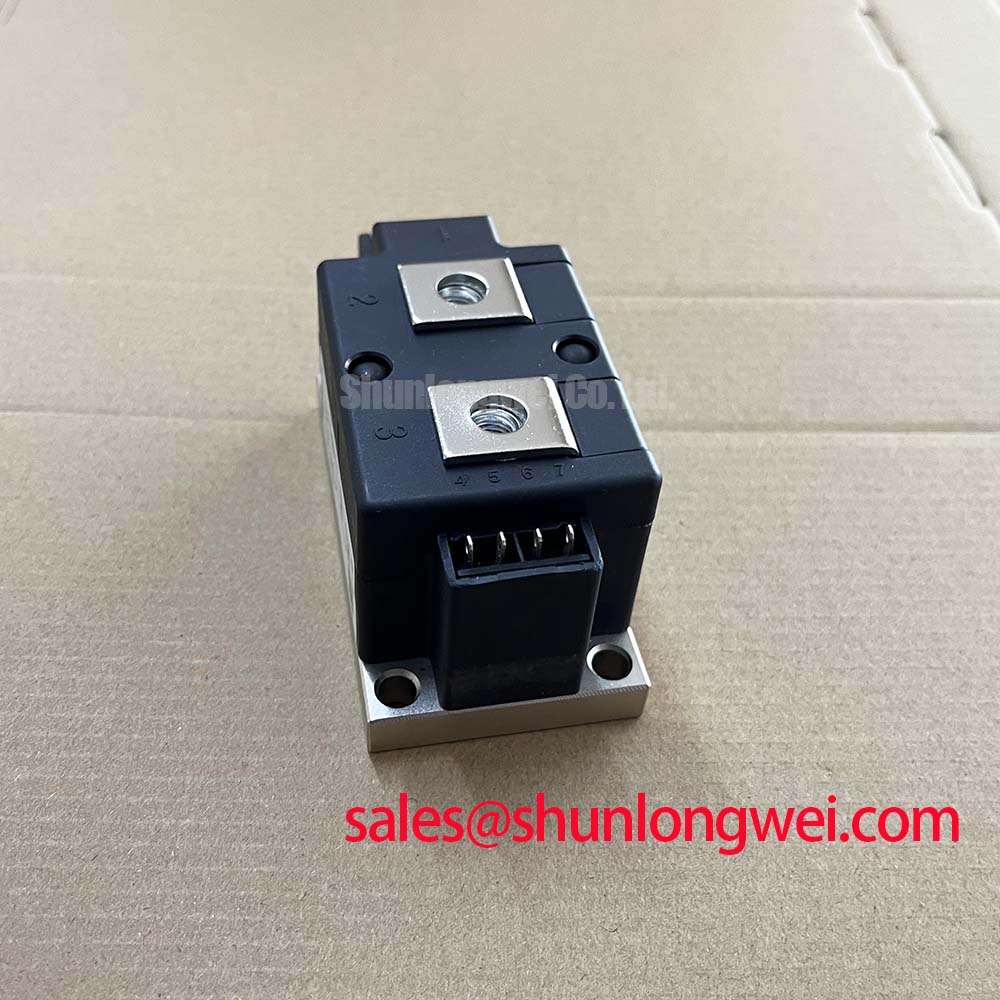
Optimized Industrial Application Scenarios
- Soft Starters for AC Motors: The MCC255-14io1 provides the necessary current handling to manage the high inrush currents typical of motor start-up cycles.
- Line Rectifiers for 50/60Hz: Its high voltage overhead and low $V_T$ (on-state voltage) reduce energy losses in large-scale industrial power supplies.
- Battery Chargers: High reliability and 3600V isolation allow for safe, high-current DC charging architectures.
- Heat and Temperature Control: Excellent $I^2t$ capability makes it suitable for resistive heating control where cycle durability is paramount.
Technical characteristics indicate the MCC255-14io1 is highly suitable for industrial power stages requiring efficient heat dissipation and significant fault-current endurance.
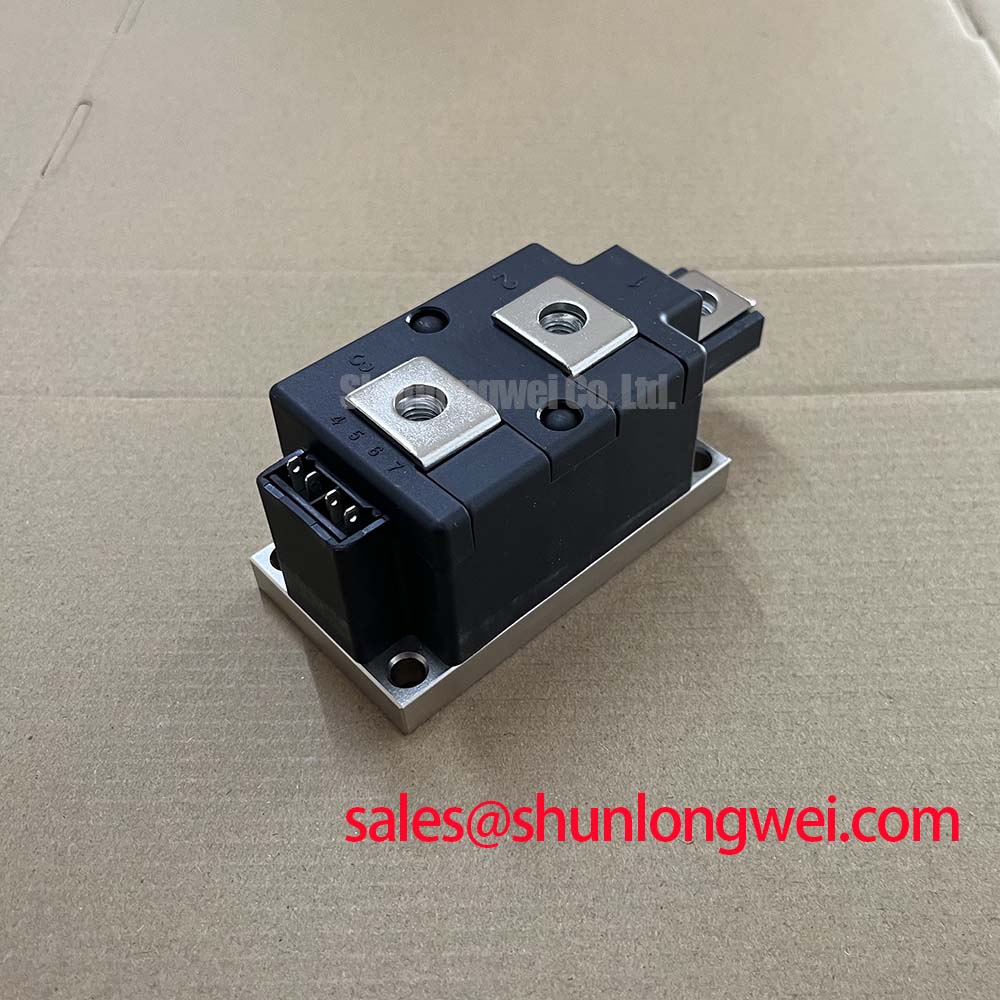
MCC255-14io1 Key Technical Specifications
| Category | Parameter | Value (Typical/Max) |
|---|---|---|
| Absolute Maximum Ratings | Peak Reverse/Forward Voltage ($V_{RRM}/V_{DRM}$) | 1400 V |
| Average On-state Current ($I_{TAV}$) | 250 A (@ $T_C = 85^circ C$) | |
| Max. Surge Current ($I_{TSM}$) | 9200 A (10ms, sine) | |
| Electrical Characteristics | On-state Voltage drop ($V_T$) | 1.08 V (@ $I_T = 300 A$) |
| Critical dv/dt | 1000 V/µs | |
| Thermal & Package | Thermal Resistance ($R_{thJC}$) | 0.139 K/W |
| Isolation Voltage ($V_{ISOL}$) | 3600 V~ RMS |

Engineer FAQ
Q1: What are the primary thermal considerations for the MCC255-14io1 in a high-current battery charger?
A: The junction-to-case thermal resistance is rated at 0.139 K/W. Designers should ensure high-quality insulation and thermal interface material are used during mounting to prevent the junction temperature ($T_vj$) from exceeding $125^circ C$ during continuous 250A operation.
Q2: Can this module be used for 480V AC line applications?
A: Yes. The 1400V $V_{RRM}$ rating provides a significant safety factor for 480V RMS AC mains, helping protect against line voltage transients and inductive spikes.
Q3: How does the DCB ceramic baseplate benefit long-term reliability?
A: DCB technology provides excellent thermal cycling capability and mechanical strength. It significantly reduces the risk of thermal fatigue at the die-attach interface compared to traditional metal-plate isolation methods.
By integrating planar passivated chips within a high-isolation DCB package, the MCC255-14io1 stands as a high-integrity solution for critical industrial power infrastructure. Its design ensures that engineers can achieve high power density while maintaining the rigorous safety margins required for line-frequency rectification and motor control.