vinco P546A2005 1200V 15A flowPIM 0 Power Module: Technical Features and Applications
vinco P546A2005 1200V 15A flowPIM 0 Power Module
Introduction and Core Technical Highlights
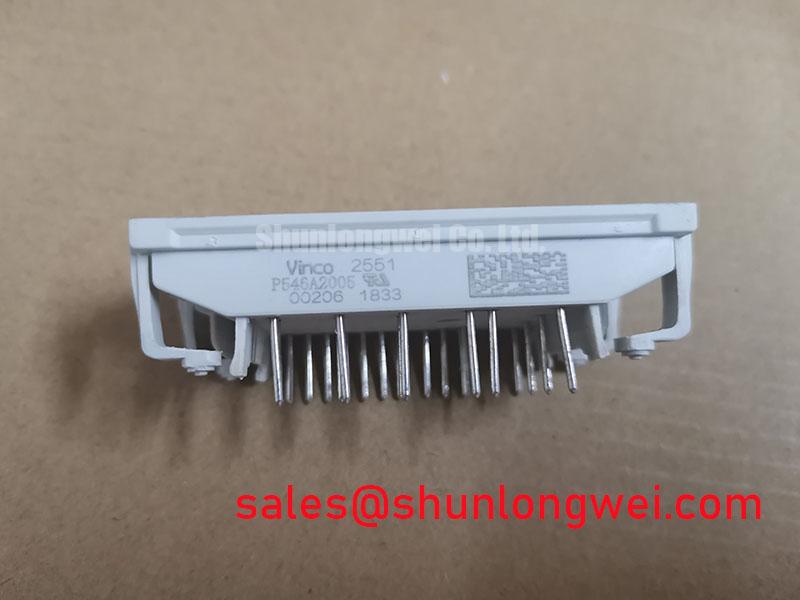
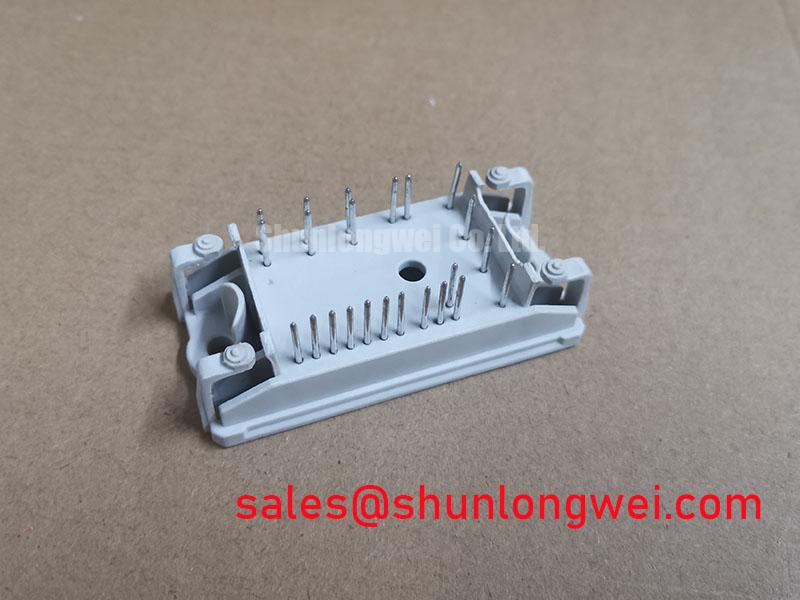
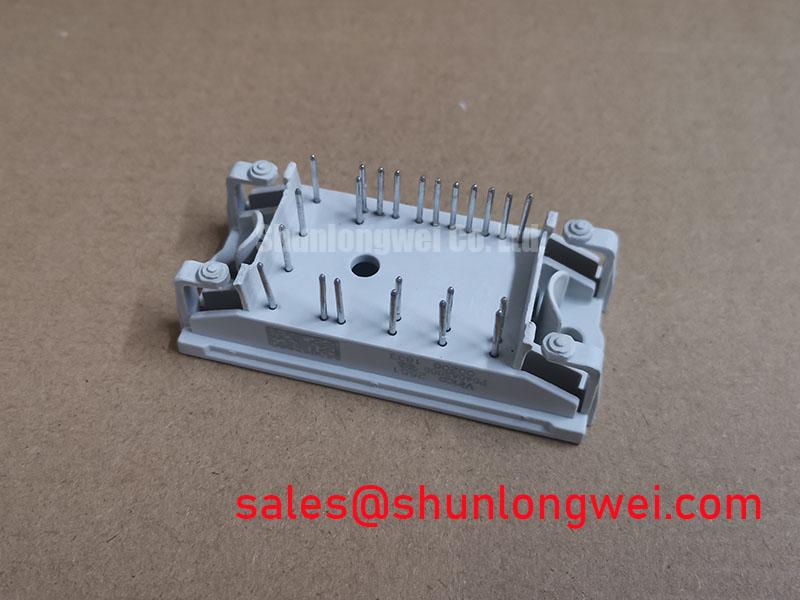
The vinco P546A2005 is an integrated PIM (Power Integrated Module) built on a space-efficient flowPIM 0 housing. This module consolidates a three-phase input rectifier, a three-phase inverter stage, and an integrated NTC thermistor. It serves as a highly integrated power solution for low-to-medium power motor control and industrial frequency conversion systems.
- Core Parameters: 1200V blocking voltage | 15A nominal current | VCE(sat) of 1.7V.
- Key Advantage 1: Solder-free pin architecture reduces mechanical stress and assembly time.
- Key Advantage: Integrated thermal sensor simplifies Thermal Management and active overtemperature protection.
This compact layout addresses the critical engineering challenge: How can designers reduce parasitic inductance in tight space constraints? By integrating the rectifier, inverter, and sensor into a single housing, this module minimizes loop area and EMI emissions.
Download Official Datasheet (PDF)

Technical Analysis: Efficiency and Thermal Performance
The vinco P546A2005 utilizes trench-gate field-stop IGBT technology paired with a fast, soft-recovery free-wheeling diode. This combination decreases conduction losses and suppresses high-frequency switching oscillations. The 1200V rating offers ample voltage margin for 400V AC grid applications, preventing breakdown under inductive voltage spikes.
An essential aspect of this module is its low thermal resistance from junction to case ($R_{th(j-c)}$). You can compare thermal resistance to the diameter of a drainage pipe. A lower resistance value operates like a wider pipe, allowing heat to escape faster. This keeps the silicon junctions cooler and preserves long-term system reliability.
By leveraging an Al2O3 ceramic substrate, the module ensures 2500V AC isolation. This internal isolation eliminates the need for external insulating sheets under the module, improving thermal transfer to the external heatsink.
Optimized Application Scenarios
- Industrial Variable Frequency Drives (VFDs): The module provides a complete three-phase power stage in a single housing. This reduces component count in standard Variable Frequency Drive (VFD) systems.
- Servo Drive Systems: Low switching energy enables high carrier frequencies. This matches the fast transient response required in precision motion control.
- Solar Inverters: The high blocking voltage supports stable grid-tie topologies. It handles DC bus fluctuations efficiently.
Best Match: This module is best suited for three-phase motor control applications up to 5.5 kW requiring compact packaging and integrated temperature feedback.
Key Specifications Parameter Table
| Parameter Group | Specification Description | Typical Value | Unit |
|---|---|---|---|
| Absolute Maximum Ratings | Collector-Emitter Voltage ($V_{CES}$) | 1200 | V |
| Continuous Collector Current ($I_C$, $T_c = 80^circtext{C}$) | 15 | A | |
| Gate-Emitter Peak Voltage ($V_{GES}$) | ±20 | V | |
| IGBT Electrical Characteristics | Collector-Emitter Saturation Voltage ($V_{CE(sat)}$, $T_j = 25^circtext{C}$) | 1.7 | V |
| Gate-Emitter Threshold Voltage ($V_{GE(th)}$) | 5.8 | V | |
| Thermal & Isolation Properties | Isolation Test Voltage ($V_{isol}$, AC, 1 min) | 2500 | V |
| Internal NTC Resistance ($R_{25}$) | 22 | kΩ |
Engineer FAQ
Q1: What are the layout benefits of using the vinco P546A2005 instead of discrete components?
A1: The module co-packages the input rectifier, gate resistors, inverter, and thermal sensor. This reduces board space by up to 50% and minimizes parasitic inductance, leading to cleaner switching waveforms and lower EMI.
Q2: How does the integrated NTC assist in system reliability?
A2: The integrated NTC sits close to the silicon dies, tracking substrate temperature. This provides fast feedback to the controller, permitting real-time protection before overheating occurs.
Q3: Is a negative gate bias necessary during turn-off for this module?
A3: For most standard operating frequencies, a 0V turn-off gate voltage is sufficient. However, in applications with high $dv/dt$ transients, applying a negative bias (e.g., -5V) helps prevent parasitic turn-on.
Design Empowerment Statement
The vinco P546A2005 integrates a three-phase rectifier, inverter, and temperature sensing inside a compact flowPIM 0 housing. This configuration resolves routing and thermal challenges in low-power motor control. The module’s robust electrical ratings and integrated thermal monitoring enable engineers to design smaller, highly reliable power conversion systems.