LG Philips LB150X03-TL01 15.0-Inch TFT-LCD Specification Guide
LB150X03-TL01 LG Philips 15.0 TFT-LCD Specification
Introduction and Core Highlights
The LB150X03-TL01 is a legacy 15.0-inch active matrix TFT-LCD module from LG Philips. It is engineered to provide consistent XGA resolution for industrial display integrations. This transmissive panel delivers a stable 250 nits luminance and a 400:1 contrast ratio, optimized for legacy system maintenance. It operates over a 1-channel LVDS interface, minimizing electromagnetic interference (EMI) challenges during signal routing. Engineers seeking a compatible predecessor reference can review the LG LB150X02-TL01 specifications for legacy drop-in comparisons.
- Core Specifications: 15.0-Inch Diagonal | 1024 x 768 XGA Resolution | 250 cd/m² Brightness | 2 CCFL Backlight Structure
- Key Engineering Advantages: Low power consumption at 3.3V logic supply and simplified single-channel 6-bit LVDS signal configuration.
- Design Intent Resolution: This module addresses the need for legacy display retrofitting in control environments where modern high-speed serial interfaces are unavailable.
Download Official LB150X03-TL01 Datasheet (PDF)
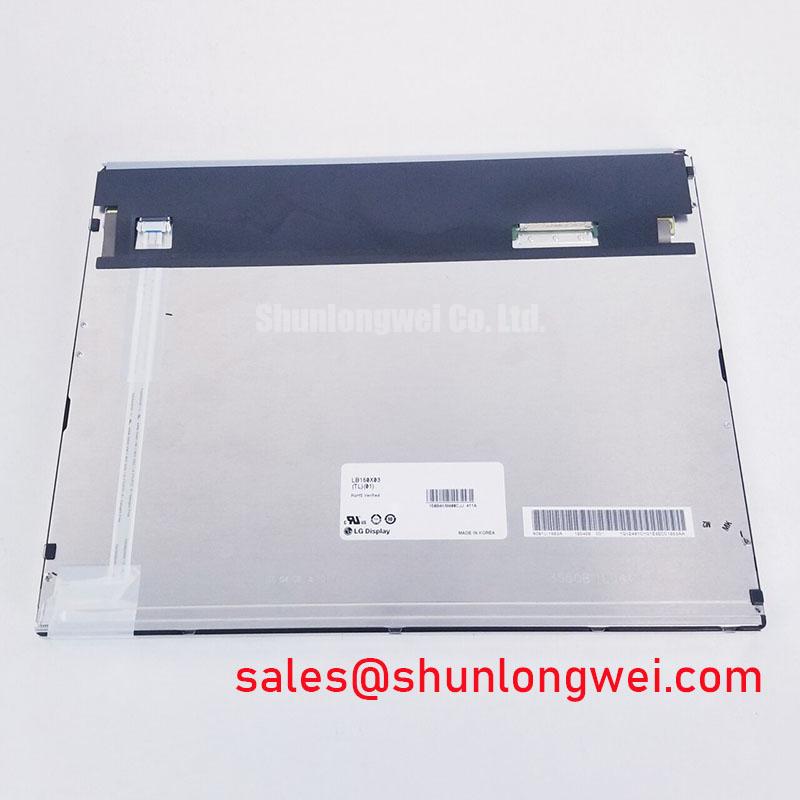


Technical Analysis Around Module Performance
The LB150X03-TL01 relies on standard amorphous silicon thin-film transistor (LCD core technology) architecture. The liquid crystal response time of 25 ms (typical total rise and fall time) prevents severe visual ghosting during graphical updates. You can analogize this response time to a physical window blind. If the blind rotates too slowly, light transitions overlap. In industrial interfaces, quick state changes require this speed to avoid operator readout errors.
The integration of a 1-channel LVDS interface with a 20-pin connector facilitates reliable transmission. The differential nature of LVDS signals reduces radiative noise. This keeps the signal clear even when routing adjacent to high-voltage lines. For system designers working with extended cable runs, maintaining signal integrity over long distance paths is highly dependent on appropriate line termination resistor placement.


Optimized Application Scenarios
- CNC Control Panels: The XGA resolution matches standard legacy coordinates. The physical bezel measurements fit older machine cuts.
- Factory HMI Systems: A 3.3V logic level matches standard controller cards. This allows straight power delivery without external buck regulators.
- Legacy Diagnostic Equipment: The 262K colors display sharp vector traces and gray steps. This is critical for reading older data waveforms.
Best match for industrial retrofitting projects needing a 15-inch display replacement with legacy CCFL lamp configurations.
Key Specifications Parameter Table
| LG Philips LB150X03-TL01 Specifications | |
|---|---|
| Display Size | 15.0 Inches (Diagonal) |
| Active Area | 304.128 (H) x 228.096 (V) mm |
| Pixel Format | 1024 x 768 Pixels (RGB Stripe) |
| Luminance (White) | 250 cd/m² (Typical) |
| Contrast Ratio | 400:1 (Typical) |
| Interface Type | LVDS (1-channel, 6-bit) |
| Logic Supply Voltage (VCC) | 3.3 V (Typical) |
| Backlight Unit | 2 CCFL Lamps (Top/Bottom) |
| Outline Dimensions | 326.5 (W) x 253.5 (H) x 12.0 (D) mm (Typical) |
| Operating Temperature | 0 to 50 °C |
Engineer FAQ
What connector is required for the signal interface on the LB150X03-TL01?
The display panel uses a 20-pin LVDS mating connector. Signal pin mappings must comply with the standard 6-bit LVDS mapping defined in the LG Philips datasheet.
Can this display operate in sub-zero environments?
No. The operating temperature range is specified from 0°C to 50°C. Cold-start attempts below 0°C will degrade the response time and significantly reduce CCFL efficiency.
How do you manage the CCFL backlight decay over time?
CCFL lamps experience brightness decay as operating hours accumulate. Reviewing the industrial LCD backlight lifespan guidelines will help design appropriate current-limiting drive circuits to maximize operational life.
Final Statement
The LG Philips LB150X03-TL01 remains a reliable choice for maintaining legacy hardware systems. Its 1-channel LVDS architecture and standard physical dimensions provide a straightforward path for field replacements. Engineers can depend on its verified parameters to maintain system continuity.