DSEI2X61-12B Dual Fast Recovery Diode Module: Features, Technical Specs, and Applications
DSEI2X61-12B Fast Recovery Epitaxial Diode Module
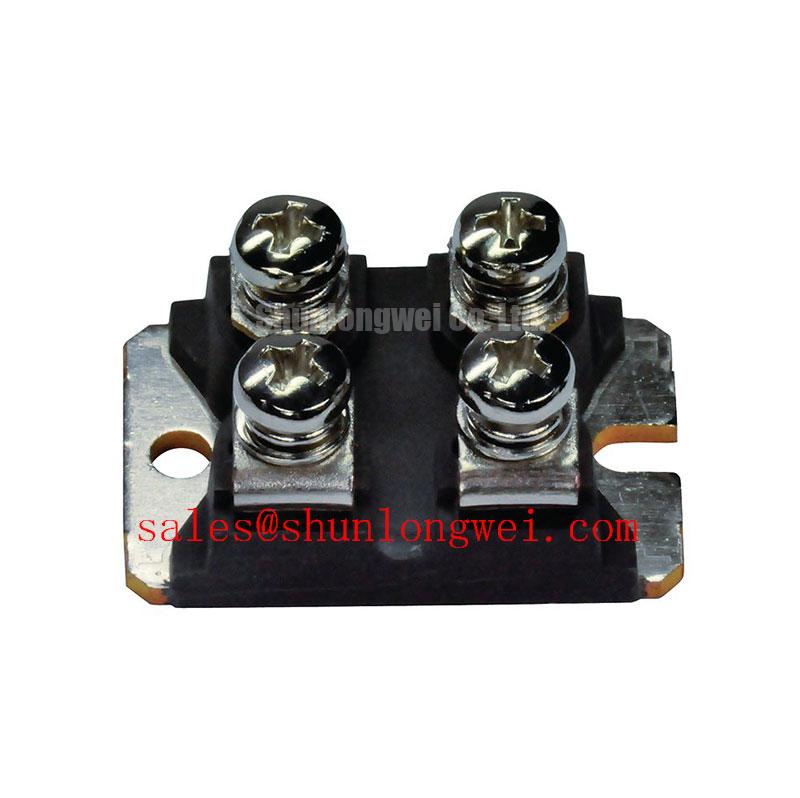
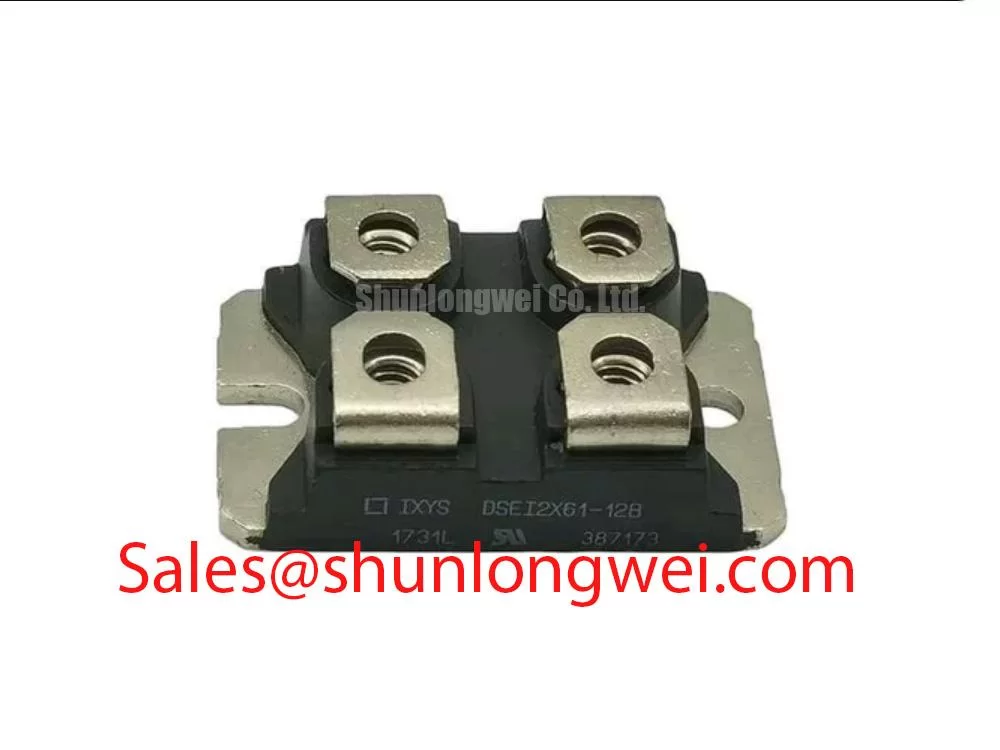
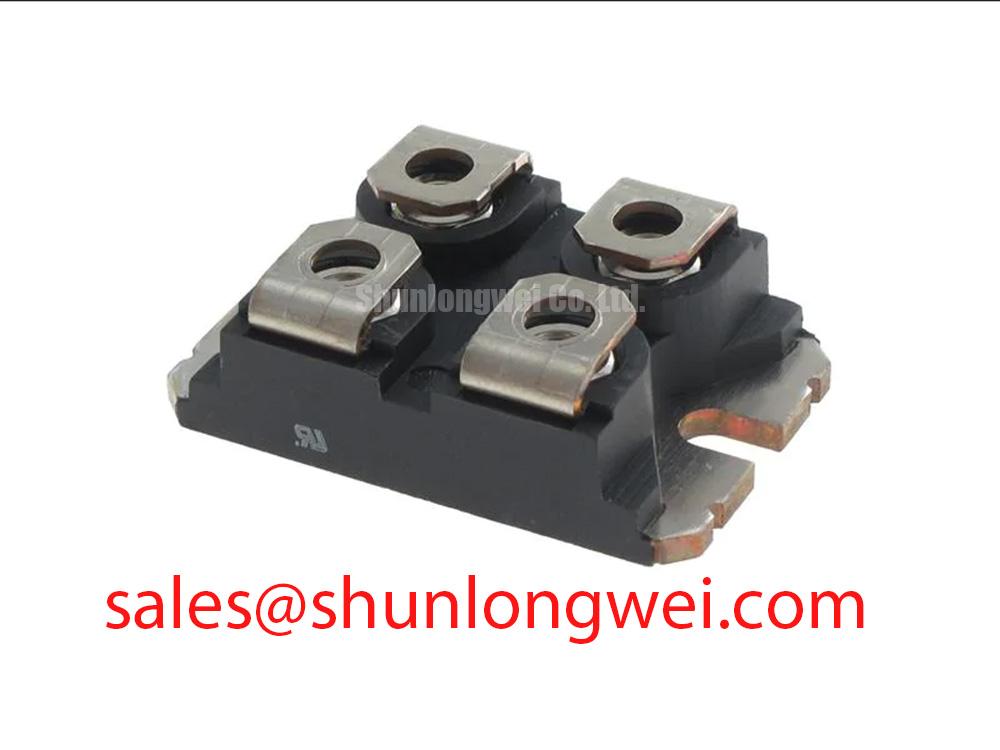
The DSEI2X61-12B is an industrial-grade dual Fast Recovery Epitaxial Diode (FRED) module manufactured by IXYS in a robust SOT-227B (miniBLOC) package. Featuring planar passivated chips with an ultra-fast soft recovery characteristic, the module is engineered to minimize turn-off switching losses and suppress high-frequency electromagnetic interference (EMI) across high-voltage power conversion systems.
Core Specifications: 1200 V | 2x 60 A ($T_C = 70^circtext{C}$) | $t_{rr} le 40text{ ns}$ | $V_{ISOL} = 2500text{ V}sim$
Key Advantages:
- Significantly lowered dynamic turn-off losses in high-frequency switching stages.
- Direct heatsink mounting via an electrically isolated baseplate with low thermal resistance.
By delivering controlled reverse recovery charge extraction, the DSEI2X61-12B resolves excessive voltage overshoot challenges in inductive freewheeling circuits without requiring oversized snubber networks.
Download Official DSEI2X61-12B Datasheet (PDF)


Technical Analysis: Soft Recovery Dynamics and Thermal Architecture
The electrical behavior of the DSEI2X61-12B is governed by its optimized epitaxial doping profile. During commutating di/dt transitions, traditional fast diodes exhibit abrupt current snap-off, which excites stray parasitic inductances and generates severe voltage transients. In contrast, the DSEI2X61-12B utilizes soft recovery behavior ($t_{rr} le 40text{ ns}$ typ. at $I_F = 1text{ A}$, $-text{di/dt} = 100text{ A}/mutext{s}$) to decelerate tail current smoothly, avoiding ringing and transient overvoltages.
Consider diode turn-off like a valve shutting off high-pressure water in a plumbing system. An abrupt valve snap causes a destructive “water hammer” shockwave, whereas a controlled deceleration stops flow gently without pipe vibration. The soft recovery characteristic of this module acts like that gentle valve, preventing inductive spikes across complementary power semiconductors.
The module packages two electrically independent diode chips inside a rugged SOT-227B housing. Utilizing direct copper bonded (DCB) ceramic substrates, the device achieves a low junction-to-case thermal resistance ($R_{thJC}$) of $0.70text{ K/W}$ per diode leg. The isolated baseplates provide $2500text{ V}sim$ electrical isolation to the cooling chassis, allowing multi-device mounting onto a shared heatsink without extra insulating foils.
Optimized Application Scenarios
- IGBT Inverter Freewheeling: Serves as an antiparallel freewheeling element in 400V–690V AC drives, where low $Q_{rr}$ protects main switching transistors. See related insights on how soft recovery diodes enhance overall system stability.
- Switched-Mode Power Supplies (SMPS): High-frequency output rectification and boost stages benefit from low recovery currents, reducing electromagnetic interference and snubber requirements.
- Induction Heating Converters: Handles resonant tank freewheeling with high thermal cycling margins under continuous $2times 60text{ A}$ forward loads.
- DC-DC Chopper & Braking Circuits: Acts as a clamp or free-wheeling diode across high-inductance loads in regenerative braking stages. Explore complementary devices in our IXYS soft-recovery diode series.
The DSEI2X61-12B delivers the definitive balance of high blocking voltage, low recovery loss, and galvanic chassis isolation for high-frequency converters.
Key Specifications Table
| Parameter | Symbol | Conditions / Values | Unit |
|---|---|---|---|
| Absolute Maximum Ratings (Per Diode Leg) | |||
| Repetitive Peak Reverse Voltage | $V_{RRM}$ | $T_J = 25^circtext{C}text{ to }150^circtext{C}$ / 1200 | V |
| Average Forward Current | $I_{FAVM}$ | $T_C = 70^circtext{C}$; rectangular, $d = 0.5$ / 60 | A |
| Peak One-Cycle Surge Current | $I_{FSM}$ | $T_J = 45^circtext{C}$; $t = 10text{ ms}$ (50 Hz), sine / 370 | A |
| Maximum Operating Junction Temp | $T_{vj}$ | -40 to +150 | °C |
| Electrical Characteristics ($T_J = 25^circtext{C}$ unless noted) | |||
| Forward Voltage Drop | $V_F$ | $I_F = 60text{ A}$; $T_J = 125^circtext{C}$ (typ. 1.65 / max 2.00) | V |
| Reverse Recovery Time | $t_{rr}$ | $I_F = 1text{ A}$; $-text{di/dt} = 100text{ A}/mutext{s}$; $V_R = 30text{ V}$ / $le 40$ | ns |
| Peak Reverse Recovery Current | $I_{RM}$ | $I_F = 60text{ A}$; $-text{di/dt} = 400text{ A}/mutext{s}$; $T_J = 100^circtext{C}$ (typ. 16) | A |
| Thermal & Mechanical Specifications | |||
| Thermal Resistance Junction-to-Case | $R_{thJC}$ | Per diode / 0.70 (Per module: 0.35) | K/W |
| Thermal Resistance Case-to-Heatsink | $R_{thCH}$ | With thermal paste applied / 0.10 | K/W |
| Isolation Voltage | $V_{ISOL}$ | $50/60text{ Hz}$, RMS; $I_{ISOL} le 1text{ mA}$; $t = 1text{ min}$ / 2500 | V~ |
| Mounting Torque | $M_d$ | Base to heatsink: 1.5 Nm (M4) / Terminals: 1.5 Nm (M4) | Nm |
Engineering FAQ
Q1: Can the two diodes in the DSEI2X61-12B be paralleled to handle 120A continuous forward current?
Yes. Because the two diode dies share identical thermal coupling on the same internal substrate, paralleling the anode and cathode terminals provides up to 120 A at $T_C = 70^circtext{C}$. Ensure symmetrical external busbar layout to balance current sharing.
Q2: How does soft recovery in the DSEI2X61-12B lower overall circuit EMI?
Hard-recovery diodes produce sharp $di/dt$ transitions at the end of reverse recovery, which trigger high-frequency ringing across stray board inductances. The soft tail decay of the DSEI2X61-12B dampens oscillations, reducing conducted and radiated noise without requiring complex RC snubbers.
Q3: What mounting precautions are critical for the SOT-227B miniBLOC housing?
Heatsink mounting surfaces must meet flatness tolerances under $0.05text{ mm}$ with a thin layer ($50text{ }mutext{m}$) of thermal interface material. Tighten heatsink and terminal M4 screws evenly to 1.1–1.5 Nm to prevent mechanical stress on internal DCB ceramics.
Q4: What is the isolation capability between the terminal pins and the baseplate?
The DSEI2X61-12B provides an internal ceramic barrier tested to $2500text{ V}sim$ RMS (1 minute), allowing engineers to mount the module directly onto grounded heatsinks without external silicone pads.
The DSEI2X61-12B dual FRED module provides an electrically isolated, low-loss rectification platform that assists hardware engineers in optimizing thermal efficiency and transient control across high-power, high-frequency conversion designs.