SanRex DF100AA160 Three-Phase Diode Bridge Module: Technical Specifications and Applications
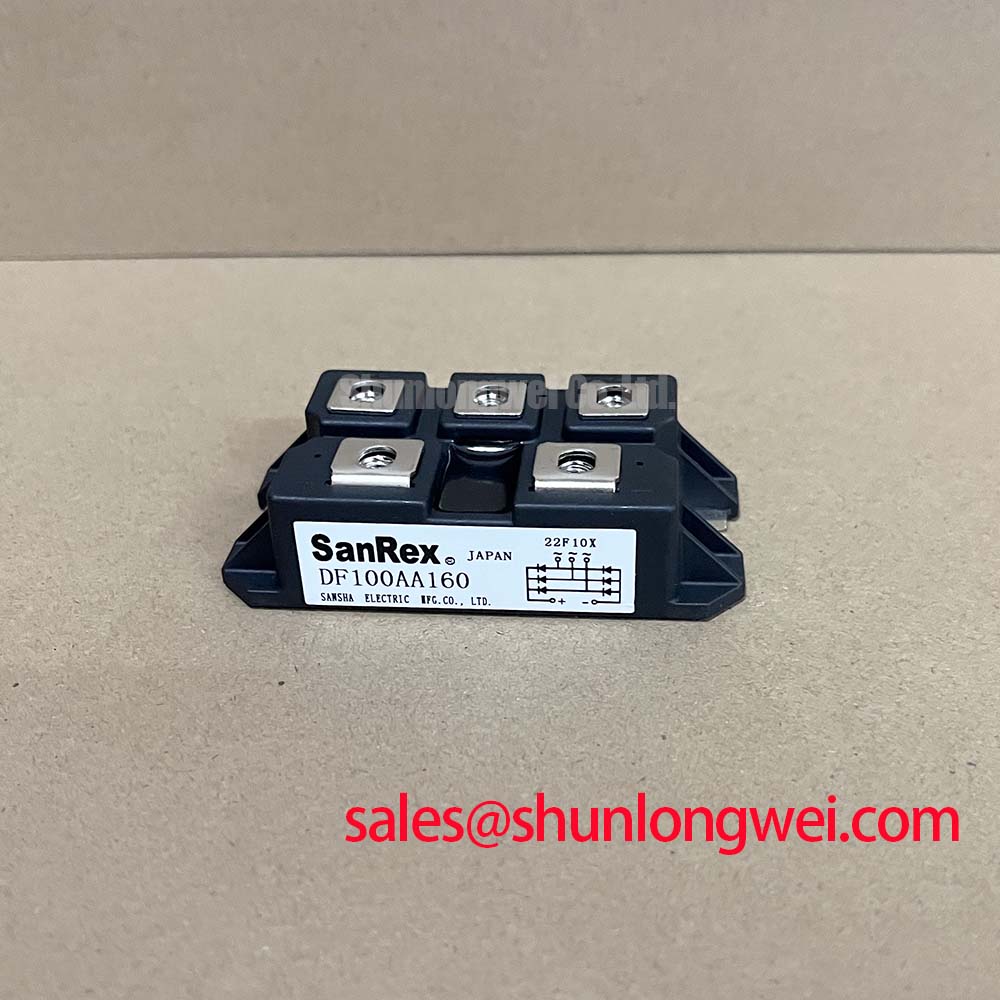
DF100AA160 SanRex Three-Phase Diode Bridge Module
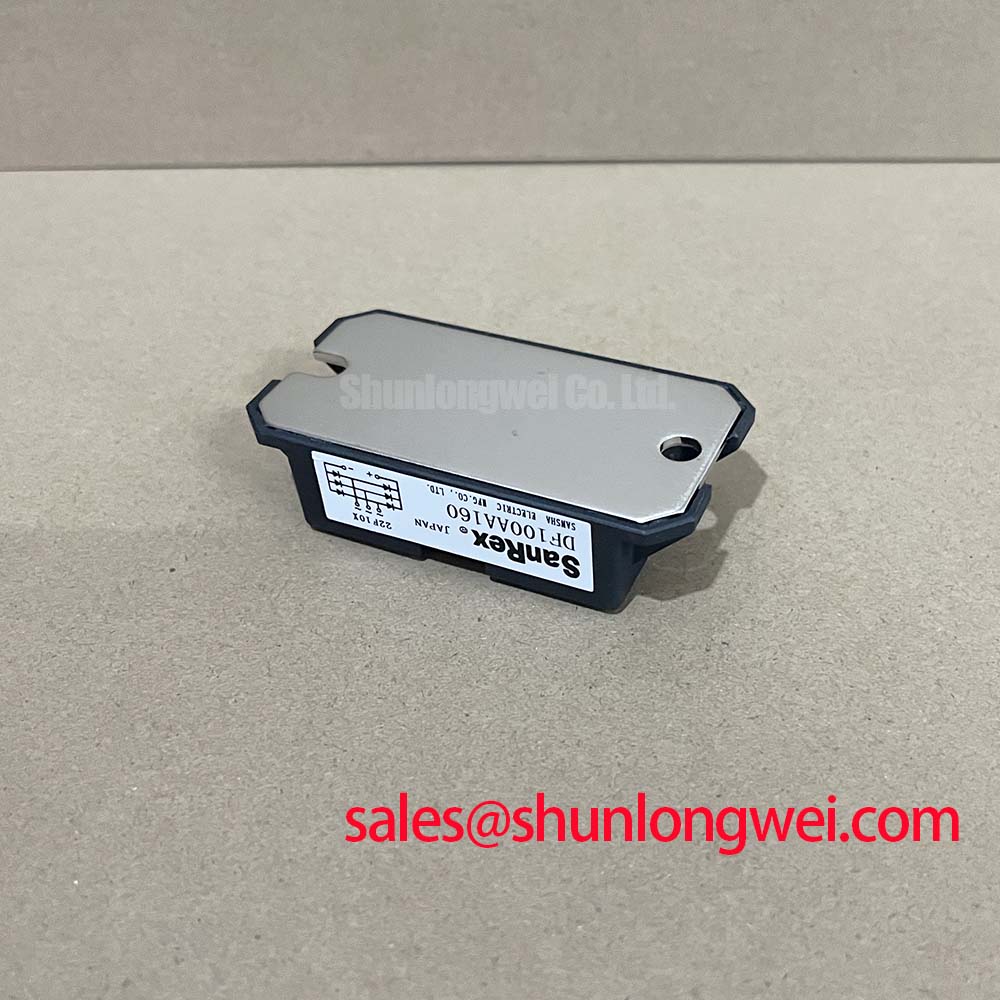
The SanRex DF100AA160 is a high-reliability three-phase diode bridge rectifier module configured for industrial power conversion systems. Designed for heavy-duty rectification, it operates with a peak repetitive reverse voltage of 1600V and an average output current of 100A. The module incorporates an isolated baseplate, which simplifies mounting and enhances system reliability under thermal stress.
Key Highlights:
- Robust Ratings: 1600V Repetitive Peak Reverse Voltage and 100A Average Rectified Output Current.
- High Surge Current Capability: Handles non-repetitive surge currents up to 1000A (at 50Hz).
- Low Forward Loss: Limits forward voltage drop to a maximum of 1.35V.
This module helps engineers looking to reduce power losses in high-voltage designs. You can Download the Official Datasheet (PDF) to inspect the complete electrical curves.
High-Performance Thermal and Electrical Engineering
The DF100AA160 is engineered to maintain low electrical losses. Its forward voltage drop ($V_{FM}$) is rated at a maximum of 1.35V when conducting 100A. By keeping this value low, the module minimizes heat generation during continuous conduction, thereby improving system efficiency. This performance is critical for power semiconductors used in enclosed, high-density industrial cabinets.
Thermal management is supported by a low junction-to-case thermal resistance ($R_{th(j-c)}$) of 0.24 °C/W. To put this in perspective, thermal resistance is like the narrowness of a highway lane; a lower resistance allows heat to exit the silicon junction and reach the heatsink quickly. This rapid heat dissipation keeps the internal operating temperatures well within safe limits, even under continuous heavy loads.
Additionally, the module features a high isolation voltage rating of 2500V AC. This ensures reliable galvanic isolation between the internal power circuitry and the copper baseplate. This electrical isolation prevents ground loops and improves operator safety during installation and maintenance. For applications requiring different current levels, refer to the SanRex diode module guide.
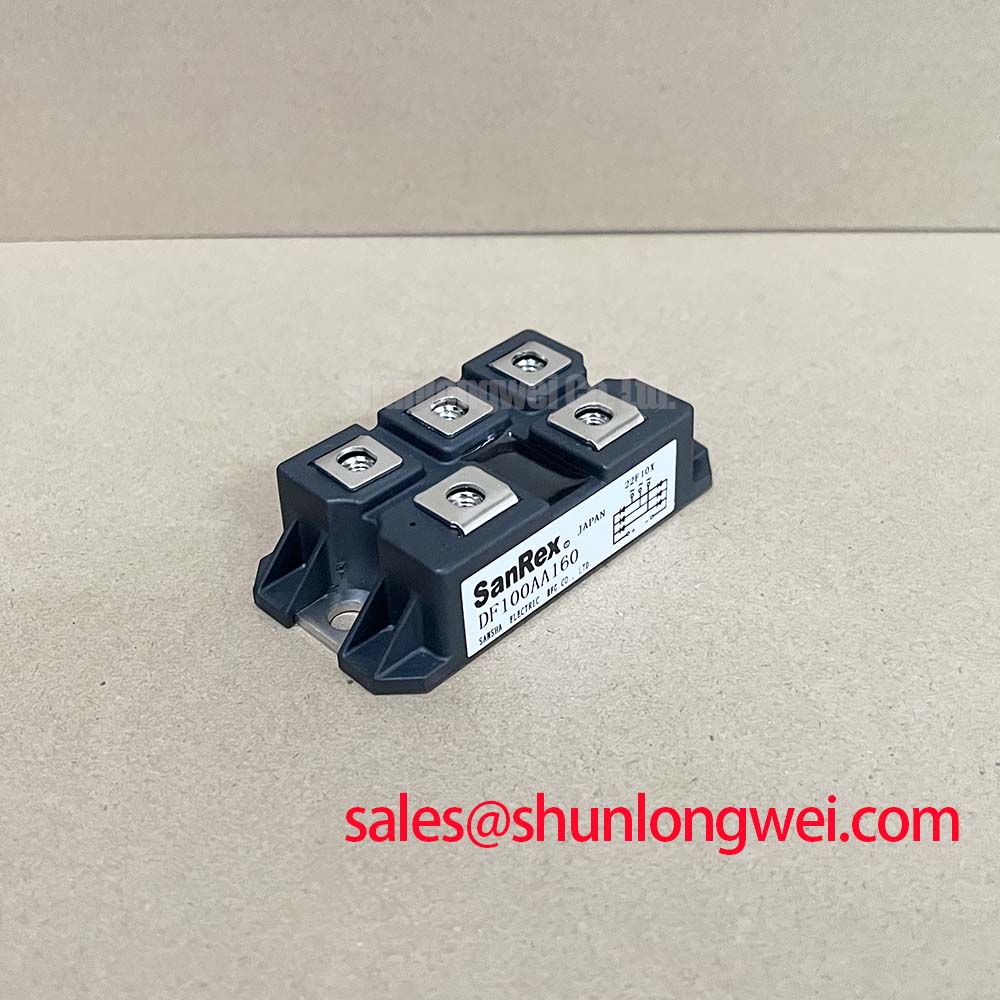
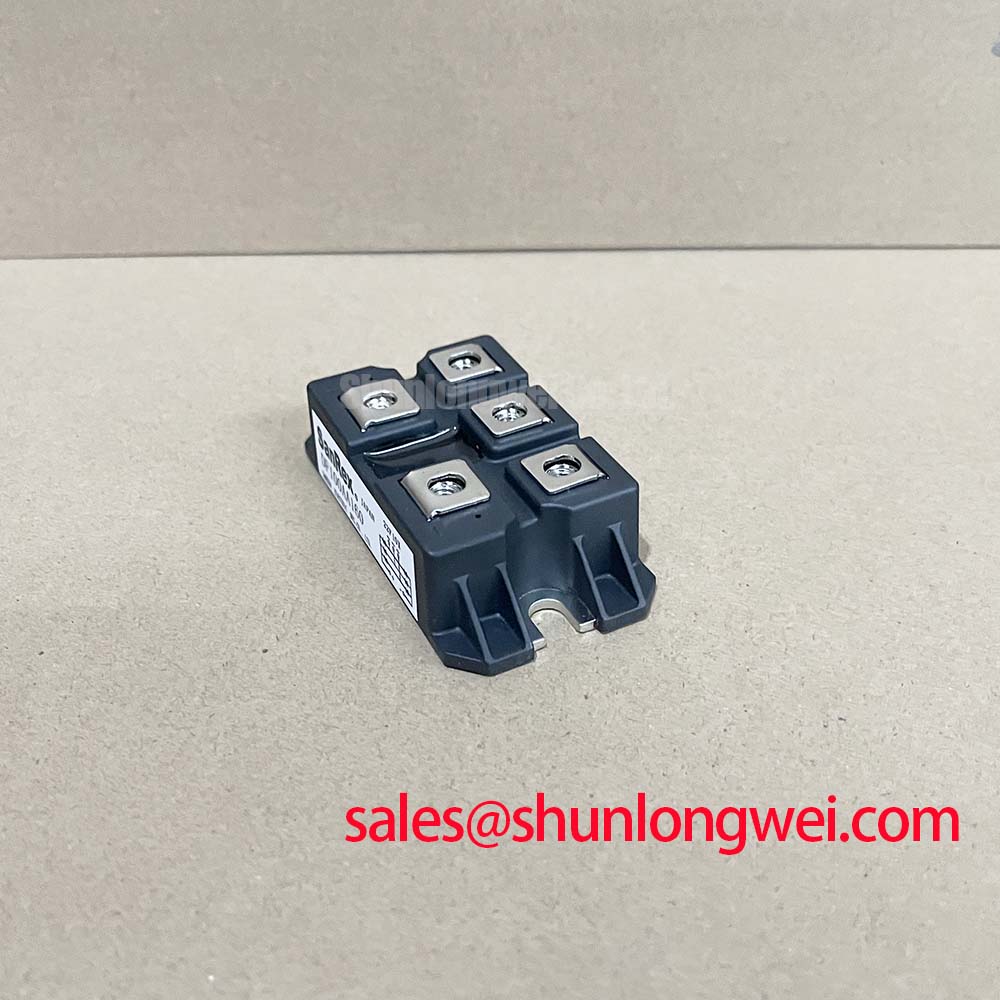

Targeted Industrial Applications
- Variable Frequency Drives (VFDs): The 1600V peak reverse voltage rating provides a robust safety margin against line voltage transients on 480V mains.
- High-Power DC Power Supplies: The low thermal resistance enables continuous operation at high duty cycles without thermal runaway.
- Battery Charging Stations: The high surge current capability of 1000A easily manages high inrush currents during the initial charging phases.
- Welding Equipment: The rugged structural packaging withstands high-vibration environments typical of factory floors.
Best-Match: The DF100AA160 is the optimal choice for industrial systems requiring robust three-phase rectification with high overload safety margins.
Key Technical Specifications
| Parameter | Symbol | Specification | Condition / Unit |
|---|---|---|---|
| Repetitive Peak Reverse Voltage | VRRM | 1600 V | Max. Rating |
| Average Output Current | IO / ID(AV) | 100 A | Three-Phase Full Wave, Tc = 101°C |
| Surge Forward Current | IFSM | 1000 / 1100 A | 1 Cycle, 50/60Hz, Peak Value |
| Forward Voltage Drop | VFM | 1.35 V | Max. at IFM = 100A, Tj = 25°C |
| Repetitive Peak Reverse Current | IRRM | 10 mA | Max. at VRRM, Tj = 150°C |
| Junction Temperature Range | Tj | -40 to +150 °C | Operating range |
| Thermal Resistance (Junction-to-Case) | Rth(j-c) | 0.24 °C/W | Max. per module |
| Isolation Voltage | VISO | 2500 V AC | 1 minute, A.C. |
Engineer FAQ
How do you calculate heatsink requirements for the DF100AA160?
System designers must calculate thermal dissipation using the junction-to-case thermal resistance (0.24 °C/W) combined with the case-to-heatsink interface thermal resistance. Ensure the total thermal resistance prevents the junction temperature from exceeding 150°C under worst-case load conditions.
What mounting torque prevents physical stress on the terminals?
To ensure secure thermal and electrical connections without damaging the package, use a mounting torque of 4.7 N·m (48 kgf·cm) for both the mounting screws and the terminal screws. Incorrect torque can lead to cracked internal substrates or loose contacts.
Can this module operate at high altitudes?
Yes, but you must account for reduced air density. The reduction in convective cooling and isolation breakdown limits at high altitudes requires appropriate voltage and current derating based on the specific system environment.
Reliable Power Rectification
The DF100AA160 provides high surge handling, a low forward voltage drop, and excellent thermal performance. It offers a solid foundation for building efficient, high-voltage industrial power systems. For custom system integration or volume supply inquiries, engineers should evaluate these documented electrical parameters against their specific load requirements.