Mitsubishi CM1000DXL-24S Dual IGBT Module: Technical Overview, Specifications, and Applications
Mitsubishi CM1000DXL-24S Dual IGBT Module (1200V 1000A)
Overview and Core Performance Value
The Mitsubishi CM1000DXL-24S is a high-power, dual-switch insulated gate bipolar transistor housing 6th-generation Mitsubishi CSTBT™ technology. Configured in a half-bridge topology, it delivers a Collector-Emitter rating of 1200V and continuous DC collector current of 1000A. The package incorporates an integrated NTC thermistor for direct baseplate temperature feedback, an isolated copper baseplate, and low-inductance terminal connections. Engineers frequently evaluate this module for MW-scale converters where thermal balance and low conduction loss define the cooling boundary. As an independent distributor, Shunlongwei Co., Ltd. provides verified technical specifications directly from official manufacturer records.
- Core Ratings: 1200V VCES | 1000A IC | 2000A ICRM
- Forward Drop: Low typical VCE(sat) of 1.80V at rated 1000A and Tj = 25°C
- Monitoring: Built-in calibrated NTC thermistor for fast thermal runaway tracking
Download Official Datasheet (PDF)
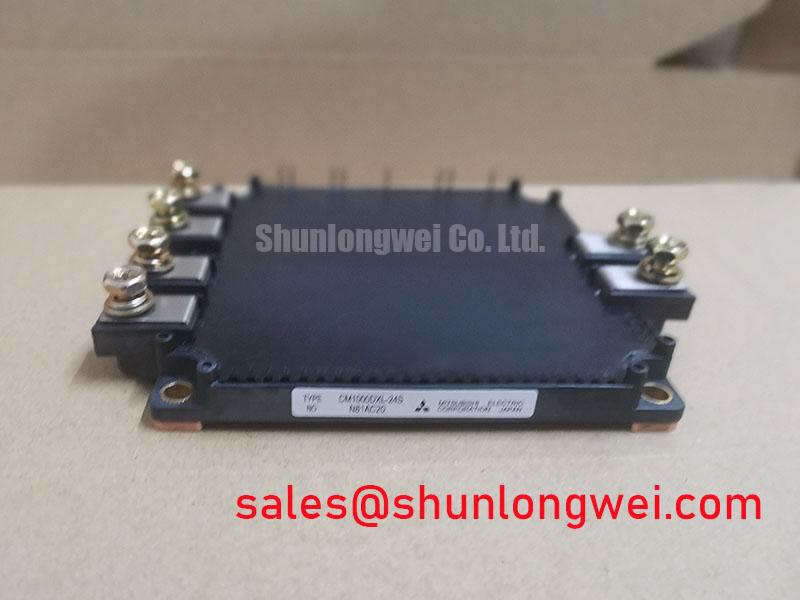
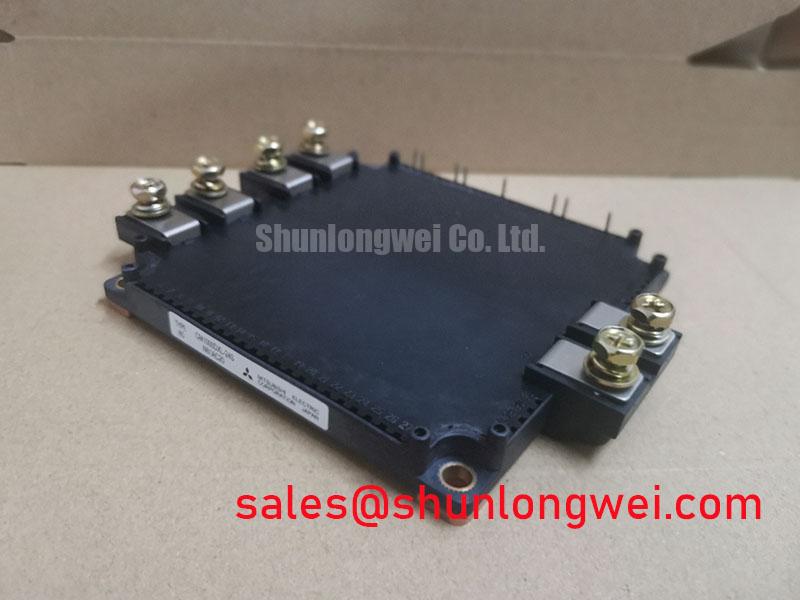
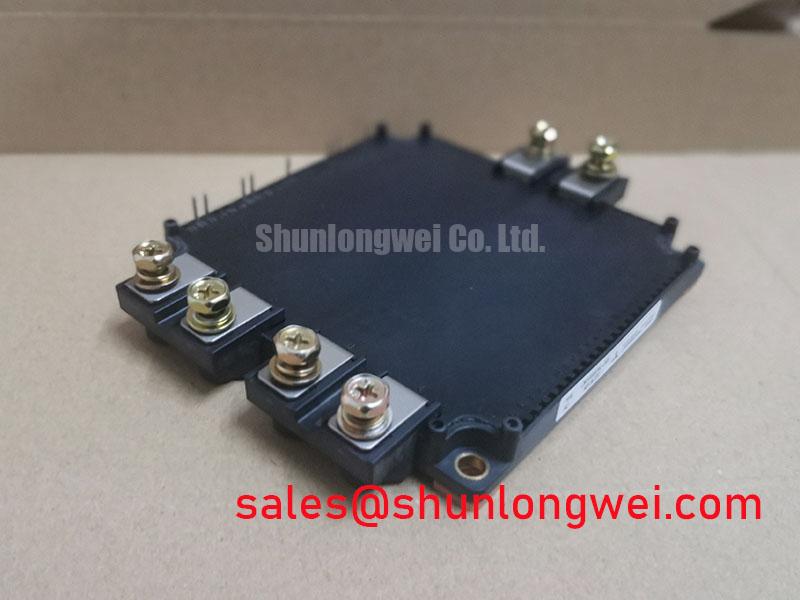
Technical Analysis and Engineering Characteristics
The core performance of the CM1000DXL-24S originates from carrier-stored trench gate bipolar technology (CSTBT™). This silicon structure optimizes the carrier concentration near the emitter surface, lowering the saturation voltage to a typical 1.80V at rated current. Lower on-state voltage drop directly reduces thermal dissipation during continuous conduction. In megawatt converter topologies, this efficiency relieves pressure on forced-liquid chillers or dense heatsink configurations, reducing system size and lifecycle operational costs.
Thermal management is further anchored by an internal thermal resistance of 0.022 K/W (junction-to-case, IGBT element). Think of thermal resistance like pipe constriction in a drainage system: the wider and less resistive the pipe, the faster heat discharges from the junction into the cold plate without creating localized thermal bottlenecks. Effective heat dissipation directly protects against excessive junction temperatures that cause bond wire fatigue. For guidance on multi-layer thermal design, review mastering IGBT thermal design with Zth curves to prevent thermal stress.
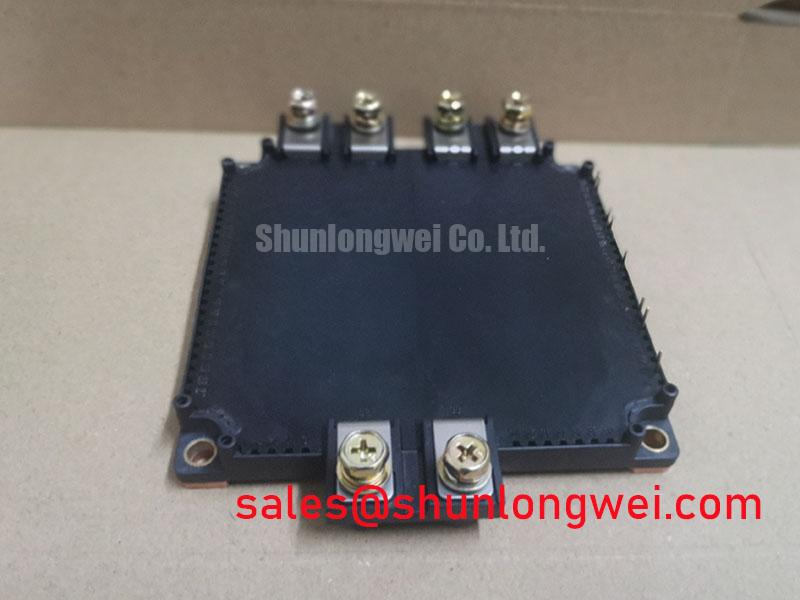
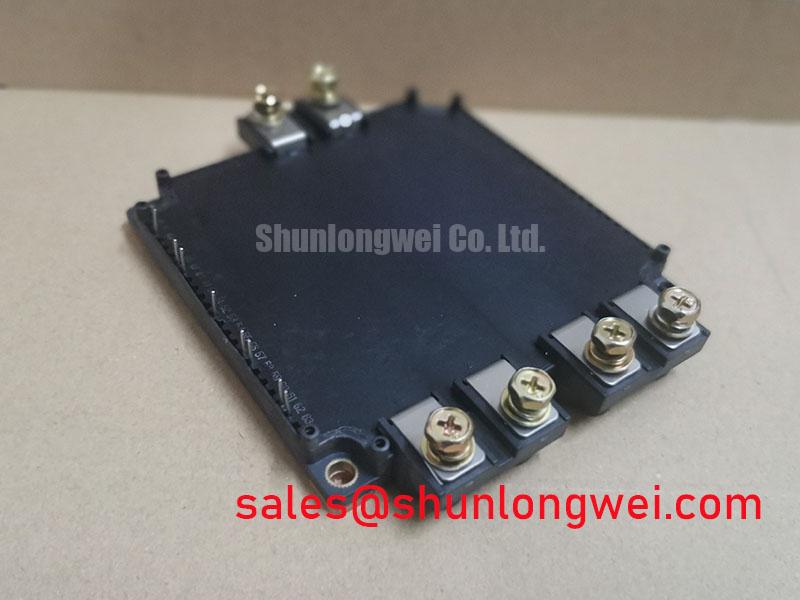
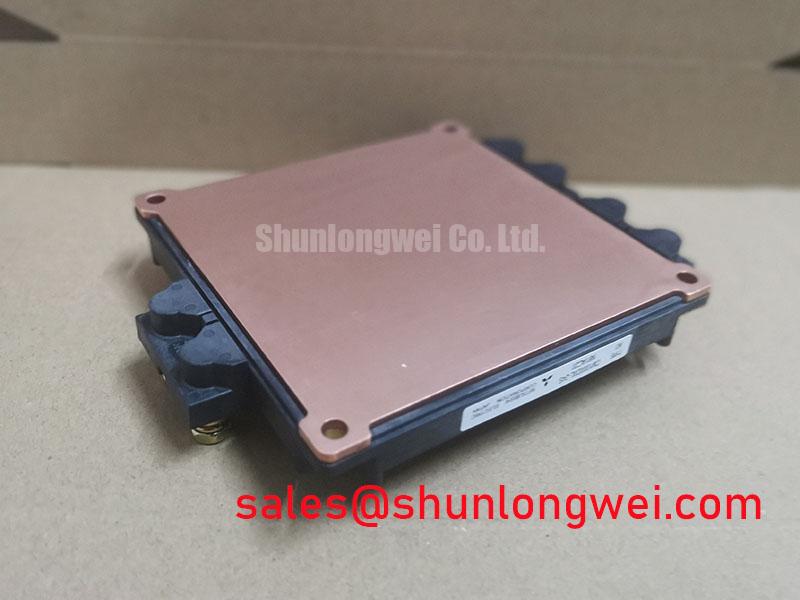
Dynamic stability during rapid commutation depends on busbar geometry and module inductance. Switching 1000A at rates exceeding several kiloamps per microsecond produces substantial inductive spikes (L × di/dt). The internal layout of the CM1000DXL-24S restricts stray package inductance to minimize overvoltage stress across the silicon dies. Designing low-inductance laminated busbars ensures the turn-off trajectory stays well inside the Reverse Bias Safe Operating Area (RBSOA). Hardware designers should review minimizing IGBT voltage spikes via busbar design and consider active clamping methods to preserve margin under harsh line events.
Optimized Application Environments
- Utility-Scale Central Inverters: The 1000A continuous current rating allows high-power three-phase bridge stages with minimal module paralleling.
- Heavy Industrial Motor Drives: Suitable for multi-hundred-kilowatt VFD inverters operating on 400V to 690V AC mains.
- Megawatt Battery Energy Storage Systems (BESS): Symmetrical half-bridge configuration facilitates bidirectional power conversion with balanced conduction losses.
- High-Frequency Induction Heating: Fast recovery free-wheeling diodes deliver soft turn-off behavior that mitigates high-frequency electromagnetic interference.
Application Verdict: The CM1000DXL-24S delivers high current density and low thermal impedance, making it a reliable building block for high-power industrial converters.
Key Electrical & Thermal Specifications
| Parameter | Symbol | Test Conditions / Notes | Rated Value |
|---|---|---|---|
| Collector-Emitter Voltage | VCES | G-E short-circuited, Tj = 25°C | 1200 V |
| Gate-Emitter Voltage | VGES | C-E short-circuited | ±20 V |
| Continuous Collector Current | IC | DC, TC = 111°C | 1000 A |
| Repetitive Peak Collector Current | ICRM | Pulse, 1 ms duration | 2000 A |
| Maximum Power Dissipation | Ptot | Per IGBT switch, TC = 25°C | 5680 W |
| Collector-Emitter Saturation Voltage | VCE(sat) | IC = 1000A, VGE = 15V, Tj = 25°C (typ.) | 1.80 V |
| Diode Forward Voltage Drop | VEC | IE = 1000A, VGE = 0V, Tj = 25°C (typ.) | 1.80 V |
| Thermal Resistance, Junction to Case | Rth(j-c)Q | Per IGBT element, max. rating | 0.022 K/W |
| Isolation Voltage | Visol | RMS, AC 1 min, terminals to baseplate | 2500 V |
| Internal NTC Resistance | R25 | TB = 25°C | 5.0 kΩ |
Frequently Asked Questions
What gate driver requirements apply to switching the CM1000DXL-24S safely?
Driving this module requires an isolated driver supplying +15V on-state voltage and a stable negative bias (-5V to -15V). Negative bias prevents spurious dv/dt-induced turn-on caused by Miller displacement currents during high collector voltage transitions.
How is the integrated NTC thermistor utilized in protection circuits?
The built-in NTC provides real-time tracking of baseplate temperature near the semiconductor chips. It communicates directly with controller analog inputs or comparator trip points to trigger over-temperature shutdown before exceeding maximum junction limits.
What mechanical torque settings are specified for module mounting?
Baseplate mounting screws (M6) must be tightened in a crossed pattern to 3.5–4.5 N·m using thermal interface material. Main power busbar connections (M8) require 9.0–11.0 N·m to guarantee low electrical contact resistance without stripping the internal threads.
What is the maximum operating junction temperature under load?
The device is rated for a continuous operating junction temperature (Tjop) up to 150°C. Maintaining practical design operating margins below 125°C under nominal full load significantly extends thermal cycle lifetime.
The Mitsubishi CM1000DXL-24S offers high power density, thermal efficiency, and mechanical robustness for demanding industrial power stages. System designers can source original modules and access engineering data through Shunlongwei Co., Ltd.