Analyzing the QM150DY-2HBK: A High-Gain Darlington Module for Robust Power Control
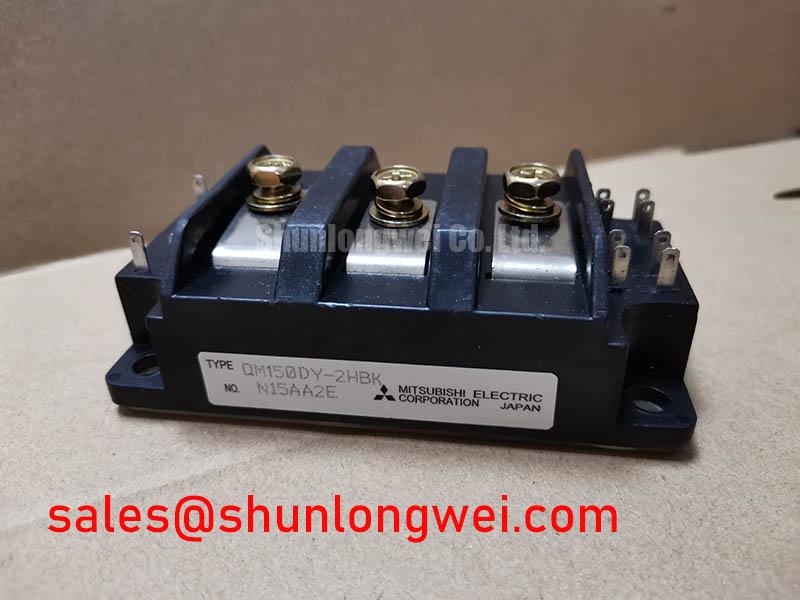
QM150DY-2HBK Mitsubishi Dual Darlington Transistor Module
Introduction and Core Highlights
The Mitsubishi QM150DY-2HBK is a robust Dual Darlington Transistor Module engineered for high-power switching applications. Its standout feature is a high DC current gain (hFE), which enables powerful current amplification from a minimal base drive signal. This simplifies the design of driver circuitry, making it an excellent choice for systems where reliability and straightforward control are paramount. By requiring less input current to control a large output, engineers can develop more efficient and cost-effective driver stages for demanding industrial loads.
- Core Specifications: 1000V | 150A | hFE min. 75
- Key Advantages: Simplifies drive circuit design, ensures robust performance under inductive loads.
Download the Official QM150DY-2H Datasheet (PDF)
Technical Analysis for System Integration
A primary engineering advantage of the QM150DY-2HBK module is its high DC current gain (hFE). The datasheet specifies a minimum hFE of 75. This means a base current of just 2A can control a collector current of 150A. Think of hFE as a form of leverage for electric current; a high hFE value means a small input effort can control a large output force. For design engineers, this translates directly to a less complex and lower-power base drive circuit, reducing component count and potential points of failure. This characteristic is central to the module’s value in robust, cost-sensitive industrial systems.
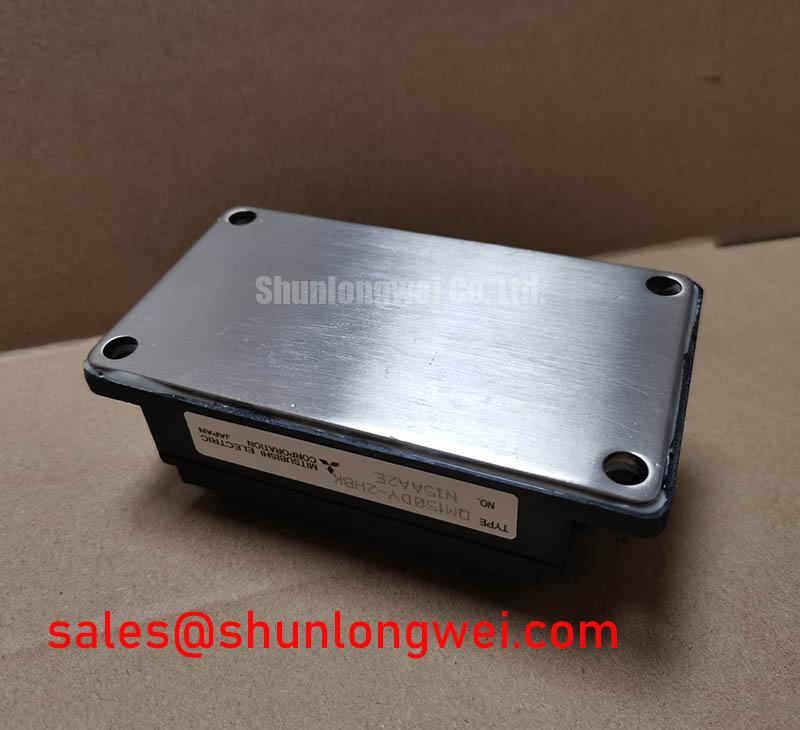
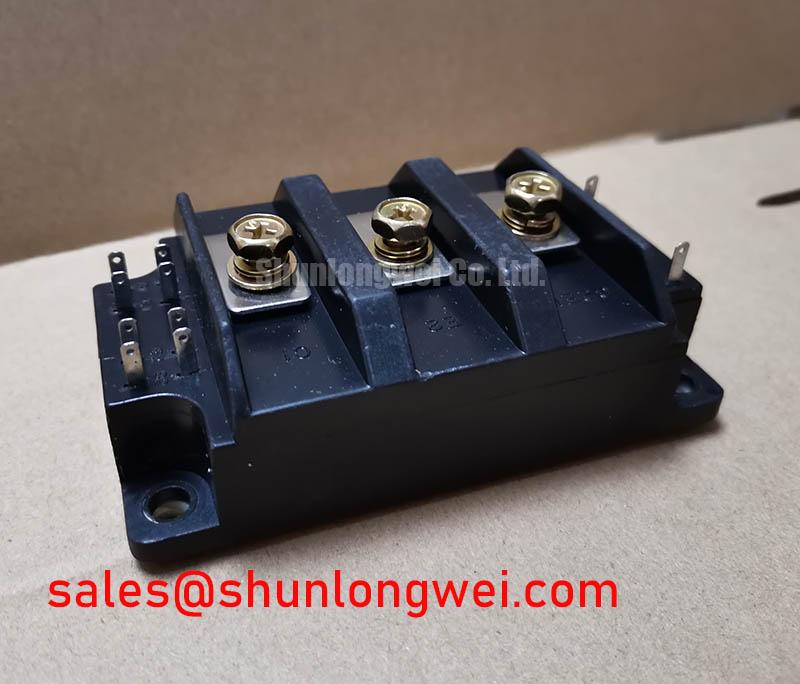
The module’s construction provides a collector-emitter voltage (VCES) rating of 1000V and a collector current (IC) of 150A. Its internal configuration includes two Darlington pairs with integrated free-wheeling diodes, forming a half-bridge topology. This dual setup is fundamental for creating inverter legs and chopper circuits. Furthermore, the module is electrically isolated with a Viso rating of 2500V (AC for 1 minute), which isolates the power stage from the control logic and ensures safety in high-voltage environments. Understanding this isolated baseplate construction is key to reliable system design.
Optimized Application Scenarios
The QM150DY-2HBK is specified for a range of industrial power control systems. Its characteristics make it particularly suitable for the following applications:
- AC and DC Motor Drives: The half-bridge configuration and robust Safe Operating Area (SOA) are ideal for driving inductive motor loads. The high gain simplifies the interface with motor controllers.
- High-Power Switching Regulators: Its 150A current rating allows for effective control in large-scale DC-DC converters and switching power supplies where reliability is more critical than switching speed.
- Welding Power Supplies: Darlington transistors are known for their durability. This module can withstand the demanding, pulsed current conditions typical in welding equipment.
- Uninterruptible Power Supplies (UPS): Its capacity to handle high currents makes it a reliable component for the inverter stage of a UPS, ensuring consistent power delivery.
This module is best matched for moderate-frequency systems where drive circuit simplicity and operational robustness are primary design goals.
Key Specifications of the QM150DY-2HBK
| Absolute Maximum Ratings (Tj=25°C) | |
|---|---|
| Collector-Emitter Voltage (VEB=2V), VCES | 1000V |
| Collector Current (DC), IC | 150A |
| Base Current (DC), IB | 8A |
| Collector Power Dissipation (TC=25°C), PC | 1000W |
| Junction Temperature, Tj | -40 to +150°C |
| Isolation Voltage (AC, 1 min.), Viso | 2500Vrms |
| Electrical Characteristics (Tj=25°C) | |
| Collector-Emitter Saturation Voltage (IC=150A, IB=2A), VCE(sat) | 2.5V (Max) |
| Base-Emitter Saturation Voltage (IC=150A, IB=2A), VBE(sat) | 3.5V (Max) |
| DC Current Gain (IC=150A, VCE=2V), hFE | 75 (Min) |
| Thermal Resistance (Junction to Case, Transistor), Rth(j-c) | 0.16 °C/W (Max) |
| Thermal Resistance (Junction to Case, Diode), Rth(j-c) | 0.30 °C/W (Max) |
Engineer’s FAQ for the QM150DY-2HBK
What is the main advantage of this module’s high DC current gain (hFE)?
The primary advantage is the simplification of the base drive circuitry. A high hFE (min. 75) means that a relatively small base current can control a much larger collector current. This reduces the power and complexity requirements for the driver stage, leading to a more streamlined and potentially more reliable system design, a core topic in our guide to robust gate drive design.
How should I approach thermal design for the QM150DY-2HBK?
Effective thermal management is crucial. The datasheet specifies a maximum thermal resistance from junction to case (Rth(j-c)) of 0.16 °C/W for each transistor. To calculate the required heatsink, first determine the total power dissipation (Pd ≈ VCE(sat) × IC). Then, use the formula Rth(c-a) = (Tj_max – Ta) / Pd – Rth(j-c) to find the maximum allowable thermal resistance for your case-to-ambient cooling solution (heatsink and thermal interface material).
What are the functions of the diodes within the module?
The module contains two types of internal diodes. Each Darlington transistor has a speed-up diode connected between the bases of the two internal transistors to improve switching speed. Additionally, a fast-recovery free-wheeling diode is connected in anti-parallel with each Darlington transistor. This diode provides a safe path for current from an inductive load (like a motor winding) when the transistor is switched off, protecting the transistor from destructive voltage spikes.
Is this module suitable for high-frequency applications like modern EV inverters?
As a Darlington transistor module, the QM150DY-2HBK has slower switching times (ton ≈ 4.0μs, toff ≈ 5.0μs) compared to modern IGBTs or SiC MOSFETs. It is best suited for moderate-frequency applications, such as motor drives operating up to around 15 kHz. For higher frequencies, a device from a more recent technology family like an IGBT module would be more appropriate.
Enabling Robust Power Designs
The QM150DY-2HBK offers engineers a proven and reliable component for high-current power control. Its inherent high gain and rugged architecture allow for the development of powerful and durable motor drives, welders, and power supplies with simplified and efficient drive stages. This module provides a direct path to creating dependable power systems built for demanding industrial environments.