Fuji 2MBI150SC-120 IGBT Module: A Comprehensive Technical Review
Fuji 2MBI150SC-120 IGBT Module: 1200V 150A Reliability
Introduction and Core Highlights
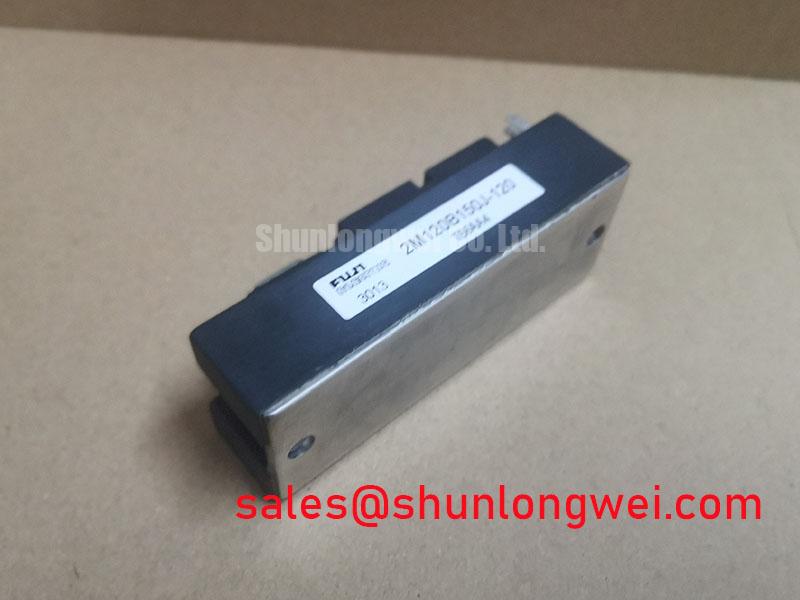
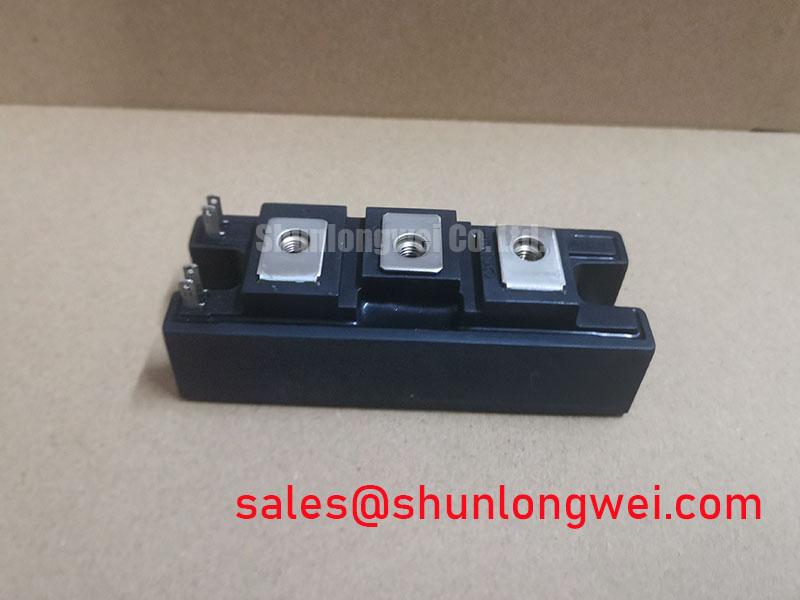
The Fuji Electric 2MBI150SC-120 is a 1200V, 150A dual IGBT module engineered for robust performance in demanding power conversion systems. This module is built upon proven Non-Punch-Through (NPT) IGBT technology, which provides a wide Safe Operating Area (SOA) and substantial short-circuit ruggedness. This design offers a reliable foundation for industrial applications where operational stability under fluctuating loads is a primary requirement. Its architecture balances performance with durability, making it a workhorse component.
- Core Specifications: 1200V | 150A | Dual IGBT Configuration
- Key Advantages: High operational reliability, excellent short-circuit withstand capability.
For complete specifications, download the official 2MBI150SC-120 datasheet (PDF).

Technical Analysis: NPT Ruggedness and Thermal Design
The defining characteristic of the 2MBI150SC-120 is its use of Non-Punch-Through (NPT) IGBT technology. This established chip design results in a device that is inherently robust. A key indicator of this is the Short Circuit Safe Operating Area (SCSOA), with a specified withstand time (t_sc) of 10µs at Vcc=600V. This capability ensures the module can survive brief but severe fault conditions, a critical requirement in industrial environments. Think of the SOA as the engineered safety margin on a bridge; the wide SOA of this NPT design means it can handle unexpected load variations and voltage transients without failure, much like a bridge built to withstand traffic well beyond its daily average.
Effective thermal management is fundamental to the reliability of any power module. The datasheet specifies the thermal resistance from junction to case (Rth(j-c)) as 0.17 K/W for the IGBT and 0.32 K/W for the freewheeling diode (FWD). These values quantify the efficiency of heat transfer from the active silicon die to the module’s baseplate. A lower thermal resistance allows heat to dissipate more effectively, which is essential for maintaining a safe operating junction temperature (Tj) and maximizing the component’s operational life. These figures are crucial inputs for calculating heatsink requirements.
Optimized Application Scenarios
The specific performance characteristics of the 2MBI150SC-120 make it a strong candidate for several high-power applications:
- Variable Frequency Drives (VFDs): Its 150A current rating and robust nature are well-suited for controlling medium-power induction motors.
- Uninterruptible Power Supplies (UPS): The module’s 1200V breakdown voltage provides a significant safety margin for the inverter stage in commercial and industrial UPS systems.
- Industrial Welding: The high short-circuit withstand time is particularly valuable in welding power supplies, where output faults can be common.
- AC and DC Servo Drives: Provides reliable and controllable power switching for precise motion control systems.
This module is best matched for systems that prioritize proven reliability and robust performance at moderate switching frequencies.
Key Specifications of the 2MBI150SC-120
| Parameter | Symbol | Value | Unit |
|---|---|---|---|
| Absolute Maximum Ratings | |||
| Collector-Emitter Voltage | V_CES | 1200 | V |
| Gate-Emitter Voltage | V_GES | ±20 | V |
| Continuous Collector Current (T_c=80°C) | I_C | 150 | A |
| Repetitive Peak Collector Current | I_CP | 300 | A |
| Collector Power Dissipation (per IGBT) | P_C | 780 | W |
| Operating Junction Temperature | T_j | +150 | °C |
| Isolation Voltage (AC, 1 min.) | V_isol | 2500 | V |
| Electrical Characteristics | |||
| Collector-Emitter Saturation Voltage (I_C=150A) | V_CE(sat) | 2.7 (Max) | V |
| Gate-Emitter Threshold Voltage | V_GE(th) | 5.0 to 8.0 | V |
| Input Capacitance | C_ies | 13 (Typ) | nF |
| Turn-On Time | t_on | 600 (Typ) | ns |
| Turn-Off Time | t_off | 500 (Typ) | ns |
| Diode Forward Voltage (I_F=150A) | V_F | 2.5 (Max) | V |
| Thermal Characteristics | |||
| Thermal Resistance (Junction to Case, IGBT) | R_th(j-c) | 0.17 (Max) | K/W |
| Thermal Resistance (Junction to Case, FWD) | R_th(j-c) | 0.32 (Max) | K/W |
Note: These values are summarized from the datasheet for reference. Engineers must consult the official Fuji Electric datasheet for complete and verified information.
Engineer’s FAQ for the 2MBI150SC-120
What are the main thermal design considerations for this IGBT?
The primary thermal considerations are managing the power losses from the IGBT and the FWD. You must calculate the total conduction and switching losses based on your specific operating conditions (current, duty cycle, switching frequency). Using the maximum thermal resistance values (Rth(j-c) of 0.17 K/W for the IGBT and 0.32 K/W for the FWD), select a heatsink with an appropriate thermal resistance (Rth(c-a)) to ensure the junction temperature (Tj) remains well below the 150°C maximum rating.
What is the correct mounting torque, and why is it important?
The datasheet specifies a mounting torque of 3.5 ± 0.5 Nm for the main mounting screws. Applying the correct torque is critical. Insufficient torque leads to poor thermal contact between the module’s baseplate and the heatsink, causing higher operating temperatures and potential for premature failure. Excessive torque can warp the baseplate, creating gaps in thermal contact and inducing mechanical stress on the internal components.
How does the NPT technology in the 2MBI150SC-120 affect performance?
The NPT (Non-Punch-Through) technology provides this module with a high degree of ruggedness and a wide Safe Operating Area (SOA). It generally exhibits a positive temperature coefficient for V_CE(sat), which aids in current sharing when paralleling modules. While newer trench-gate or field-stop technologies may offer lower V_CE(sat) and faster switching, the NPT design of the 2MBI150SC-120 makes it a highly reliable choice for applications with demanding load conditions and moderate switching frequencies.
Empowering Reliable Power System Design
The Fuji 2MBI150SC-120 offers a solid, data-backed solution for power system engineering. Its foundation in NPT technology ensures a wide safe operating area and the ruggedness necessary to withstand industrial environments. This allows engineers to develop resilient and dependable power semiconductors-based systems with confidence, balancing performance with long-term operational stability.