BSM100GD120DN2 1200V 100A IGBT Module: A Technical Review
BSM100GD120DN2 1200V 100A Dual IGBT Module Analysis
Introduction and Core Highlights
The BSM100GD120DN2 is a 1200V half-bridge IGBT module that provides a robust and efficient solution for high-power switching applications. Leveraging Trench and Fieldstop IGBT technology, this module is specified for low conduction losses and high operational reliability. It integrates two IGBTs with fast-recovery freewheeling diodes in an industry-standard package, simplifying thermal management and system assembly for power conversion systems.
- Core Specifications: 1200V | 100A (@ TC=80°C) | VCE(sat) (typ) 2.2V.
- Key Advantages: Low conduction losses improve system efficiency; integrated NTC thermistor enables precise temperature monitoring.
- Design Consideration: The positive temperature coefficient of VCE(sat) is a key feature for balancing current when operating modules in parallel.
Download the Official BSM100GD120DN2 Datasheet (PDF)

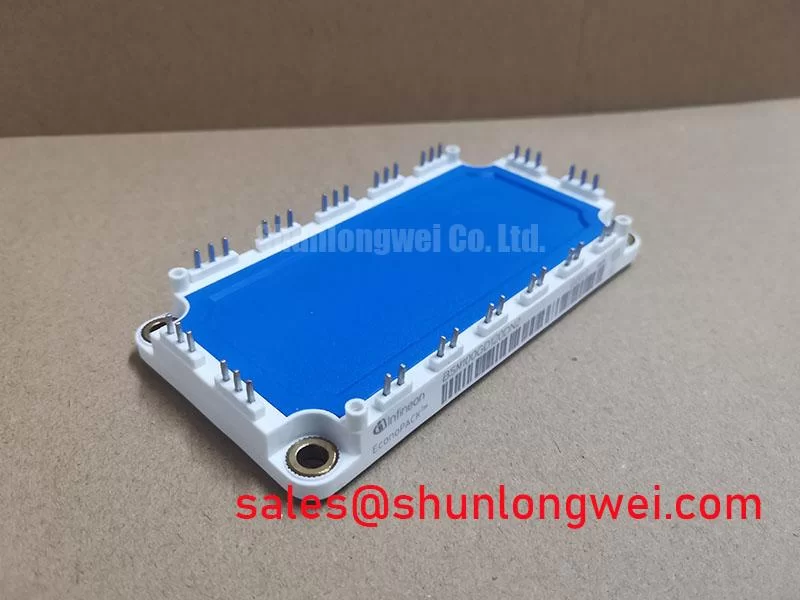
Technical Analysis for System Integration
A defining characteristic of the BSM100GD120DN2 is its low collector-emitter saturation voltage (VCE(sat)), specified typically at 2.2V for a 100A current at a junction temperature of 25°C. This parameter is critical for system efficiency. Think of VCE(sat) as the electrical friction a component generates when it’s switched on; a lower value means less power is converted into waste heat. For engineers designing motor drives or solar inverters, this directly translates to reduced cooling requirements, potentially allowing for smaller heatsinks and more compact overall system dimensions. This efficiency is a direct result of the module’s Trench/Fieldstop IGBT internal structure.
Effective thermal management is fundamental to the long-term reliability of any power module. The BSM100GD120DN2 facilitates this through a low maximum thermal resistance from junction to case (RthJC) of 0.27 K/W per IGBT. This value represents the efficiency of heat transfer from the active silicon die to the module’s baseplate. A lower thermal resistance is analogous to a wider pipe for heat to flow through, enabling more effective cooling and preventing the device from exceeding its maximum 150°C operating junction temperature. The inclusion of an NTC thermistor provides a direct, real-time method for monitoring the module’s temperature, allowing the system controller to implement over-temperature protection.

Optimized Application Scenarios
The electrical and thermal characteristics of the BSM100GD120DN2 make it well-suited for several demanding applications:
- Variable Frequency Drives (VFDs): The module’s 1200V blocking voltage and 100A current rating are ideal for controlling three-phase AC motors in industrial automation. Its efficiency minimizes heat buildup within drive cabinets.
- Solar Inverters: Low switching and conduction losses are essential for maximizing the energy yield from photovoltaic arrays. This module’s performance helps to increase the overall efficiency of the DC-AC power conversion stage.
- Uninterruptible Power Supplies (UPS): System reliability is critical. The module’s robust thermal design and a specified short-circuit withstand time of 10 µs ensure stable operation during load anomalies.
- Welding Power Supplies: The module’s ability to handle high pulsed currents (up to 200A) makes it a durable component for inverter-based welding systems.
This module provides an optimal balance for power systems requiring high efficiency and field-proven reliability up to approximately 50 kW.
Key Electrical and Thermal Specifications
| BSM100GD120DN2 Module Characteristics | |
|---|---|
| Parameter | Value |
| Absolute Maximum Ratings | |
| Collector-Emitter Voltage (VCES) | 1200 V |
| Continuous DC Collector Current (IC @ TC=80°C) | 100 A |
| Pulsed Collector Current (ICpuls, tp=1ms) | 200 A |
| Gate-Emitter Voltage (VGES) | ±20 V |
| IGBT & Diode Characteristics (at Tvj=25°C unless otherwise specified) | |
| Collector-Emitter Saturation Voltage (VCE(sat), IC=100A, VGE=15V) | 2.2 V (Typ) |
| Diode Forward Voltage (VF, IF=100A) | 2.15 V (Typ) |
| Short-Circuit Withstand Time (tsc) | 10 µs |
| Thermal and Mechanical Properties | |
| Thermal Resistance, Junction-to-Case (RthJC per IGBT) | 0.27 K/W (Max) |
| Isolation Test Voltage (Visol, RMS, 50Hz, 1 min) | 2500 V |
| Mounting Screw Torque (M6) | 3.0 – 5.0 Nm |
Engineer’s FAQ
- What are the primary considerations for designing a heatsink for the BSM100GD120DN2?
- Heatsink design should start with the module’s thermal resistance (RthJC) values provided in the datasheet. The total power dissipation, which is the sum of conduction and switching losses under your specific operating conditions (current, voltage, switching frequency), must be calculated. The required thermal resistance of the heatsink can then be determined to ensure the maximum junction temperature is not exceeded.
- What is the correct mounting procedure for this module to ensure proper thermal contact?
- Ensure the heatsink surface is clean and flat. Apply a thin, even layer of thermal grease. The module should be secured using M6 screws with a tightening torque between 3.0 and 5.0 Nm, as specified in the datasheet. Uneven or excessive torque can lead to poor thermal contact or damage the module’s baseplate.
- How does the integrated NTC thermistor improve system reliability?
- The integrated NTC thermistor provides a means for real-time temperature feedback directly from the module. This allows the system’s control logic to reduce power or shut down completely if the temperature approaches the maximum limit, preventing catastrophic failure from overheating. An in-depth discussion on this topic can be found in our article on the role of the integrated NTC in IGBT modules.
Concluding Statement
The BSM100GD120DN2 offers a well-documented and highly reliable platform for power electronics engineers. Its foundation in Trench/Fieldstop technology provides a direct path to achieving high system efficiency, while its thermal characteristics and integrated protective features support the development of durable, long-life power conversion systems.