BSM200GB60DLC 600V 200A IGBT Module: Technical Review and Analysis
## BSM200GB60DLC: 600V 200A Dual IGBT Module Technical Review
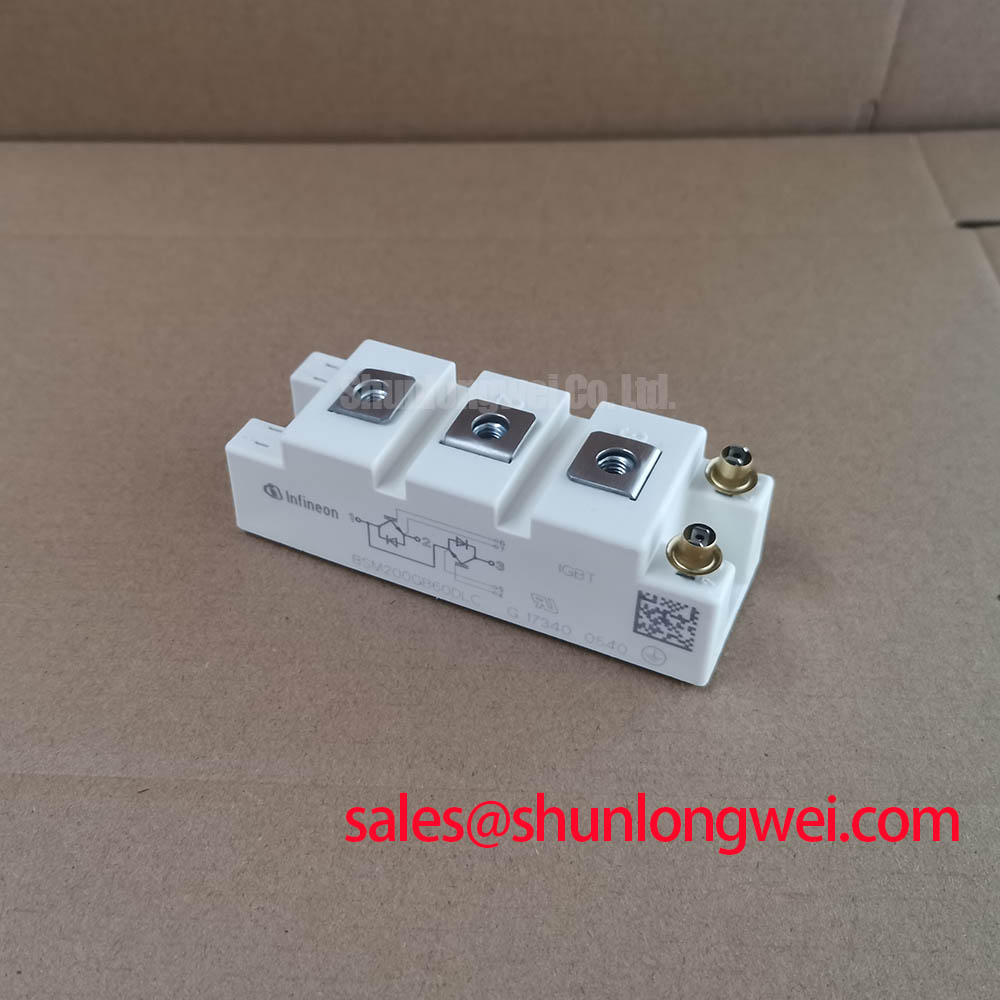
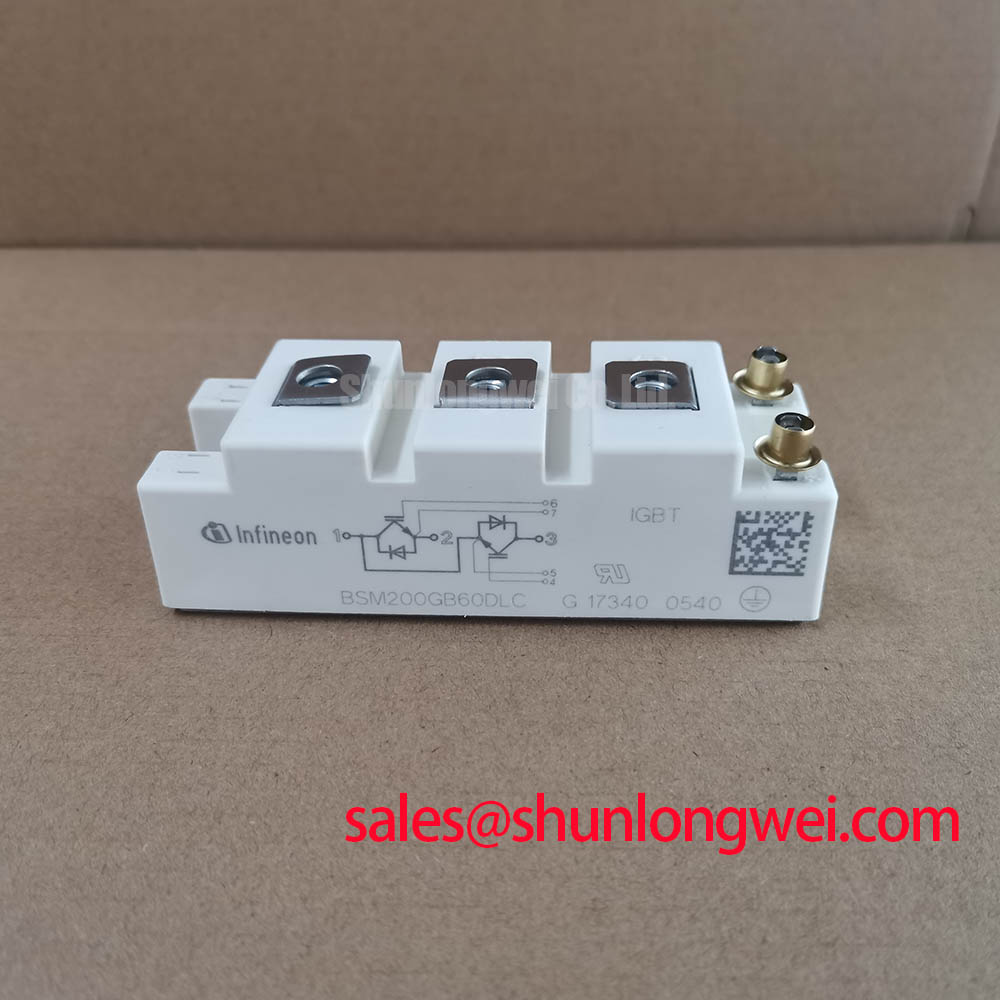
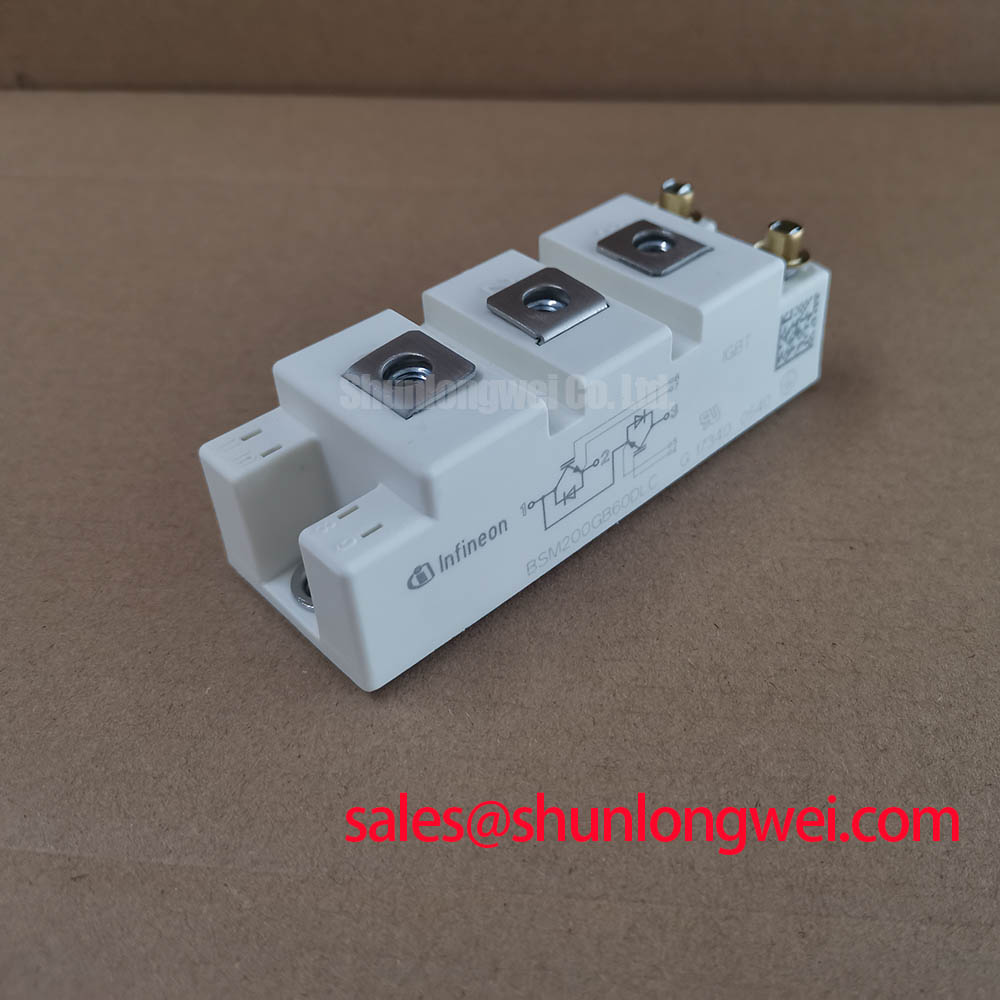
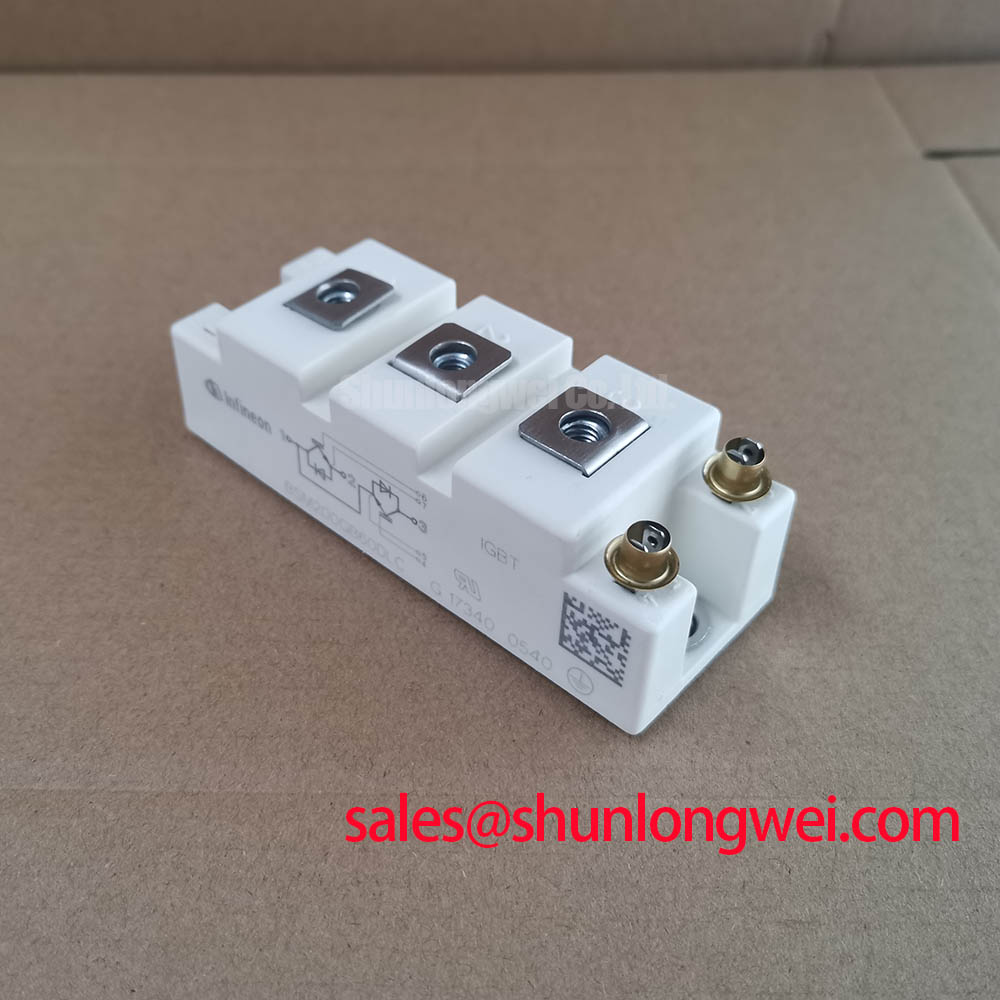
The EUPEC BSM200GB60DLC is a 600V, 200A dual IGBT module engineered for robust performance in high-power industrial applications. This module integrates two IGBTs in a half-bridge configuration, providing a compact and thermally efficient solution for power conversion systems. Its key value proposition lies in the balance of low conduction losses, demonstrated by a typical VCE(sat) of 2.1V at nominal current, and a robust package design that includes an integrated NTC thermistor for real-time temperature monitoring. This combination facilitates reliable and efficient system operation.
* **Core Specifications**: 600V | 200A | VCE(sat) (typ) of 2.1V @ 200A, 25°C
* **Key Advantages**: Low conduction losses improve system efficiency; integrated NTC thermistor enhances thermal protection.
* **Engineered for Reliability**: The module’s low junction-to-case thermal resistance allows for effective heat dissipation, which is critical for maintaining reliability under heavy loads.
Download the BSM200GB60DLC Datasheet (PDF)
Technical Analysis for System Integration
The engineering value of the BSM200GB60DLC is evident in its electrical and thermal characteristics, which are optimized for industrial power systems. The collector-emitter saturation voltage (VCE(sat)) is specified with a typical value of 2.1V at the nominal 200A current (Tj=25°C). This parameter is a direct indicator of conduction losses; a lower VCE(sat) means less power is converted into waste heat when the IGBT is active. For system designers, this translates directly into higher overall energy efficiency and reduced requirements for thermal management hardware, potentially lowering system cost and size.
Effective thermal management is further supported by the module’s low thermal resistance from junction to case (RthJC), rated at a maximum of 0.18 K/W for the IGBT. This can be likened to the width of a pipe; a lower thermal resistance value signifies a wider “pipe” for heat to escape from the semiconductor junction to the heatsink. This efficiency in heat transfer is crucial for preventing the device from exceeding its maximum junction temperature of 150°C, thereby enhancing long-term reliability and operational lifespan under demanding load cycles.
Furthermore, the integration of an NTC thermistor provides a vital safety and monitoring function. This component allows the control system to accurately track the module’s temperature in real-time. By implementing an over-temperature protection trip point in the control logic, designers can prevent thermal runaway and catastrophic failure. This feature is particularly valuable for creating robust systems that can safely operate near their performance limits. For more information on this, see our guide to the critical role of the integrated NTC.
Optimized Application Scenarios
The BSM200GB60DLC is well-suited for several medium-power applications where its electrical and thermal characteristics provide a clear advantage:
* **AC Motor Drives:** The half-bridge topology is a fundamental building block for 3-phase Variable Frequency Drives (VFDs). Its 200A current rating and efficient thermal dissipation ensure reliable control of industrial motors.
* **Uninterruptible Power Supplies (UPS):** In UPS systems, high efficiency is critical. The module’s low VCE(sat) reduces energy loss during both charging and inverting states, improving overall system performance.
* **Welding Power Supplies:** These applications involve high-current pulses. The robust thermal design of the BSM200GB60DLC allows it to withstand the thermal stress associated with repetitive welding cycles.
* **Solar Inverters:** Efficiently converting DC power from solar panels to AC power for the grid requires low switching and conduction losses. This module’s performance helps maximize the energy yield of the system.
This module is best matched for applications requiring a robust 600V/200A half-bridge solution with a focus on thermal stability and system reliability.
Key Specifications of the BSM200GB60DLC
| Parameter | Symbol | Value | Unit |
|---|---|---|---|
| Absolute Maximum Ratings | |||
| Collector-Emitter Voltage | VCES | 600 | V |
| Continuous Collector Current (Tc = 80°C) | IC,nom | 200 | A |
| Gate-Emitter Peak Voltage | VGES | ±20 | V |
| Total Power Dissipation (per Transistor, Tc = 25°C) | Ptot | 730 | W |
| Electrical & Thermal Characteristics | |||
| Collector-Emitter Saturation Voltage (IC=200A, VGE=15V, Tj=25°C) | VCE(sat) | 1.95 (typ) / 2.45 (max) | V |
| Gate Threshold Voltage (IC=8.0mA, VCE=VGE) | VGE(th) | 4.5 to 6.5 | V |
| Thermal Resistance, Junction-to-Case (per IGBT) | RthJC | 0.18 (max) | K/W |
| Thermal Resistance, Junction-to-Case (per Diode) | RthJC | 0.33 (max) | K/W |
| Short Circuit Withstand Time (VGE ≤ 15V, VCC=360V, Tj ≤ 125°C) | tsc | 10 | µs |
Engineer’s Frequently Asked Questions
**1. What is the primary benefit of the low thermal resistance (Rth(j-c)) specified for the BSM200GB60DLC?**
The low thermal resistance of 0.18 K/W (max) per IGBT ensures efficient heat transfer from the silicon die to the case and heatsink. This allows the module to run cooler under load, which directly enhances system reliability and longevity. It also provides engineers with more flexibility in thermal design, potentially allowing for a smaller, more cost-effective heatsink solution.
**2. What is the function of the integrated NTC thermistor?**
The integrated NTC (Negative Temperature Coefficient) thermistor provides a means for real-time temperature monitoring of the module’s baseplate. Its resistance decreases predictably as temperature increases. By connecting this thermistor to a monitoring circuit, a system’s controller can trigger alarms or shut down the drive if the temperature exceeds safe operating limits, preventing thermal damage.
**3. What are the key considerations when mounting this module?**
For optimal thermal performance, the module’s baseplate must be mounted to a flat, clean heatsink surface with a suitable thermal interface material (thermal grease). The datasheet specifies a mounting torque for the M6 screws to ensure proper contact without inducing mechanical stress on the module’s substrate. Insufficient torque can lead to poor thermal contact, while excessive torque can damage the isolated baseplate. Exploring topics like thermomechanical reliability can provide deeper insights.
**4. How does VCE(sat) change with temperature?**
The collector-emitter saturation voltage (VCE(sat)) has a positive temperature coefficient. As seen in the datasheet, the typical VCE(sat) at 200A increases from 2.1V at 25°C to 2.5V at 125°C. This characteristic is beneficial when paralleling IGBT modules, as it helps to naturally balance current sharing between devices.
By providing a balanced set of features—low conduction losses, robust thermal design, and integrated protection—the BSM200GB60DLC serves as a dependable power switching component. It enables engineers to build efficient and durable power conversion systems for a wide range of industrial environments.