A Technical Guide to the Vicor VI-26W-CU High-Density DC-DC Converter
Vicor VI-26W-CU DC-DC Converter for High-Density Power
Flexible and Efficient Power Conversion with the VI-26W-CU
The Vicor VI-26W-CU is a high-efficiency, component-level DC-DC converter that provides a robust solution for distributed power architectures. Its primary value lies in an exceptionally wide input voltage range and the capability for simple, direct paralleling to achieve higher power outputs or redundant system configurations. This design empowers engineers to develop scalable and reliable power systems with simplified thermal management, making it an excellent choice for demanding industrial applications.
- Core Specifications: 100-375V DC Input | 12V DC Output | 150W Power
- Key Advantages: Facilitates system scalability with easy parallel operation; high efficiency up to 90% reduces cooling requirements.
- Design Flexibility: The wide input range accommodates a variety of unregulated power sources, simplifying front-end power design.
Download the Official VI-26W-CU Datasheet (PDF)
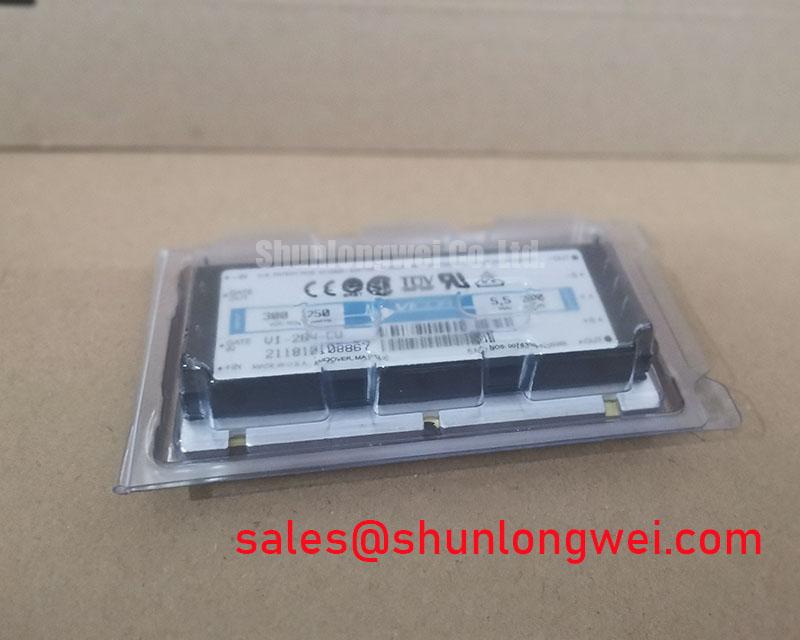
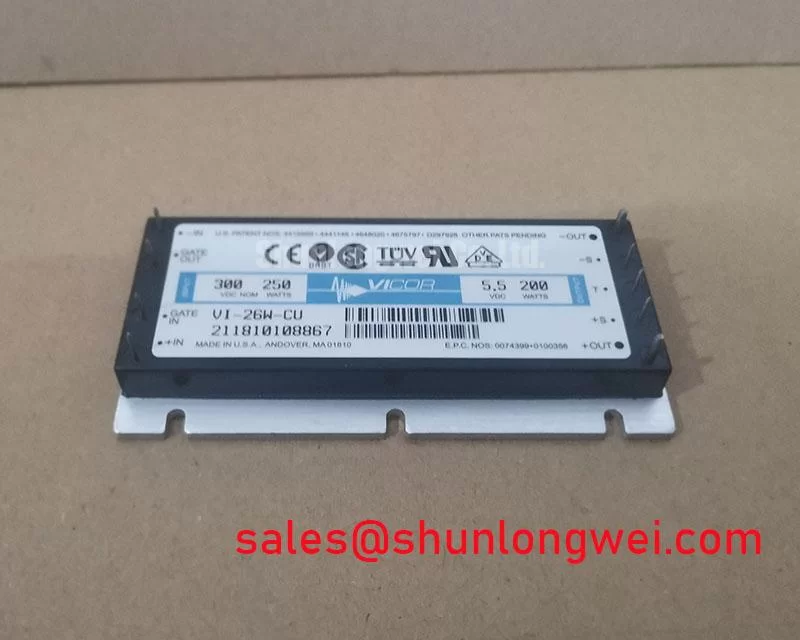
Technical Analysis for System Integration
The VI-26W-CU is engineered around a zero-current switching (ZCS) topology, which is fundamental to its high efficiency and power density. By minimizing switching losses, the module converts power with minimal heat generation. For a design engineer, this directly translates to a smaller thermal footprint. Think of thermal resistance as the width of a pipe for heat to escape; the module’s efficient design ensures this “pipe” is wide, preventing thermal bottlenecks and often negating the need for bulky, forced-air cooling systems in space-constrained designs. Proper thermal management remains crucial, but the starting point is significantly more advantageous.
A standout feature documented in the datasheet is the module’s wide input range, spanning from 100V to 375V DC. This broad compatibility allows the converter to operate reliably from poorly regulated or fluctuating DC buses, which are common in industrial environments or battery-powered systems. This simplifies the front-end design by reducing the need for extensive pre-regulation or protection circuitry, saving board space and component cost. Furthermore, the module’s remote sense capability compensates for voltage drops across PCB traces or wiring, ensuring precise voltage regulation directly at the load—a critical factor for sensitive electronic systems.
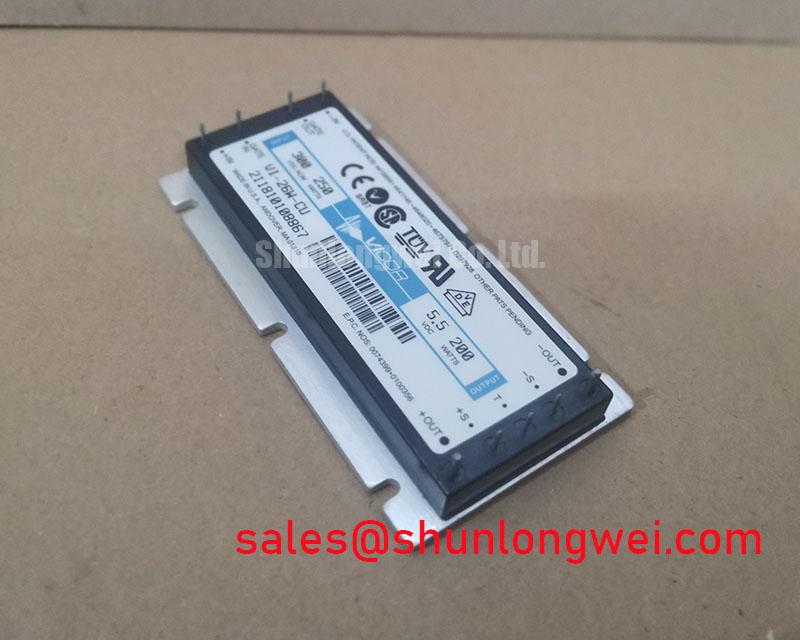

Optimized Application Scenarios
The specific characteristics of the VI-26W-CU make it a strong candidate for several demanding applications:
- Distributed Power Systems: The modular, high-density design is ideal for architectures where power conversion is located close to the load, improving transient response and reducing bus impedance. The module’s parallel capability is key here.
- Industrial Automation & Control: Its ability to handle a wide, unregulated DC input (100-375V) ensures stable operation from factory floor power buses, which are often subject to noise and voltage swings.
- Telecommunications Equipment: High efficiency and a compact footprint are critical for densely packed telecom racks. The low-noise FM control helps minimize electromagnetic interference (EMI), a vital consideration in sensitive communication systems.
- Aerospace and Defense: The robust build and high reliability inherent in Vicor’s component-level converters are well-suited for applications where performance under challenging conditions is non-negotiable.
This module is best matched for systems requiring a scalable, efficient, and reliable 150W power block from a high-voltage, variable DC source.
Key VI-26W-CU Specifications
| Electrical Characteristics | |
|---|---|
| Input Voltage Range | 100 V to 375 V DC |
| Output Voltage | 12 V (Adjustable from 10% to 110%) |
| Output Power | 150 W |
| Efficiency | 90% (Typical) |
| Isolation Voltage (Input to Output) | 3000 Vrms |
| Mechanical & Thermal Characteristics | |
| Operating Temperature (Baseplate) | -40°C to 100°C |
| Dimensions | 4.6″ x 2.4″ x 0.5″ (116.8 x 61.0 x 12.7 mm) |
Engineer’s FAQ
1. How can I increase the output power using the VI-26W-CU?
The datasheet specifies that these modules can be paralleled for higher power. By connecting the PR (Parallel) pins of multiple modules, they will actively share the load current. This allows for straightforward power scaling without complex external control circuitry, which is a key topic in power semiconductor system design.
2. What are the main thermal design considerations?
While highly efficient, the module still dissipates heat. The primary path for heat removal is through its aluminum baseplate. It is critical to mount the baseplate to a suitable heatsink with a thermal interface material. The datasheet provides thermal resistance figures to help calculate the required heatsink performance to keep the baseplate temperature below the 100°C maximum.
3. What is the function of the PC (Primary Control) pin?
The PC pin serves as a logic disable input. Pulling this pin low will shut down the converter, providing a simple way to control the output power electronically. This is useful for sequencing power rails or for system-level fault protection. The datasheet specifies the required voltage levels for this logic function.
4. Are external components required for operation?
Yes, for most applications, external input and output filtering capacitors are necessary to manage ripple and ensure stable operation. The datasheet provides recommendations for capacitor values based on the application. Depending on the system’s EMI requirements, additional filtering may also be needed to meet specific regulatory standards. Understanding topics like parasitic inductance is crucial for effective filter design.
This module’s architecture provides a foundation for building high-performance, scalable power systems. The combination of a wide operational input range, high efficiency, and integrated control features enables engineers to meet stringent design requirements while simplifying the overall system complexity.