Fuji 2MBI300U4H-120: A Technical Review of a High-Speed IGBT Module
Fuji 2MBI300U4H-120: A 1200V/300A Dual IGBT Module
High-Speed Switching for Robust Power Conversion
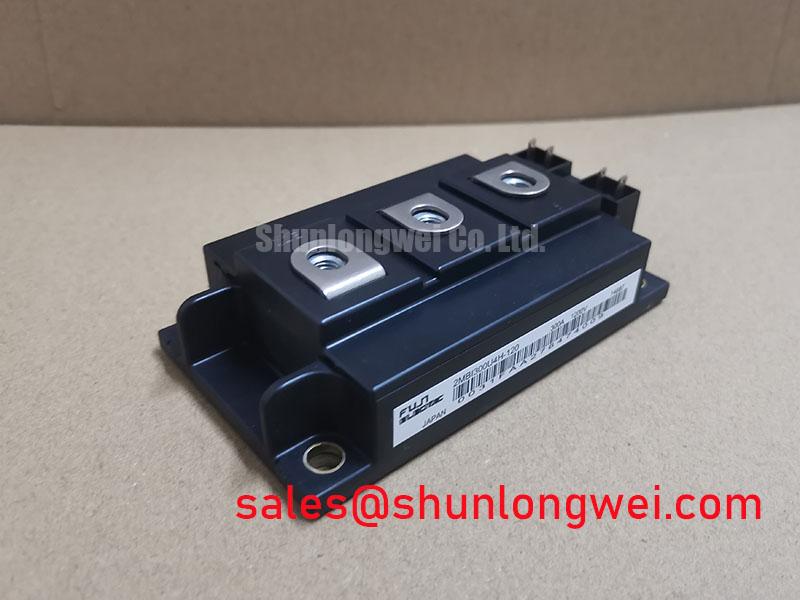
The Fuji Electric 2MBI300U4H-120 is a dual IGBT module from the U-Series, delivering a balanced combination of high-speed switching and low conduction losses for demanding power systems. This 1200V, 300A module provides a robust foundation for high-frequency inverters and motor drives, where both efficiency and reliability are critical operational parameters. By integrating an N-channel IGBT with a fast and soft-recovery Free Wheeling Diode (FWD), this device is engineered to minimize power dissipation and manage thermal performance effectively.
- Core Specifications: 1200V | 300A | VCE(sat) 2.7V (max)
- Key Features: High-speed switching capabilities and an integrated NTC thermistor for temperature monitoring.
- Engineering Value: Enables efficient heat dissipation and provides essential over-temperature protection, contributing to system longevity.
For complete specifications and performance curves, download the official datasheet (PDF).

Technical Analysis for System Integration
The performance of the 2MBI300U4H-120 is defined by a strategic balance between on-state losses and switching speed. The collector-emitter saturation voltage (VCE(sat)) is specified at a maximum of 2.7V at 300A and 125°C. This value is a critical factor in determining conduction losses, directly impacting the module’s thermal load. While not the lowest in the industry, it is coupled with high-speed switching characteristics (typical turn-on time of 1200 ns and turn-off time of 500 ns), making it suitable for applications where switching frequency is a key design parameter.
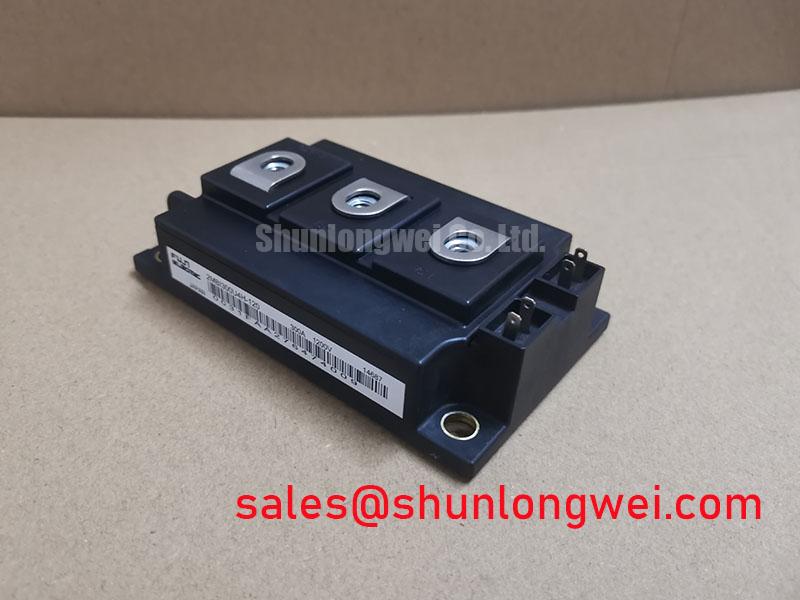
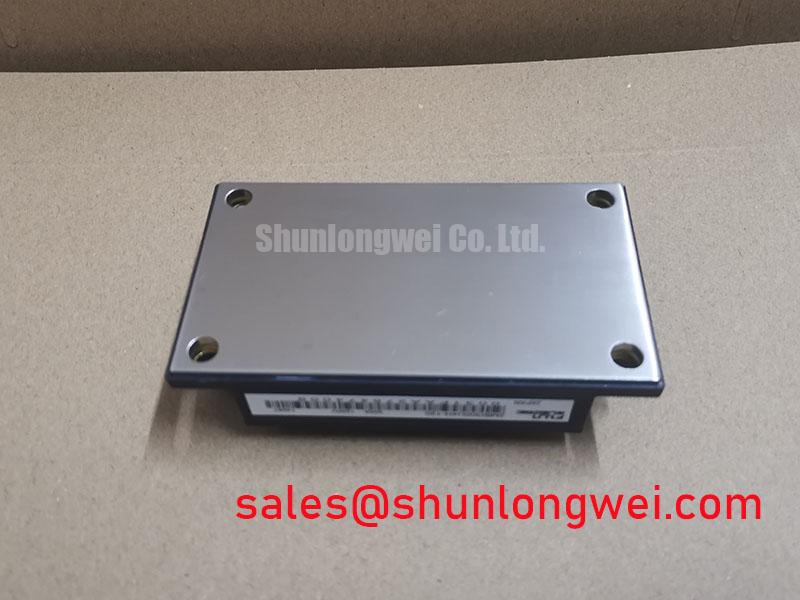
Effective thermal management is crucial for reliability in high-power modules. The 2MBI300U4H-120 features a thermal resistance from junction to case (Rth(j-c)) of 0.085 K/W for the IGBT and 0.16 K/W for the diode. This parameter can be thought of like the width of a pipe; a lower value indicates a wider pipe, allowing heat to flow more easily from the semiconductor junction to the heatsink. This efficient heat transfer is essential for keeping the device within its maximum operating junction temperature of 150°C and is a key input for any thermal design simulation.
Furthermore, the module includes an integrated NTC thermistor. This component serves as an onboard temperature sensor, providing real-time feedback to the system’s controller. This data enables the implementation of precise over-temperature protection, which can prevent catastrophic failures caused by overload conditions or cooling system malfunctions, a critical aspect of preventing IGBT failures.
Optimized Application Scenarios
The specific characteristics of this module make it a suitable choice for several high-power applications:
- Variable Frequency Drives (VFDs): The 300A current rating and 1200V blocking voltage are well-suited for controlling high-power AC motors. The balance between switching and conduction losses helps maintain efficiency across different operating speeds.
- Solar Inverters: In large-scale photovoltaic systems, the module’s high voltage rating and efficient switching contribute to maximizing energy conversion from the DC source to the AC grid.
- Uninterruptible Power Supplies (UPS): Its robust power handling capacity ensures reliable performance in the inverter stage of UPS systems, providing stable power during outages.
- Welding Equipment: The module’s fast switching allows for precise control over the welding arc, while its high current capability manages the demanding power pulses required in welding processes.
This module is a strong candidate for systems that require a durable 1200V/300A half-bridge configuration with an emphasis on switching performance and thermal robustness.
Key Specifications of the 2MBI300U4H-120
| Absolute Maximum Ratings (Tj=25°C) | |
|---|---|
| Collector-Emitter Voltage (VCES) | 1200V |
| Gate-Emitter Voltage (VGES) | ±20V |
| Continuous Collector Current (IC @ Tc=25°C) | 400A |
| Continuous Collector Current (IC @ Tc=80°C) | 300A |
| Repetitive Peak Collector Current (ICp) | 600A |
| Total Power Dissipation (PC) | 1470W |
| Operating Junction Temperature (Tj) | -40 to +150°C |
| Electrical Characteristics (Tj=125°C unless otherwise noted) | |
| Collector-Emitter Saturation Voltage (VCE(sat)) @ 300A | 2.7V (max) |
| Forward Voltage of FWD (VF) @ 300A | 2.4V (max) |
| Turn-on Time (ton) | 1200ns (typ) |
| Turn-off Time (toff) | 500ns (typ) |
| Thermal Resistance (Rth(j-c), IGBT) | 0.085 K/W (max) |
| Thermal Resistance (Rth(j-c), FWD) | 0.16 K/W (max) |
Note: These parameters are based on the official datasheet. Engineers should always refer to the complete datasheet for detailed curves and application notes.

Engineer’s FAQ
What are the primary trade-offs for the 2MBI300U4H-120 in a high-frequency inverter design?
The primary trade-off is between conduction loss and switching loss. With a VCE(sat) of up to 2.7V, conduction losses might be higher than some newer technologies. However, its U-Series design provides fast switching characteristics, which reduces switching losses. For a high-frequency inverter, engineers must balance these two factors based on their specific operating duty cycle and frequency to optimize overall system efficiency.
How does the internal NTC thermistor in the 2MBI300U4H-120 improve system reliability?
The integrated NTC thermistor provides a direct, real-time measurement of the module’s internal temperature. This allows the system’s microcontroller to monitor thermal performance and trigger a shutdown or power reduction if the temperature exceeds safe limits. This proactive protection prevents thermal runaway and significantly enhances the long-term reliability of the power system. For more on this, see our guide on the role of the integrated NTC in IGBT reliability.
How do I use the Rth(j-c) value to select a heatsink?
The junction-to-case thermal resistance (Rth(j-c)) of 0.085 K/W is the starting point for thermal calculations. To select a heatsink, you must first calculate the total power dissipation (conduction + switching losses). Then, using the maximum desired junction temperature (e.g., 125°C for a safety margin) and the ambient temperature, you can determine the total required thermal resistance from junction-to-ambient. By subtracting the Rth(j-c) and the thermal resistance of the thermal interface material (TIM), you arrive at the required Rth(c-a) for the heatsink.
Can this module be used in a hard-switched, half-bridge topology?
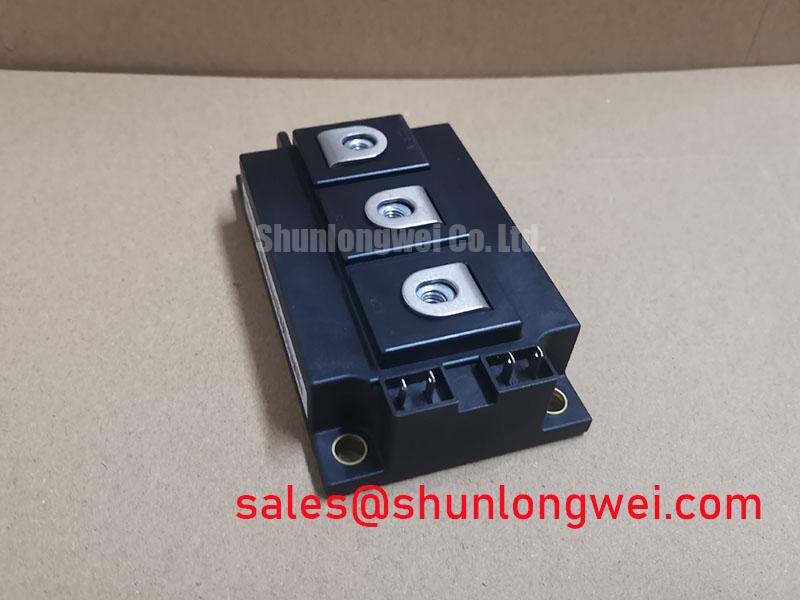
Yes. The 2MBI300U4H-120 is a dual IGBT module configured as a half-bridge, making it ideal for this topology. It includes integrated freewheeling diodes (FWD) which are essential for handling the reverse recovery currents that occur during hard switching in applications like H-bridge and half-bridge inverters.
Enabling Robust and Efficient Power Designs
The Fuji Electric 2MBI300U4H-120 offers a proven and reliable solution for engineers developing high-power conversion systems. Its architecture provides a solid balance between switching speed and thermal performance, while the integrated NTC thermistor adds a crucial layer of protection. This module empowers designers to build efficient and durable systems for demanding industrial environments.