Fuji Electric 2MBI400U4H-170-50: Technical Guide to the 1700V 400A Dual IGBT Module
Fuji Electric 2MBI400U4H-170-50 | 1700V 400A Dual IGBT Module
Introduction to High-Voltage Power Management
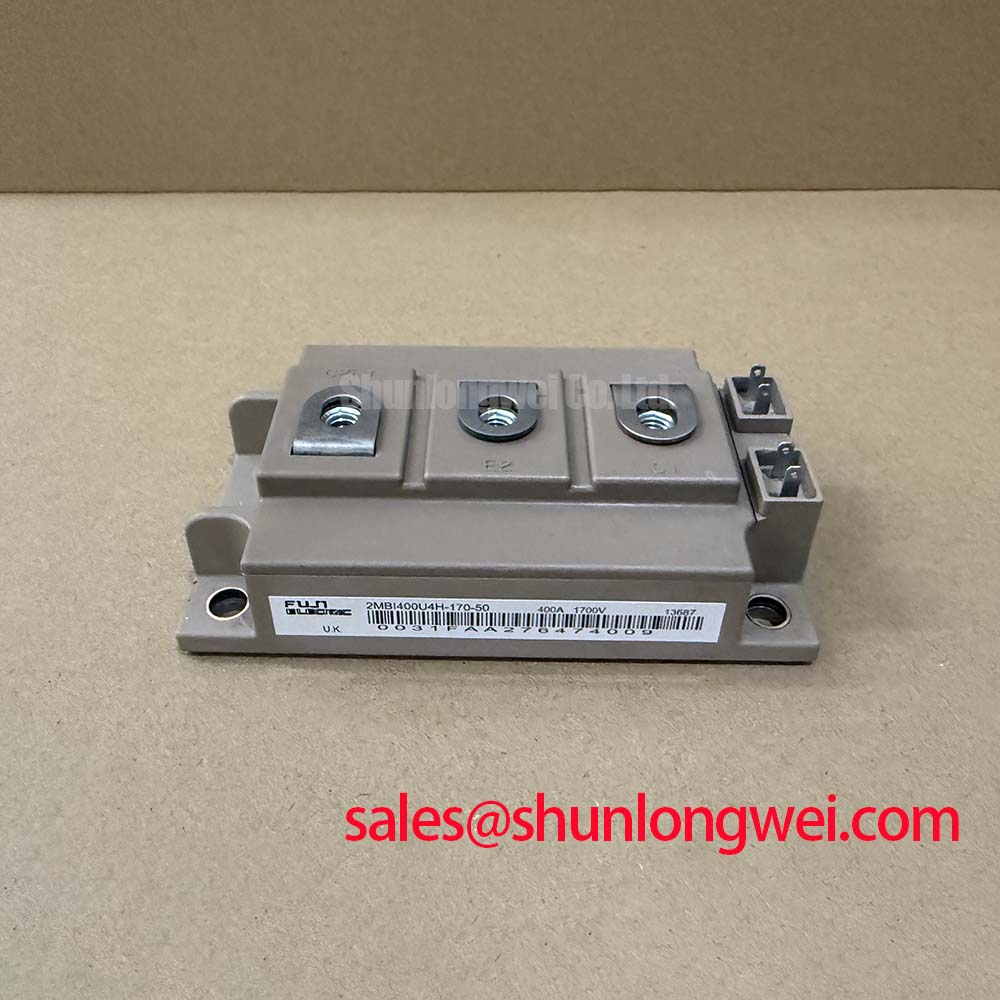
The 2MBI400U4H-170-50 represents a sophisticated solution for high-power switching, belonging to Fuji Electric’s esteemed U4 series of IGBT modules. This 2-pack dual module is engineered to provide a robust voltage ceiling of 1700V alongside a continuous collector current of 400A. By integrating advanced Trench Gate technology, this component addresses the critical engineering need for reduced conduction losses and enhanced switching stability in demanding industrial environments.
- Core Specifications: 1700V | 400A | Low VCE(sat) for reduced thermal overhead.
- Key Advantages: Optimized switching characteristics for lower EMI and superior power cycling durability.
- Design margin: Engineers often ask how the 1700V rating benefits 690V AC systems; this module provides a significantly wider safety margin against voltage transients compared to standard 1200V alternatives.
Download Official 2MBI400U4H-170-50 Datasheet (PDF)
M3: Technical Analysis of the U4 Series Architecture
The technical core of the 2MBI400U4H-170-50 lies in its Trench Gate structure, a significant evolution over legacy planar technologies. In high-power semiconductors, trench gate evolution has allowed for a much higher cell density, which directly translates to a lower On-state Saturation Voltage (VCE(sat)). For the system designer, a lower VCE(sat) means the device behaves more like an ideal switch with minimal internal resistance.
To understand the engineering significance of VCE(sat), one can use a fluid dynamics analogy. Imagine the IGBT as a high-pressure valve in a water system. The VCE(sat) value represents the “electrical friction” within the valve when it is fully open. A high value creates a bottleneck, generating heat and wasting energy. The 2MBI400U4H-170-50 minimizes this friction, allowing 400A of current to flow with significantly less heat generation than previous generations, which simplifies the requirements for power semiconductor cooling systems.
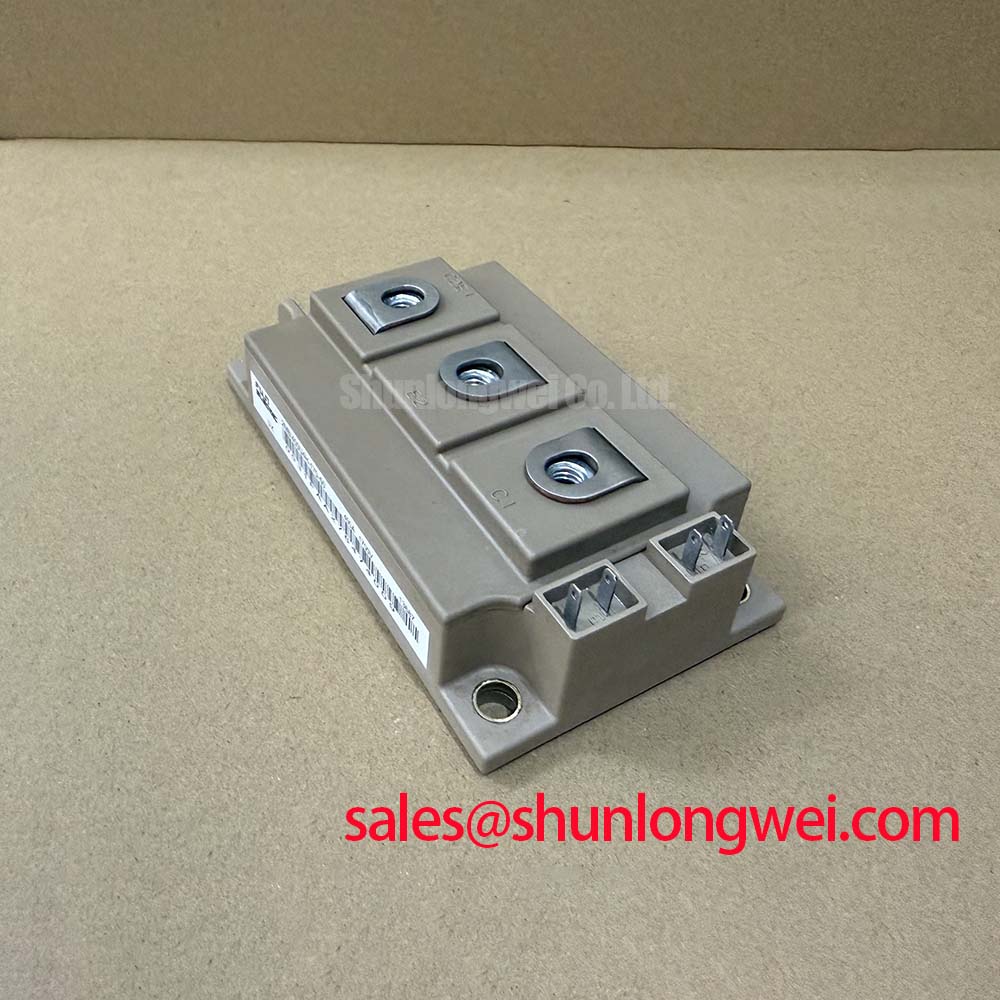
Furthermore, the 1700V collector-emitter voltage rating is critical for applications where reliability cannot be compromised. In many industrial grids, inductive flyback and line surges can easily exceed the breakdown limits of lower-rated modules. By utilizing a 1700V device, developers ensure that the module operates well within its Safe Operating Area (SOA), even during unpredictable grid events or high-speed switching cycles that typically induce voltage spikes due to stray inductance.
M4: Optimized Application Scenarios
The 2MBI400U4H-170-50 is frequently selected for high-power conversion tasks where thermal efficiency and voltage headroom are paramount:
- Industrial Motor Drives (VFDs): Specifically for 690V AC heavy industrial motors, where the 1700V rating handles regenerative braking spikes effectively.
- Wind Power Converters: The module’s power cycling capability and high voltage rating make it suitable for the erratic power flows inherent in wind turbine generation.
- Large-scale Uninterruptible Power Supplies (UPS): Used in the inverter stage to provide clean, reliable power with high efficiency, reducing the cooling load in data centers.
- Solar Inverters: Acts as a primary switch in central inverters, benefiting from low switching losses at moderate frequencies.
Best Match: This module is the optimal choice for 690V AC system architectures requiring high reliability and simplified thermal management through low conduction losses.
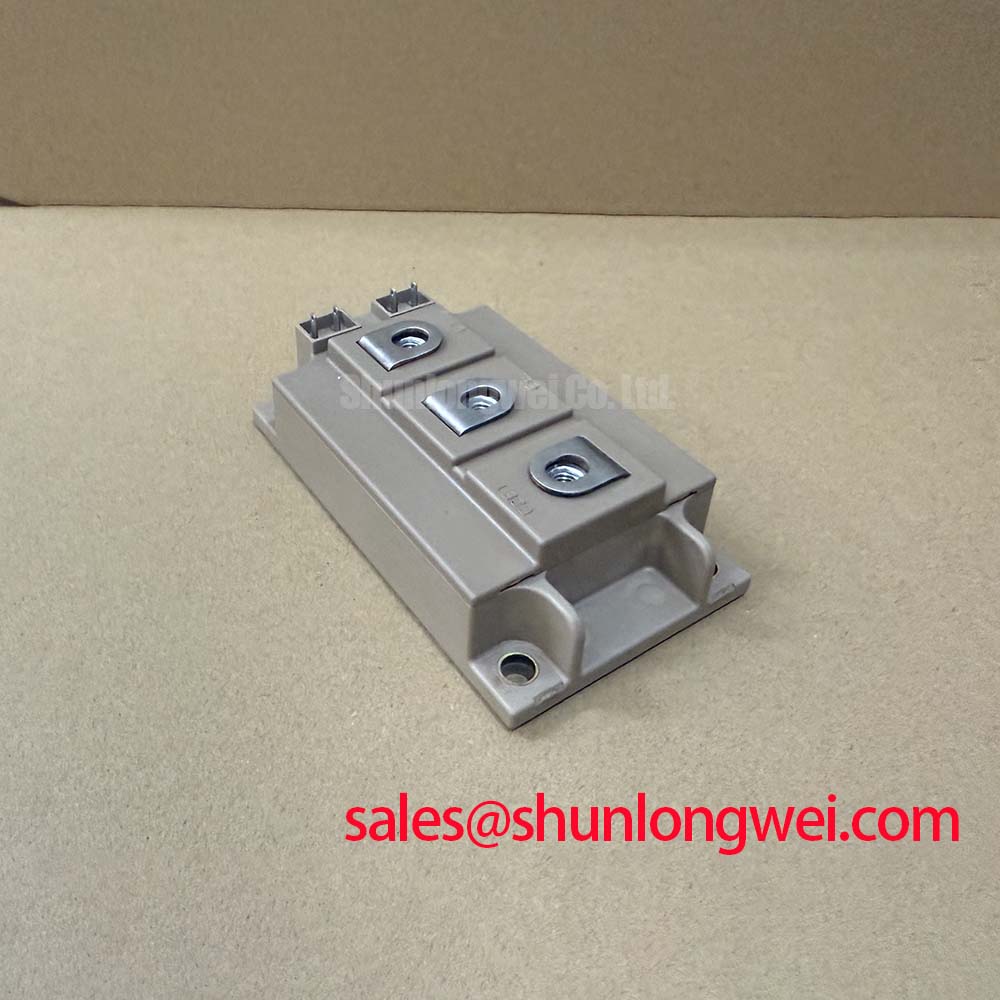
M5: 2MBI400U4H-170-50 Key Specifications
| Category | Parameter | Typical Value / Rating |
|---|---|---|
| Absolute Maximum Ratings | Collector-Emitter Voltage (Vces) | 1700V |
| Collector Current (Ic) | 400A (at Tc=80°C) | |
| Junction Temperature (Tj) | Up to +150°C | |
| Electrical Characteristics | Collector-Emitter Saturation Voltage | 2.20V (Typ. at Ic=400A) |
| Gate-Emitter Threshold Voltage | 4.5V to 8.5V | |
| Thermal & Isolation | Thermal Resistance (j-c) | 0.045 °C/W (IGBT) |
| Isolation Voltage (Viso) | AC 3400V (1 min) |
M6: Engineer’s FAQ
Q1: What are the gate drive requirements for the 2MBI400U4H-170-50?
A: The module requires a gate-emitter voltage ($V_{GE}$) of +15V for efficient turn-on. It is highly recommended to use robust gate drive design incorporating a negative bias (e.g., -5V to -15V) to ensure immunity against parasitic turn-on caused by high dv/dt events.
Q2: How should the thermal interface material be applied for this module?
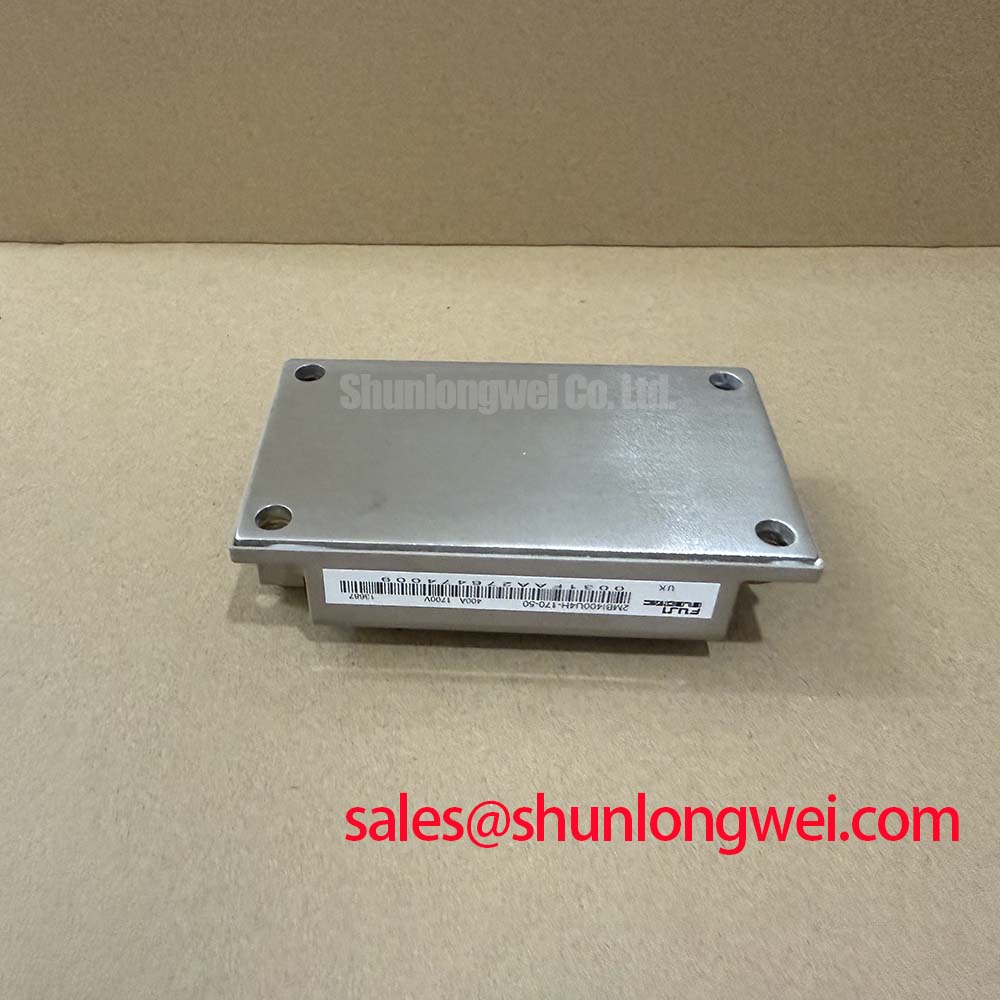
A: To achieve the rated thermal resistance of 0.045 °C/W, a high-quality thermal grease must be applied uniformly with a thickness of approximately 100μm to 150μm. Proper mounting torque for the baseplate screws is essential to eliminate air gaps between the module and the heatsink.
Q3: Is the 2MBI400U4H-170-50 suitable for high-frequency switching?
A: While the U4 series is optimized for efficiency, switching losses increase with frequency. It is typically utilized in the 2kHz to 10kHz range. Beyond this, thorough analysis of parasitic inductance is required to manage switching transients.
Closing Statement
The Fuji Electric 2MBI400U4H-170-50 stands as a high-performance cornerstone for power electronic designs that demand extreme reliability at 1700V. By leveraging Trench Gate technology to minimize internal losses and providing a robust 400A current capacity, this module enables engineers to build more efficient, compact, and resilient power conversion systems for the global industrial market.