Infineon BSM25GP120: A Technical Analysis of a High-Efficiency 1200V IGBT Module
BSM25GP120 IGBT Module | Infineon 1200V 25A Sixpack
Introduction and Core Highlights
The Infineon BSM25GP120 is a highly integrated power module containing six IGBTs in a three-phase bridge configuration, delivering an efficient solution for compact inverter designs. Its core value proposition lies in the use of Trench/Field-Stop IGBT3 technology, which achieves a low collector-emitter saturation voltage (VCE(sat)) to significantly reduce conduction losses and improve thermal performance. This low VCE(sat) directly translates to less heat generated during operation, which can simplify system cooling requirements.
- Core Specifications: 1200V | 25A (ICnom) | 1.7V VCE(sat) (Typ. at Tj=125°C)
- Key Advantages: Minimizes conduction power loss, simplifies thermal management with an integrated NTC thermistor.
Download Official Datasheet (PDF)

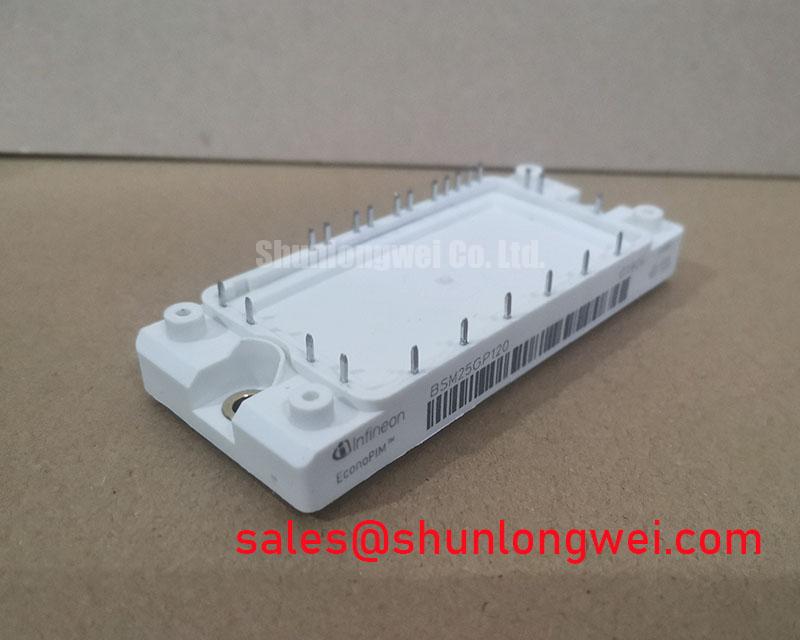
Technical Analysis of Core Features
The engineering significance of the BSM25GP120 centers on its electrical and thermal efficiency. The specified typical VCE(sat) of 1.7V at a junction temperature of 125°C is a critical parameter. This low on-state voltage drop directly curtails the power dissipated as heat during the conduction phase (Pcond = VCE(sat) × IC). For system designers, this means lower operating temperatures, enhanced reliability, and the potential to reduce the size and cost of the required heatsink. The module’s thermal resistance from junction to case (RthJC) is specified per IGBT at a maximum of 0.85 K/W. You can think of thermal resistance like the width of a pipe; a lower value indicates a wider pipe, allowing heat to flow away from the semiconductor junction more easily.
Integration is another key aspect of this module’s architecture. By housing a full three-phase bridge (a “Sixpack” configuration) in a single package, it reduces the complexity of PCB layout and assembly compared to using twelve discrete components (six IGBTs and six diodes). This compact design also minimizes stray inductance between components, a crucial factor in managing voltage overshoots during high-speed switching. Furthermore, the inclusion of an NTC thermistor provides a direct and reliable method for monitoring the module’s internal temperature, enabling robust over-temperature protection schemes within the system controller.
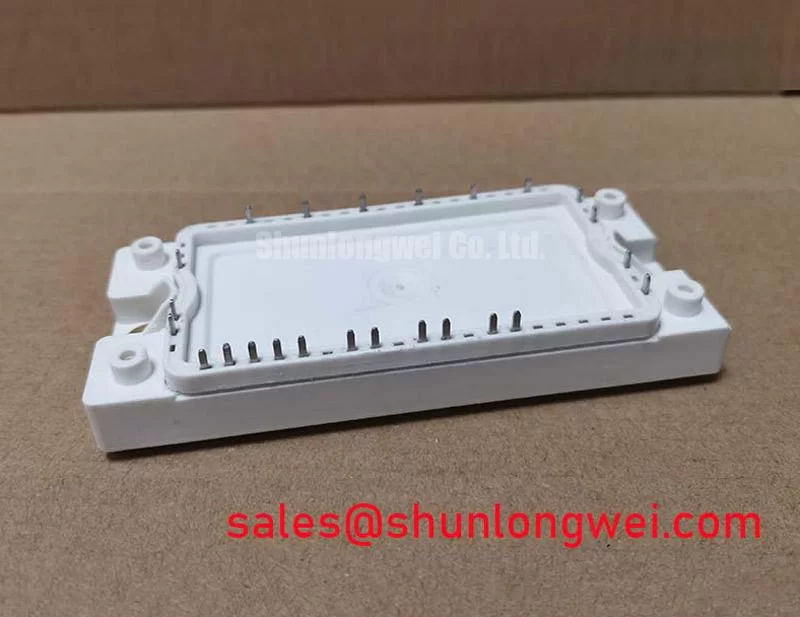
Optimized Application Scenarios
The specifications of the BSM25GP120 make it well-suited for several power conversion applications:
- AC Motor Drives: The sixpack topology is the standard building block for three-phase Variable Frequency Drives (VFDs). Its 1200V rating offers substantial design margin for systems operating on 400V to 480V AC lines.
- Uninterruptible Power Supplies (UPS): High efficiency is critical in UPS systems to minimize energy waste. The low VCE(sat) directly contributes to higher overall system efficiency.
- Servo Drives: The module’s robust electrical characteristics and integrated nature support the dynamic load and precise control requirements of industrial servo applications.
- Solar Inverters: Reliable and efficient power conversion is paramount for maximizing energy harvesting. The module’s thermal performance ensures stability under demanding environmental conditions.
Its balance of current rating, voltage headroom, and low conduction losses makes it an optimal fit for power-dense motor drives up to 7.5 kW.
Key Specification Parameters for BSM25GP120
| Parameter | Value | |
|---|---|---|
| Absolute Maximum Ratings | ||
| Collector-Emitter Voltage (VCES) | Tj = 25°C | 1200 V |
| DC Collector Current (IC) | TC = 80°C | 25 A |
| TC = 25°C | 35 A | |
| Total Power Dissipation (Ptot) per IGBT | 200 W (TC = 25°C) | |
| Electrical Characteristics (IGBT) | ||
| Collector-Emitter Saturation Voltage (VCE(sat)) | IC = 25 A, VGE = 15 V, Tj = 25°C | 1.70 V (Typ.) / 2.15 V (Max.) |
| IC = 25 A, VGE = 15 V, Tj = 125°C | 1.70 V (Typ.) | |
| Short Circuit Withstand Time (tpsc) | ≥ 10 µs (VGE ≤ 15V, Tj ≤ 150°C, VCC = 600V) | |
| Thermal and Mechanical Characteristics | ||
| Thermal Resistance, Junction to Case (RthJC) per IGBT | 0.85 K/W (Max.) | |
| Isolation Test Voltage (Visol) | 2500 V (RMS, f=50Hz, t=1min) | |
Engineer’s FAQ
- What is the main advantage of the BSM25GP120’s 1.7V VCE(sat)?
- A low VCE(sat) directly reduces the power lost as heat when the IGBT is on. This leads to higher inverter efficiency, lower operating temperatures, and potentially smaller, more cost-effective cooling systems. It is a key parameter for achieving high power density.
- What is the recommended mounting torque for the BSM25GP120?
- The datasheet specifies a mounting torque for the module terminals (M5 screws) of 2.5 – 3.5 Nm and for the mounting screws (M5) of 2.5 – 3.5 Nm. Applying the correct torque is critical to ensure a low-resistance electrical connection and an effective thermal interface to the heatsink, preventing both hotspots and mechanical stress. For more on this, see our analysis on IGBT thermal design.
- How does the integrated NTC thermistor function?
- The Negative Temperature Coefficient (NTC) thermistor is a thermally sensitive resistor. Its resistance decreases as the module temperature increases. By monitoring this resistance value, a control system can accurately infer the module’s operating temperature and trigger protective measures like derating or shutdown if it exceeds safe limits, preventing thermal failure.
- Is this module suitable for high-frequency switching applications?
- The BSM25GP120 utilizes Infineon’s IGBT3 technology, which is optimized for a balance between low conduction losses (VCE(sat)) and switching losses. Based on the Eon and Eoff values in the datasheet, it is well-suited for applications with switching frequencies typically found in industrial motor drives, generally in the range of 2 kHz to 16 kHz. For very high-frequency designs (>20 kHz), other IGBT technologies might offer lower switching losses.
Concluding Statement
By integrating a complete three-phase inverter stage with proven, low-loss Trench/Field-Stop IGBT3 technology, the BSM25GP120 provides a robust foundation for engineers to develop compact, efficient, and thermally stable power conversion systems.