QM100DY-24 Review: A High-Gain, Isolated Darlington Module for Simplified Power Control
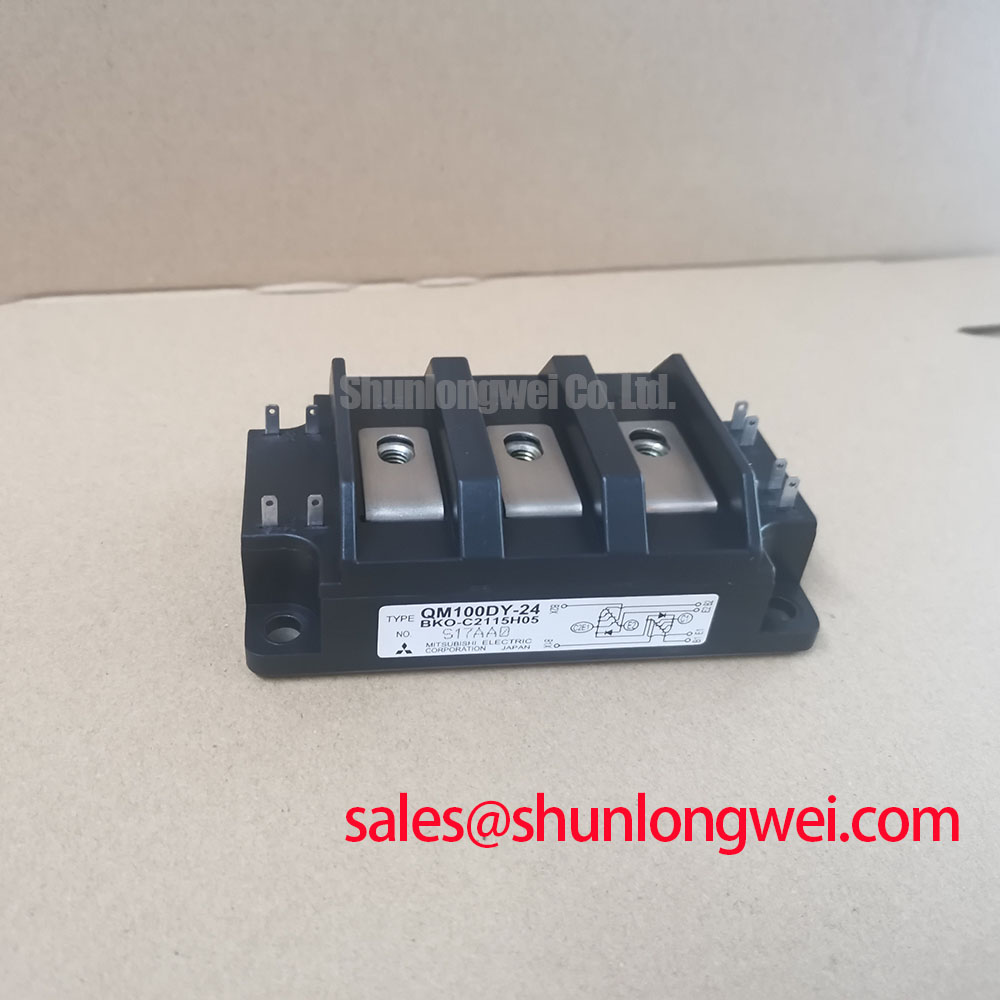
QM100DY-24 Mitsubishi Dual Darlington Transistor Module
High-Gain 1200V/100A Switching with Integrated Isolation
The Mitsubishi QM100DY-24 is a dual Darlington transistor module engineered for efficient, high-gain control in medium-power industrial switching applications. This module’s primary value lies in its combination of robust current handling and an integrated, electrically isolated base, which streamlines both the drive circuit and the thermal management design. By delivering a high DC current gain (hFE), it reduces the power required from the control stage, allowing for a more straightforward and cost-effective system architecture.
- Core Specifications: 1200V | 100A | hFE 75 (typ)
- Key Advantages: Simplifies drive circuit requirements, enhances system safety with 2500V isolation.
This integrated approach helps answer a common engineering challenge: how to achieve effective thermal dissipation without complex and costly insulation schemes.
Download Official Datasheet (PDF)

Technical Analysis of Core Features
The QM100DY-24 module is defined by characteristics that directly impact system design and reliability. A deep-dive into the datasheet reveals how its specifications translate into tangible engineering benefits.
High DC Current Gain (hFE)
A key parameter of this module is its high DC current gain (hFE), with a typical value of 75. This figure represents the amplification factor from the base input to the collector output. For the QM100DY-24, it means a relatively small base current can control the full 100A collector current. This significantly reduces the burden on the gate drive circuitry, enabling the use of lower-power, less complex drivers. This characteristic is fundamental to simplifying the overall power stage design and can lead to reduced component count and PCB footprint. Understanding device gain is crucial for preventing issues like IGBT latch-up in similar power devices.

Integrated Electrical Isolation
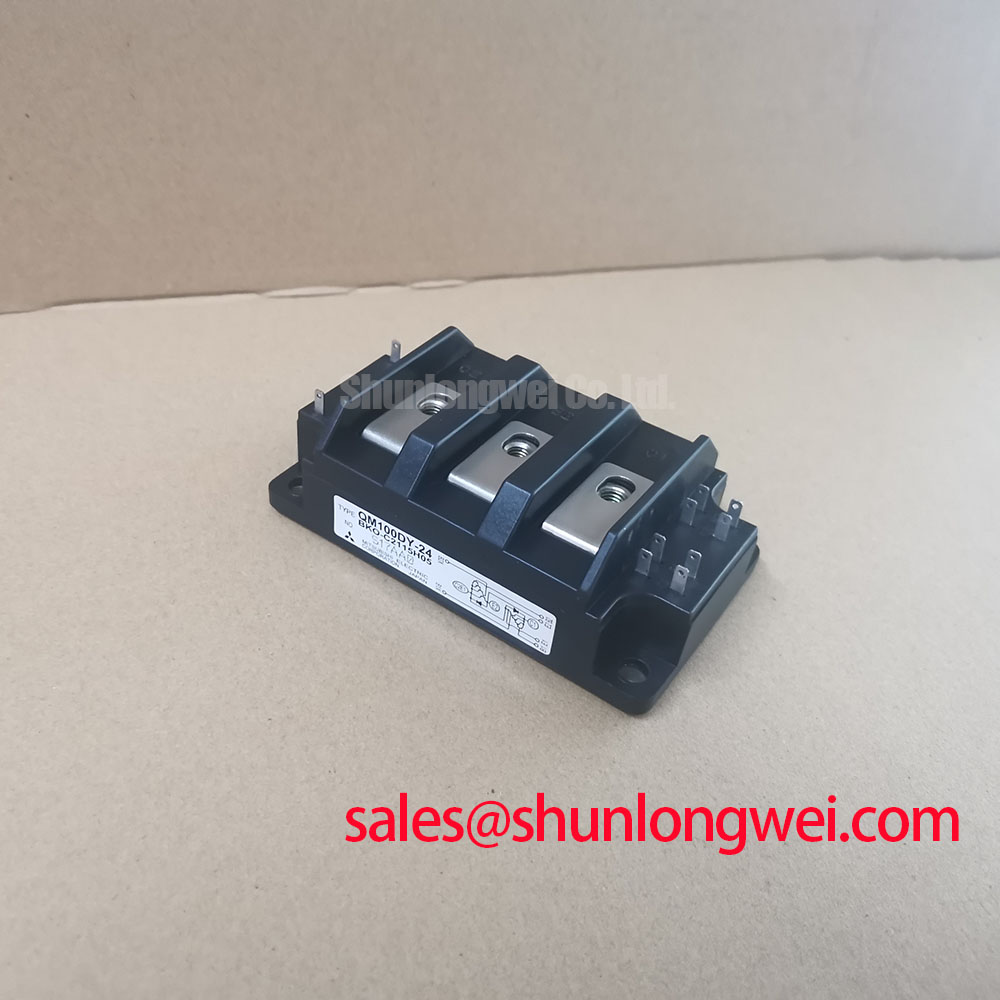
The module features a collector that is electrically isolated from the mounting baseplate, with an isolation voltage (Viso) rated at 2500V AC for 60 seconds. This feature offers a critical advantage in system assembly and thermal management. You can think of the thermal resistance, Rth(j-c), as the width of a pipe for heat to escape; a lower value means heat flows more easily. The QM100DY-24’s isolated base allows it to be mounted directly onto a grounded chassis or heatsink without requiring additional, often thermally inefficient, insulating layers like mica pads. This simplifies manufacturing, reduces assembly time, and ensures a more reliable thermal path from the transistor junction to the heatsink.
Optimized Application Scenarios
The specific parameter set of the QM100DY-24 makes it a strong candidate for several medium-frequency, medium-voltage applications.
- AC & DC Motor Drives: Its 100A current rating and robust construction are well-suited for controlling the speed and torque of industrial motors.
- Switching Power Supplies: The dual configuration is ideal for building half-bridge topologies used in high-power switch-mode power supplies (SMPS).
- Uninterruptible Power Supplies (UPS): The module’s voltage and current ratings are appropriate for the inverter stage of many commercial UPS systems, where reliability is paramount.
- Welding Power Supplies: Capable of handling the high-current pulses required in certain welding applications, leveraging its durable packaging.
This module is best matched for systems needing robust, high-gain current control up to 100A without the complexity of high-power drive circuitry.
Key Specification Parameters
| Absolute Maximum Ratings (Tc=25°C) | |
|---|---|
| Collector-Base Voltage (VCBO) | 1200V |
| Collector-Emitter Voltage (VCEO) | 1200V |
| Emitter-Base Voltage (VEBO) | 10V |
| Collector Current (IC) | 100A |
| Maximum Power Dissipation (Pc) | 625W |
| Electrical Characteristics (Tj=25°C) | |
| Collector-Emitter Saturation Voltage (VCE(sat)) | 2.5V (max) @ IC=100A |
| Base-Emitter Saturation Voltage (VBE(sat)) | 3.0V (max) @ IC=100A |
| DC Current Gain (hFE) | 75 (typ) |
| Turn-On Time (ton) | 3.0µs (typ) |
| Turn-Off Time (toff) | 12.0µs (typ) |
| Thermal and Isolation Characteristics | |
| Thermal Resistance (Rth(j-c)) | 0.2 °C/W (per transistor) |
| Isolation Voltage (Viso) | 2500V (AC, 1 min) |
Engineer’s FAQ
What are the main considerations for mounting the QM100DY-24?
The module’s isolated base (rated for 2500V) allows direct mounting to a grounded heatsink, simplifying assembly. To achieve the specified thermal resistance of 0.2 °C/W, it is critical to apply a thin, uniform layer of thermal grease and torque the mounting screws to the datasheet specification of 25 ~ 35 kg-cm.
How does the hFE of the QM100DY-24 benefit my drive circuit?
The high DC current gain (typically 75) means a much smaller base current is needed to control the main collector current. This allows for a lower-power, simpler, and more cost-effective driver stage, a core component of any power semiconductor system.
What is a key reliability factor for this type of module?
For all power modules, ensuring long-term reliability of the internal structure is vital. The integrity of the internal silicone gel, which protects the die from moisture and mechanical stress, is a key factor in the operational lifespan of the device under thermal cycling.
Can the two transistors inside be used in parallel for 200A?
The datasheet does not specify matching characteristics for paralleling. While theoretically possible with external balancing components like emitter resistors, it is not an officially supported configuration. For reliable current sharing, selecting a single module rated for the target current is the recommended engineering practice.
Enabling Robust Power Control
The QM100DY-24 offers a well-defined solution for controlling high currents in industrial systems. Its architecture, centered on high gain and integrated isolation, empowers engineers to develop dependable and thermally efficient motor controls and power supplies while simplifying the overall system design.