Semikron SKIIP23NAB126V1: A Technical Overview of Solder-Free MiniSKiiP 2 CIB Power Modules
Semikron SKIIP23NAB126V1 | 1200V 35A MiniSKiiP 2 CIB Module
Authorized Technical Overview and Solder-Free Power Integration
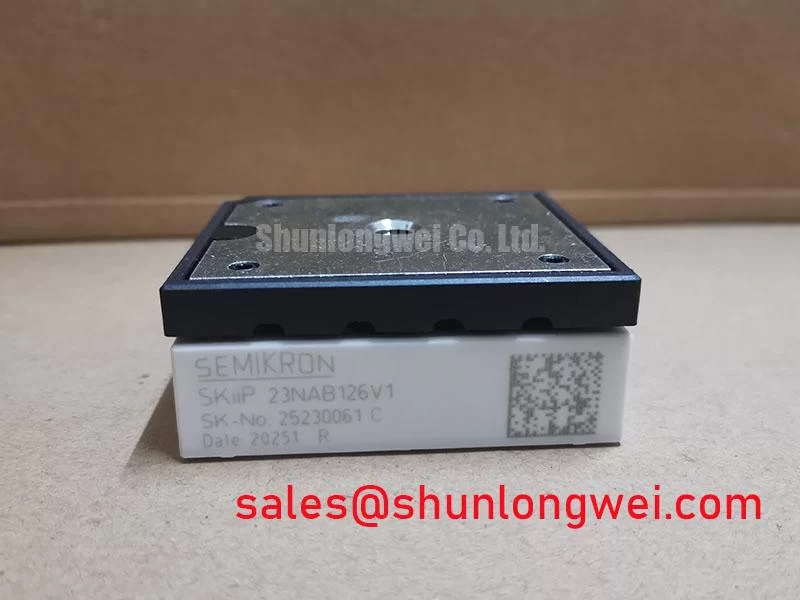
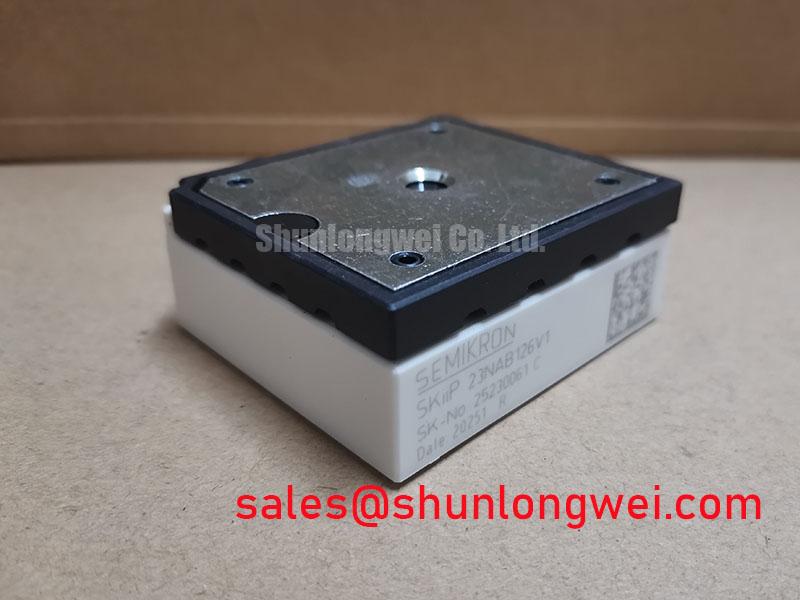
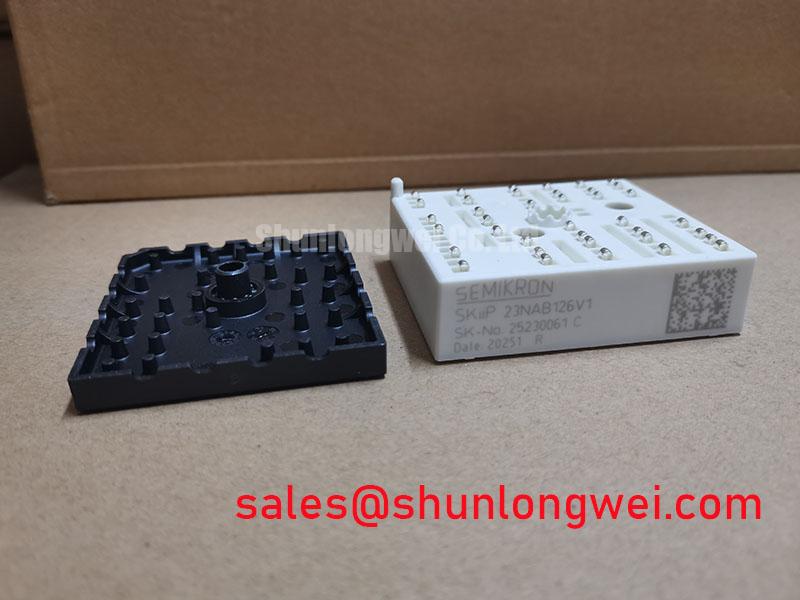
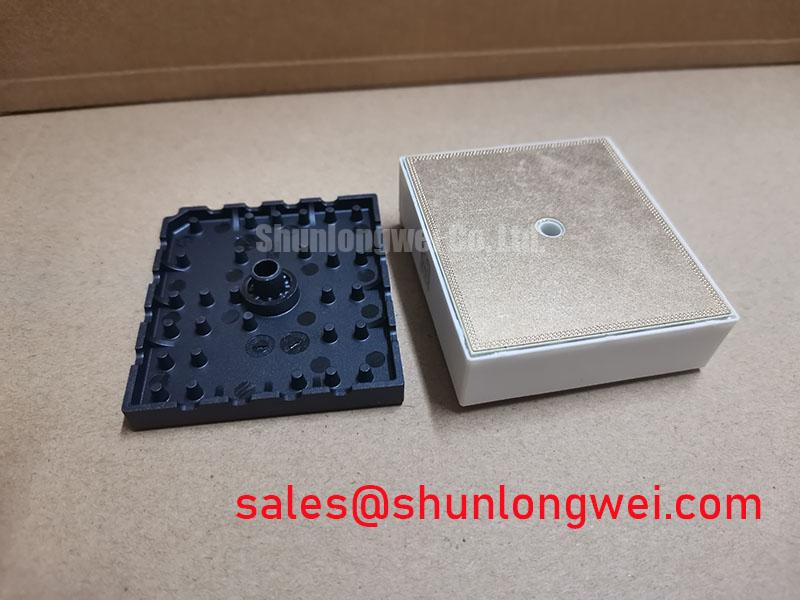
The SKIIP23NAB126V1 is a highly integrated power semiconductor module utilizing Semikron’s signature pressure contact technology to eliminate traditional solder interfaces between the power circuitry and the heat sink. This MiniSKiiP 2 package houses a complete Converter-Inverter-Brake (CIB) topology, featuring a 3-phase bridge rectifier, a 3-phase bridge inverter based on Trench IGBT3 technology, and an integrated brake chopper. By removing solder layers, this module significantly enhances power cycling capability and mitigates common IGBT failures associated with thermal fatigue.
- Core Specifications: 1200V | 35A ($I_{C,nom}$ at $T_s=25^circ C$) | $V_{CE(sat)}$ 1.70V (typ.)
- Engineering Advantages: Simplifies mechanical assembly via a single mounting screw and provides superior thermal management through the elimination of baseplate-to-heatsink solder voids.
- Design Intent: Engineers often ask how to maximize reliability in compact motor drives; the SKIIP23NAB126V1 answers this by utilizing Semikron SKiiP® Technology to ensure consistent pressure distribution across all internal chips.
Download Official SKIIP23NAB126V1 Datasheet (PDF)
Technical Analysis of Pressure Contact Efficiency
The engineering philosophy behind the SKIIP23NAB126V1 focuses on the reduction of internal thermal resistance. By employing pressure contact technology, the module bypasses the standard Copper-Baseplate architecture. You can imagine the thermal interface of a standard module like a series of traffic lights (solder layers) that slow down the flow of heat; the SKIIP23NAB126V1 acts like a spring-loaded highway, allowing thermal energy to transit directly from the chip to the heat sink with minimal obstruction. This results in a significantly lower $R_{th(j-s)}$ compared to traditional soldered modules of similar dimensions.
The transition to Trench IGBT3 technology provides a tightly controlled $V_{CE(sat)}$ with a positive temperature coefficient. This characteristic is essential for IGBT paralleling or ensuring stable performance under heavy load fluctuations. Furthermore, the inclusion of the integrated NTC thermistor allows for real-time junction temperature estimation, empowering the control system to execute proactive thermal derating before the device reaches its $175^circ C$ maximum junction limit.
Optimized Application Scenarios
The SKIIP23NAB126V1 is optimized for the following industrial environments:
- Compact Variable Frequency Drives (VFDs): The all-in-one CIB topology allows for a drastically reduced PCB footprint in motor control units up to 7.5 kW.
- Industrial Pump and Fan Controls: High energy efficiency is achieved through the Trench IGBT3’s low switching losses, reducing the overall thermal design requirements for the enclosure.
- Servo Drive Systems: Fast switching capabilities combined with the robust CAL3 freewheeling diodes make it suitable for high-dynamic positioning tasks.
- Solar Inverter Auxiliary Stages: Reliable power conversion in small-scale renewable energy systems requiring long-term outdoor durability.
Best Match Conclusion: Ideal for 400V AC drive designs where high reliability and simplified mechanical assembly are prioritized over ultra-high power density requirements.
Key Specifications Parameter Table
| Parameter Group | Specific Metric | Value (Typical) |
|---|---|---|
| Absolute Maximums | Collector-Emitter Voltage ($V_{CES}$) | 1200 V |
| Continuous Collector Current ($I_C$) @ $T_s=70^circ C$ | 25 A | |
| Electrical Characteristics | IGBT Saturation Voltage ($V_{CEsat}$) | 1.70 V |
| Inverter Diode Forward Voltage ($V_F$) | 1.80 V | |
| Thermal & Isolation | Thermal Resistance ($R_{th(j-s)}$) per IGBT | 1.10 K/W |
| Isolation Voltage (AC, 1 min) | 2500 V |
Engineer FAQ
Q1: What is the primary benefit of the “Solder-Free” assembly in the SKIIP23NAB126V1?
A1: The primary benefit is the elimination of large-area solder layers between the ceramic substrate and the heatsink. This significantly increases resistance to thermal cycling stresses, which is the leading cause of premature failure in standard industrial power modules.
Q2: Can this module be mounted with standard thermal grease?
A2: Yes, but the thickness must be carefully controlled according to the MiniSKiiP assembly instructions. Because the module relies on pressure, an even layer of insulating silicone gel or thermal paste is critical for both heat transfer and dielectric strength.
Q3: How does the integrated brake chopper improve system design?
A3: The integrated chopper allows the system to dissipate regenerative energy from the motor during deceleration without requiring an external discrete power transistor, thereby reducing BOM complexity and PCB space.
Final Engineering Statement
The Semikron SKIIP23NAB126V1 represents a robust solution for engineers seeking to balance ease of manufacturing with high-reliability power conversion. By integrating a full CIB topology into the solder-free MiniSKiiP 2 package, it provides a stable platform for next-generation motor drives while minimizing the risks associated with traditional thermal assembly methods.