Sharp LJ640U26: High-Reliability VGA Monochrome Industrial TFEL Display Module
Sharp LJ640U26 VGA Monochrome Industrial TFEL Display Module
Exceptional Solid-State Reliability for Demanding Field Operations
The Sharp LJ640U26 is a 10-inch class, 640 x 480 pixel VGA monochrome display module engineered using Thin-Film Electroluminescent (TFEL) technology. Unlike standard liquid crystal displays, the LJ640U26 is a completely solid-state device, making it a primary choice for environments characterized by extreme temperature fluctuations and high mechanical stress. Its autonomous light-emitting structure eliminates the need for a separate backlight, ensuring a wide viewing angle and consistent performance without the risk of fluid leakage or freezing. 640 x 480 Resolution | TFEL Solid-State Physics | Amber Monochrome output.
Download Sharp LJ640U26 Official Datasheet (PDF)
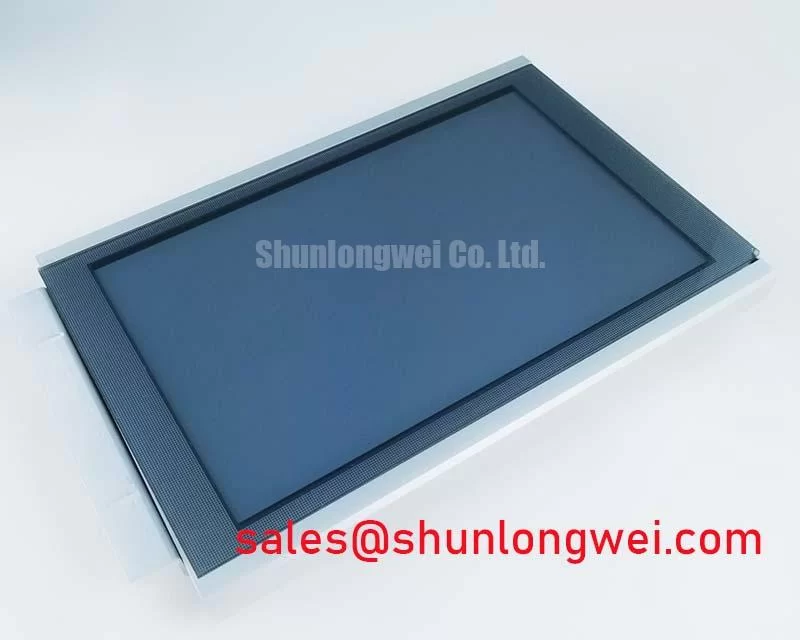
Technical Analysis: The Engineering Advantage of TFEL Physics
The Sharp LJ640U26 utilizes a unique electroluminescent structure where an inorganic phosphor layer is sandwiched between two dielectric layers. When an AC voltage is applied, the phosphor emits a high-contrast amber light. From an engineering perspective, this “solid-state” nature is its most significant advantage. You can visualize the difference between the LJ640U26 and a standard LCD as the difference between a solid stone brick and a water balloon; while the water balloon (LCD) is susceptible to freezing, leaking, or changing its behavior under pressure, the solid stone (TFEL) remains structurally and functionally identical regardless of its orientation or surrounding atmosphere.
Furthermore, the response time of the LJ640U26 is technically instantaneous. Traditional LCDs rely on the physical rotation of liquid crystal molecules, a process that slows down significantly in cold weather, leading to “ghosting.” The LJ640U26, however, achieves pixel switching through electronic excitation, resulting in a response time of less than 1ms. This makes it exceptionally suited for real-time monitoring applications where lag can compromise operator safety. This speed is a critical factor in extreme reliability engineering for medical and military applications.


Optimized Industrial Application Scenarios
Given its technical specifications, the Sharp LJ640U26 is highly optimized for the following scenarios:
- Marine Radar and Sonar: The high-speed response time ensures that fast-moving targets are rendered without motion blur, while the amber output preserves the operator’s night vision.
- Aerospace Cockpit Instrumentation: TFEL technology is naturally resistant to high-altitude pressure changes and the intense vibration of avionics systems. Consult our guide to vibration and shock resistance for more on this.
- Medical Imaging equipment: The high pixel density and uniform luminance are vital for displaying precise diagnostic data in environments where magnetic interference might disrupt other display types.
- Legacy System Maintenance: As a VGA-compatible monochrome unit, it serves as a robust replacement for older CRT-based industrial controllers that require 4-bit or 8-bit digital interfaces.
Best Match Conclusion: The LJ640U26 is the ideal solution for systems requiring zero motion blur and structural display integrity in sub-zero temperatures.

Sharp LJ640U26 Key Specifications
| Parameter Group | Specification Details |
|---|---|
| Display Technology | Thin-Film Electroluminescent (TFEL), light-emitting |
| Resolution | 640 x 480 (VGA) |
| Active Area | 191.9 mm (H) x 143.9 mm (V) |
| Luminous Intensity | Typ. 70 cd/m² (Amber output) |
| Response Time | < 1 ms (Solid-state switching) |
| Interface | Digital Parallel (4-bit/8-bit), TTL level |
| Input Voltages | +5V (Logic), +12V to +24V (Power Supply) |
| Viewing Angle | Greater than 160 degrees (L/R/U/D) |

Engineer FAQ
Q1: How do I drive the Sharp LJ640U26 with a modern MCU?
A: The LJ640U26 requires a parallel digital signal. Most engineers use an FPGA or a dedicated display controller chip to convert modern protocols (like LVDS or SPI) to the required 4-bit or 8-bit parallel timing sequences defined in the LCD core technology documentation.
Q2: Does this display suffer from image sticking or Mura?
A: No. Because TFEL does not use liquid crystals or organic compounds that degrade unevenly, it is technically immune to the Mura defects or image sticking common in TFT-LCD and OLED panels.
Q3: What are the primary thermal considerations for the LJ640U26?
A: While the display can operate in sub-zero temperatures without degradation, the internal high-voltage conversion generates heat. Designers should ensure at least 5mm of clearance around the rear power board for passive convection.
The Sharp LJ640U26 remains a benchmark for ruggedization in industrial visualization. By prioritizing solid-state TFEL physics over conventional liquid crystal methods, this module empowers engineers to maintain operational uptime in conditions where visual reliability is non-negotiable.