Infineon FF400R12KT4 1200V 400A Dual IGBT Module: Technical Analysis and Applications
Infineon FF400R12KT4 1200V 400A Dual IGBT Module
Introduction and Core Highlights
The IGBT Module FF400R12KT4 is a half-bridge configuration housed in a standard 62mm package. It integrates Trenchstop IGBT4 silicon technology with a fast, soft-recovery freewheeling diode. This combination limits both conduction and switching power losses in medium-power converters.
- Core Specifications: 1200V | 400A (at TC = 80°C) | VCE(sat) 1.75V
- Key Benefits: Reduced cooling requirements, high thermal cycling stability, and minimized EMI emissions.
This module helps engineers solve thermal management challenges in high-power setups by keeping junction temperatures stable.
Download Official Datasheet (PDF)

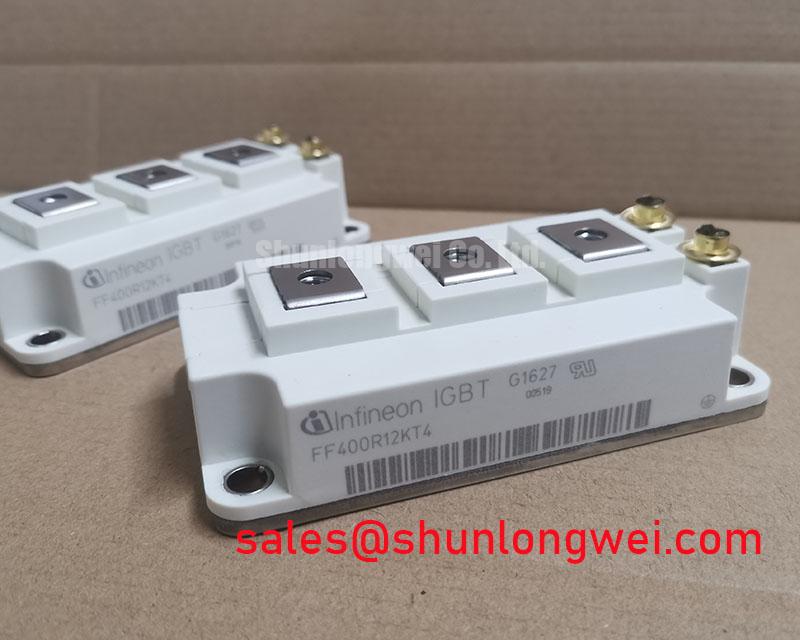
Technical Analysis of Trenchstop IGBT4 Performance
Implementing a Trench Gate IGBT4 structure lowers the collector-emitter saturation voltage to 1.75V under rated current conditions. This structure reduces conduction losses relative to older NPT designs. It also includes an integrated Kelvin emitter terminal to optimize gate drive voltage control accuracy.
The module features a low thermal resistance from junction to case, rated at 0.05 K/W for the IGBT. Think of thermal resistance like the width of a water pipe. A lower resistance value behaves like a wider pipe, allowing heat to escape faster to the heatsink. This fast heat transfer keeps the junction temperature below the 150°C continuous limit.
The companion emitter-controlled diode limits reverse recovery current peaks. This reduction in peak current decreases turn-on switching losses in the IGBT. It also limits voltage overshoots during fast switching transitions. Applying a robust gate drive design helps optimize these switching profiles safely.
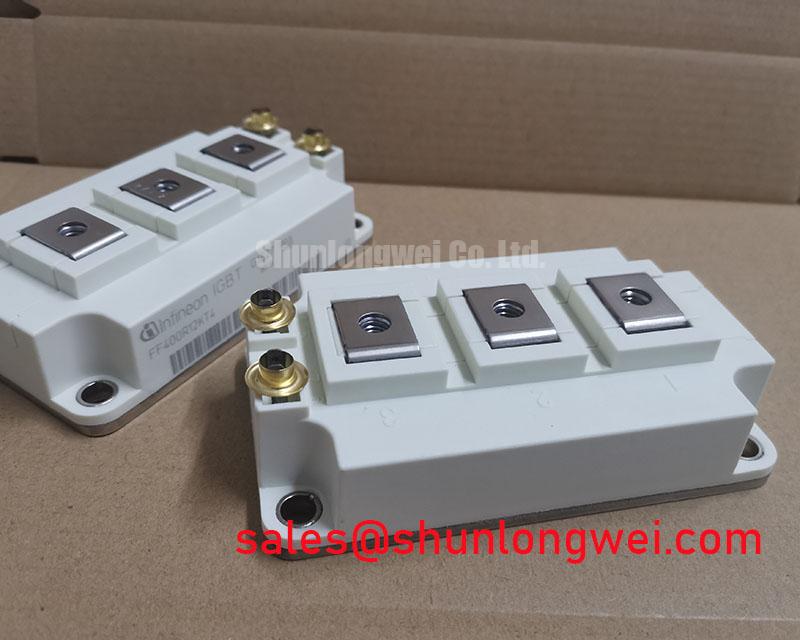
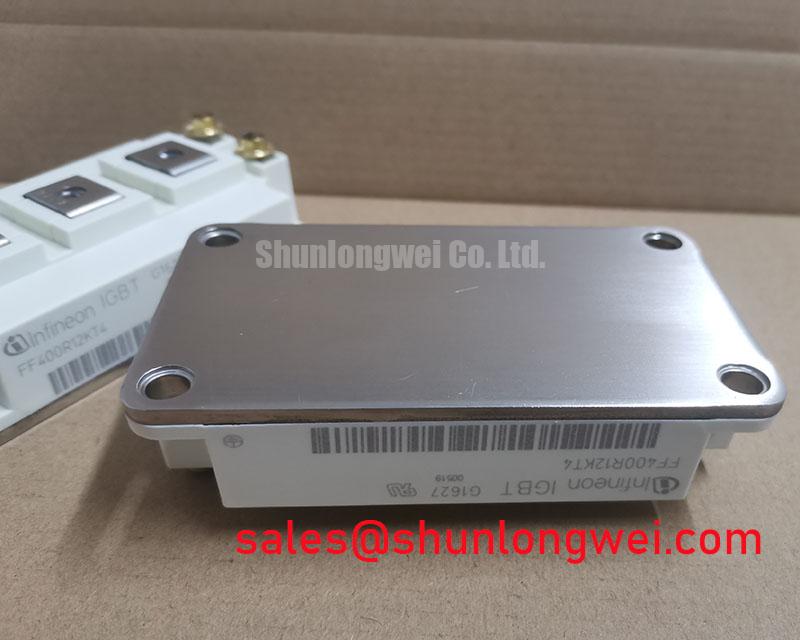
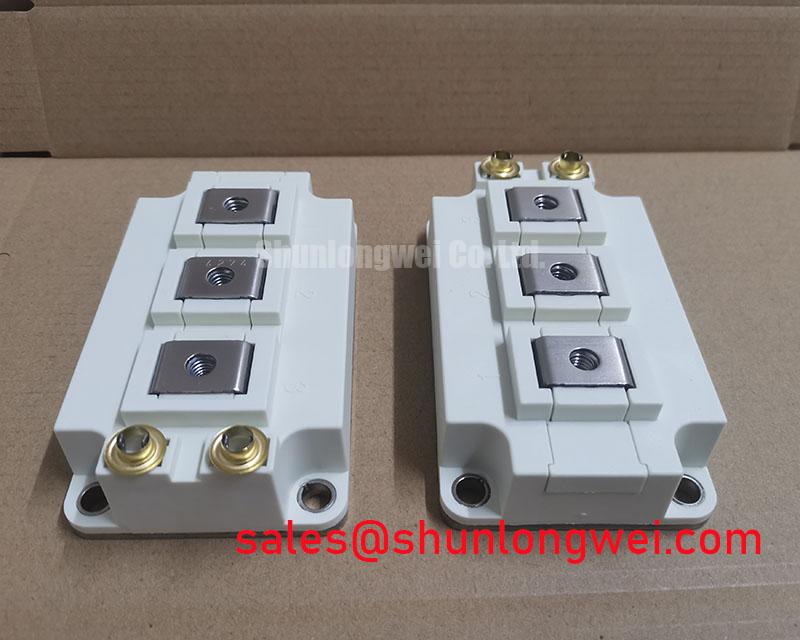
Optimized Application Profiles
- Variable Frequency Drives (VFDs): Lowers conduction losses in heavy-duty motor control systems during low-frequency operations.
- Solar Inverters: The 1200V rating supports high DC link voltages while maintaining conversion efficiency.
- Uninterruptible Power Supplies (UPS): Supports rapid power switching transitions. Devices benefit from the safety provided by isolated baseplates in multi-phase power cabinets.
Conclusion: The module is best suited for industrial motor control, solar power, and UPS systems requiring standard 62mm packaging.
Key Specifications Table
| Parameter Group | Specification | Typical Value / Rating |
|---|---|---|
| Absolute Maximums | Collector-Emitter Voltage (VCES) | 1200 V |
| Continuous DC Collector Current (IC) | 400 A (at TC = 80°C) | |
| Repetitive Peak Collector Current (ICRM) | 800 A | |
| Electrical (IGBT) | Saturation Voltage VCE(sat) | 1.75 V (at Tvj = 125°C, 400A) |
| Gate Threshold Voltage VGE(th) | 5.8 V (typical) | |
| Input Capacitance (Cies) | 23.5 nF | |
| Thermal | Thermal Resistance, Junction to Case (RthJC) | 0.05 K/W (per IGBT) |
| Max. Operating Junction Temperature | 150°C (continuous) |
Engineer FAQ
What are the typical switching losses of the FF400R12KT4 under rated industrial conditions?
At a junction temperature of 125°C, a DC link voltage of 600V, and a collector current of 400A, the typical turn-on energy loss is 38 mJ. The turn-off energy loss is typically 45 mJ when using a gate resistor of 1.8 ohms.
What is the maximum short-circuit capability of this module?
The module features a maximum short-circuit withstand time of 10 microseconds. This rating applies under conditions of Tvj = 150°C, VCC = 800V, and a maximum peak gate voltage of 15V.
What is the recommended terminal mounting torque for installation?
The electrical terminals require a mounting torque between 3.0 Nm and 6.0 Nm. The baseplate mounting screws require 3.0 Nm to 6.0 Nm. Staying within these limits prevents mechanical damage and maintains uniform thermal contact. Review the guide on IGBT terminal torque risks for more details.
Closing Statement
The FF400R12KT4 provides solid electrical isolation and low switching energy losses. The 62mm package footprint integrates Trenchstop IGBT4 technology, helping power systems run efficiently with simple cooling setups.