Technical Analysis of the APT75GP120JDQ3: A Rugged 1200V IGBT for Demanding Applications
APT75GP1-20JDQ3 1200V Punch-Through IGBT Analysis
High-Reliability Power Switching with Robust Short-Circuit Tolerance
The Microchip APT75GP120JDQ3 is a 1200V Punch-Through (PT) IGBT that provides a durable solution for high-power switching applications. Its unique value proposition lies in the combination of a robust short-circuit withstand time and a co-packaged Fast Recovery Epitaxial Diode (FRED) with soft recovery characteristics. This pairing enables the development of power systems with enhanced reliability and a reduced EMI signature. For engineers evaluating components for demanding conditions, the inclusion of a soft recovery diode is a significant factor in mitigating voltage overshoot and electromagnetic interference.
- Core Specifications: 1200V | 75A (@ Tc=110°C) | 10µs SCWT
- Key Advantages: High tolerance to fault conditions, minimized EMI and voltage spikes.
Download Official Datasheet (PDF)
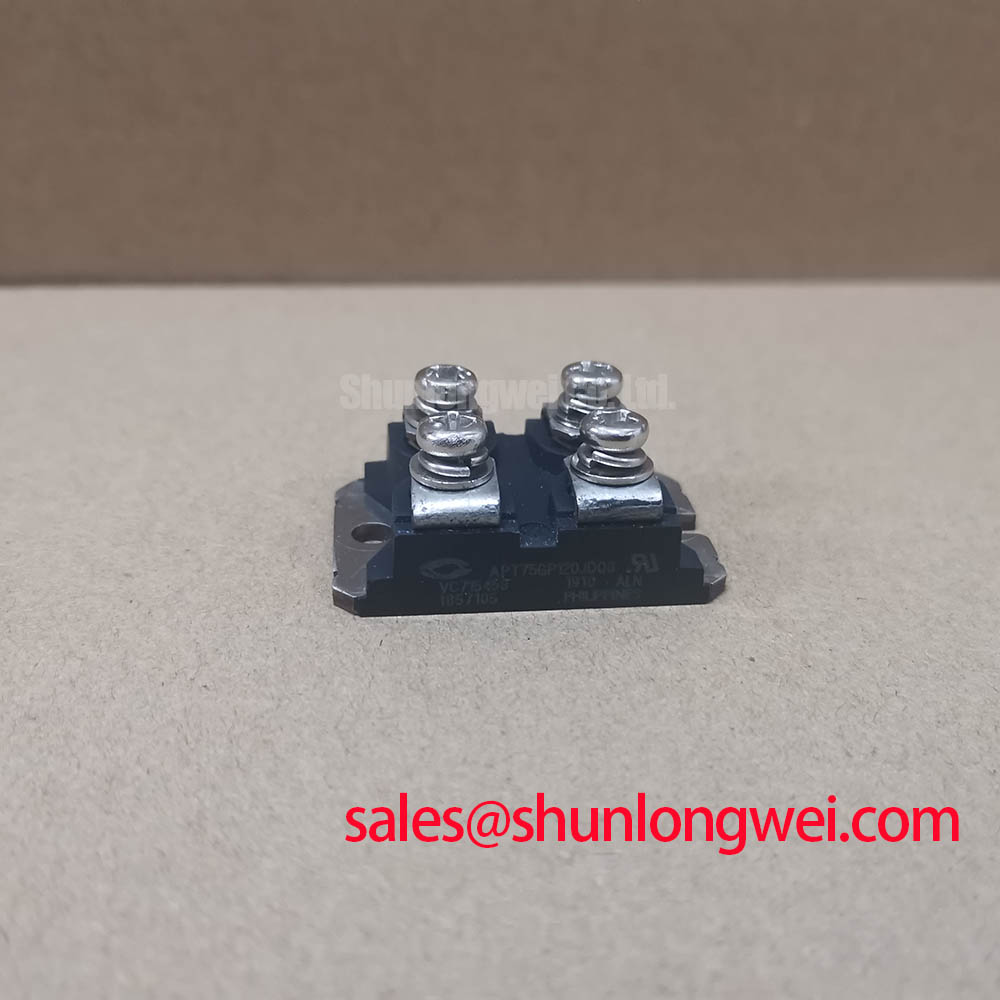

Technical Analysis for System Reliability
A standout feature documented in the datasheet is the 10µs short-circuit withstand time (tSC). This parameter is a critical indicator of the device’s ruggedness. In applications like motor control or welding, fault conditions such as a phase-to-ground short can occur. The APT75GP120JDQ3 is specified to survive a direct short circuit for 10µs, providing sufficient time for protection circuits to detect the fault and safely shut down the system. This capability is fundamental to preventing catastrophic device failure and enhancing overall system safety.
The integration of a DQ series FRED with soft recovery is another significant engineering benefit. The recovery characteristic of a diode can be compared to a vehicle’s braking system. A “hard” recovery diode stops abruptly, creating a jolt—in electrical terms, this is a large voltage spike and high-frequency EMI. In contrast, the soft recovery of the co-packaged diode in the APT75GP120JDQ3 is like a smooth, controlled stop. This behavior minimizes voltage overshoot during IGBT turn-on, reduces stress on the device, and lowers the system’s overall EMI generation. This often simplifies or eliminates the need for external snubber circuits, saving board space and component cost.
Optimized Application Scenarios
This IGBT is well-suited for applications where operational robustness and controlled switching are paramount.
- Welding Power Supplies: The 10µs short-circuit rating provides the necessary resilience to withstand the frequent output shorts inherent in welding operations.
- Motor Drives: Soft diode recovery minimizes EMI, which is critical for systems with long motor cables that can act as antennas.
- Uninterruptible Power Supplies (UPS): The combination of high voltage rating and ruggedness ensures reliable operation during load transients and fault conditions.
- Solar Inverters: Low switching losses from the PT structure and soft diode recovery contribute to higher overall conversion efficiency and grid compatibility.
The device is an excellent match for hard-switched applications operating at frequencies up to 20kHz where reliability under adverse conditions is a primary design driver.
Key Specification Parameters
| Absolute Maximum Ratings (TC = 25°C unless otherwise specified) | |
|---|---|
| Collector-Emitter Voltage (VCES) | 1200V |
| Continuous Collector Current @ TC=110°C (IC) | 75A |
| Pulsed Collector Current (ICM) | 225A |
| Short-Circuit Withstand Time (tSC) | 10µs |
| Total Power Dissipation @ TC=25°C (PD) | 543W |
| Electrical Characteristics (IGBT & Diode) | |
| Collector-Emitter Saturation Voltage (VCE(sat)) Typ. @ 75A | 2.2V |
| Diode Forward Voltage (VF) Typ. @ 75A | 2.3V |
| Total Switching Energy (Ets) Typ. @ 75A | 5.2mJ |
| Thermal Resistance, Junction to Case (RθJC) | 0.23°C/W |

Engineer FAQ
1. How does the 10µs short-circuit withstand time (SCWT) improve inverter reliability?
The 10µs SCWT provides a critical safety margin. In the event of an accidental short circuit in the load or system, the IGBT will not fail instantaneously. This duration is sufficient for the gate drive’s protection circuitry (e.g., desaturation detection) to sense the overcurrent condition and safely turn off the IGBT, preventing cascading failures and improving the overall robustness of the inverter. For a deeper understanding of failure modes, explore our analysis of IGBT root cause failures.
2. What are the mounting torque specifications for the SOT-227 package?
According to the datasheet, the recommended mounting torque for the M4 mounting screws is 1.24 to 1.47 N·m (11 to 13 in·lbs). The electrical terminals (also M4) have a recommended torque of 1.47 to 1.96 N·m (13 to 17 in·lbs). Applying incorrect torque can lead to poor thermal contact or physical damage to the module.
3. What is the main benefit of the Kelvin emitter connection on this device?
The SOT-227 package for this device includes a Kelvin emitter (E2) pin separate from the main power emitter (E1) terminal. This auxiliary emitter connection provides a clean voltage reference for the gate driver circuit, bypassing any voltage drops induced by the high switching currents flowing through the main emitter’s bond wires and lead inductance. Using the Kelvin emitter results in more precise and faster switching control, reducing switching losses.
4. How is Punch-Through (PT) technology different from Non-Punch-Through (NPT)?
PT IGBTs, like the APT75GP120JDQ3, incorporate an N+ buffer layer that allows for a thinner drift region. This structure generally results in faster switching speeds and lower conduction losses (VCE(sat)) compared to older NPT designs. The trade-off is typically a lower reverse-blocking voltage capability, making PT devices ideal for DC circuit applications like inverters and choppers.
The APT75GP120JDQ3 offers a validated set of performance characteristics for power systems requiring high reliability. Its balance of short-circuit ruggedness and controlled, low-EMI switching empowers engineers to design systems that are both durable and efficient, meeting the demands of challenging industrial environments.