AUO M170EG01 V5: A Reliable High-Contrast Display for Industrial Systems
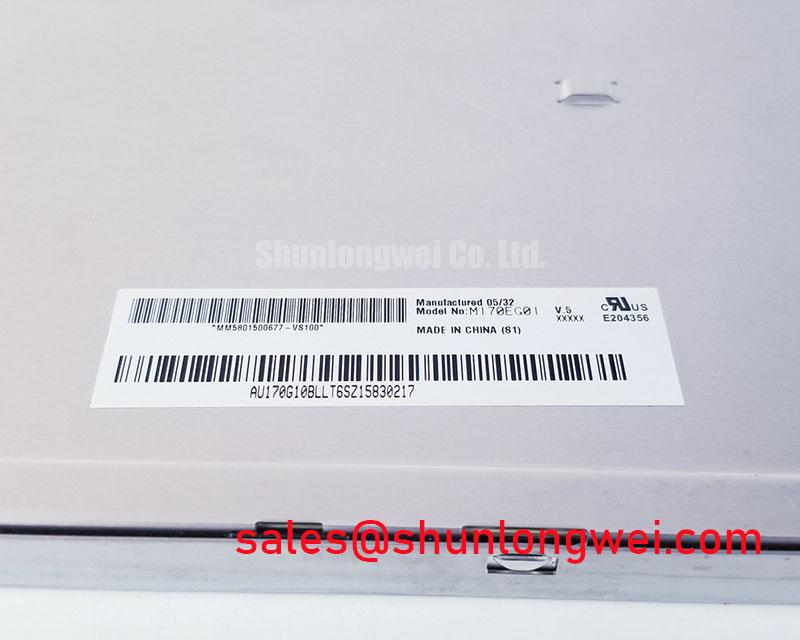
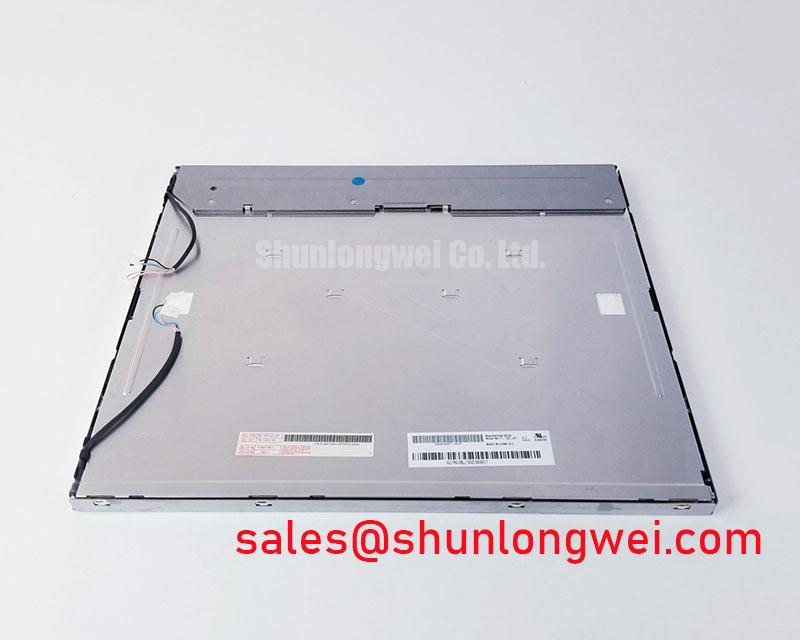
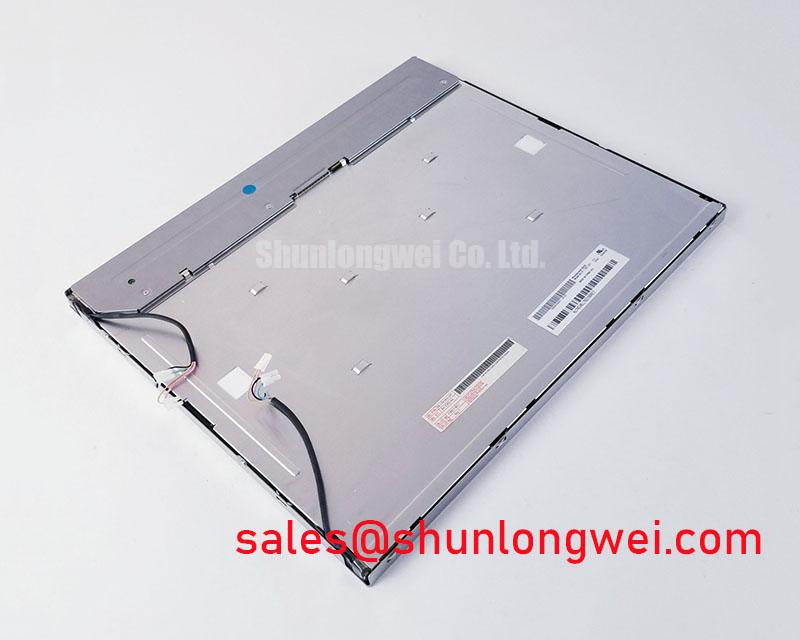
AUO M170EG01 V5 17.0″ SXGA Industrial TFT-LCD Module
High-Contrast Visuals and Proven Reliability for Industrial Systems
The AUO M170EG01 V5 is a 17.0-inch color TFT-LCD module delivering consistent, high-clarity performance for demanding industrial environments. This display’s unique value lies in its combination of a high typical contrast ratio and a reliable CCFL backlight system, making it an excellent component for both new designs and legacy system sustainment. It provides the visual precision required for complex HMIs and information kiosks where readability is critical. Its standard 5:4 aspect ratio is particularly suitable for upgrading older industrial terminals without altering software GUIs.
- Core Specifications: 1280×1024 SXGA | 800:1 Contrast Ratio | 8ms Response Time
- Key Advantages: Exceptional readability for data-intensive applications. Smooth motion rendering for video and monitoring.
Download the Official M170EG01 V5 Datasheet (PDF)
Technical Analysis for System Integration
The technical specifications of the M170EG01 V5 are geared towards robust industrial performance. A standout feature is its typical contrast ratio of 800:1. Think of contrast ratio as the legibility of text on a page; a higher ratio is like crisp, black ink on bright white paper, making it easier to distinguish details. For an engineer designing an HMI, this means operators can read critical data, alarms, and schematics at a glance, reducing the chance of errors. This level of clarity is maintained across a range of ambient lighting conditions, supported by a 300 cd/m² typical brightness and an anti-glare surface treatment.
Another key engineering parameter is the 8ms typical response time (Tr+Tf). In applications such as process control or machine vision, where on-screen information is constantly changing, a slow response time can cause motion blur or “ghosting.” The fast response of the M170EG01 V5 ensures that moving graphics, video feeds, and scrolling data remain sharp and clear. This allows for accurate real-time monitoring of system operations. This capability, combined with a standard 2-channel, 8-bit LVDS interface, simplifies integration with a wide variety of industrial controllers and single-board computers.
The module’s architecture is built around a 4-CCFL backlight system. While LED has become more common, CCFL technology provides proven, long-term stability and a specific spectral output that may be essential for maintaining consistency in established product lines. For engineers tasked with servicing or upgrading existing equipment, this display offers a form-fit-function replacement path, minimizing the need for costly redesigns of the inverter or power delivery systems. Explore more about LCD core technology to understand these design choices.
Optimized Application Scenarios
The specific feature set of this module makes it a strong candidate for several applications:
- Industrial HMI Panels: The 1280×1024 resolution and 5:4 aspect ratio are ideal for displaying complex schematics and control interfaces, especially in legacy systems.
- Information Kiosks: Good viewing angles (80/80/60/80 L/R/U/D) and an anti-glare surface ensure readability for users from various positions.
- Test and Measurement Equipment: The high contrast and fast response time allow for clear visualization of waveforms and rapidly updating numerical data.
- Medical Information Displays: Suitable for non-diagnostic applications like patient monitoring stations where data clarity and reliability are paramount.
This module is a best-match for systems requiring a durable 17″ SXGA display with proven CCFL backlight technology and a standard digital interface.
Key Specifications of the M170EG01 V5
| Parameter | Specification |
|---|---|
| Manufacturer | AUO |
| Screen Size | 17.0 inches |
| Resolution | 1280(RGB)×1024, SXGA, 96 PPI |
| Panel Technology | a-Si TFT-LCD, Normally White |
| Luminance | 300 cd/m² (Typ.) |
| Contrast Ratio | 800:1 (Typ.) |
| Viewing Angle (L/R/U/D) | 80/80/60/80 (Typ.) (CR≥10) |
| Response Time | 8 ms (Typ., Tr+Td) |
| Interface Type | LVDS (2 ch, 8-bit), 30 pins connector |
| Backlight System | 4 pcs CCFL, 50K hours (Typ.) |
| Operating Temperature | 0 ~ 50 °C |
| Storage Temperature | -20 ~ 60 °C |
| Outline Dimensions (W×H×D) | 358.5 × 296.5 × 17.5 mm |
Engineer’s Frequently Asked Questions
1. Is the M170EG01 V5 suitable as a drop-in replacement for older 17-inch SXGA panels?
Yes, its standard SXGA (1280×1024) resolution, 5:4 aspect ratio, 30-pin LVDS interface, and 5.0V power supply voltage make it a strong candidate for replacing similar panels from other manufacturers. However, verification of mounting points and inverter compatibility for the CCFL backlight is essential. For further reading on component lifecycles, see our guide on navigating LCD end-of-life challenges.
2. What are the power requirements for the CCFL backlight system?
The datasheet specifies a lamp voltage of 720V (Typ.) and a lamp current of 7.5mA (Typ.) per lamp. The total backlight power consumption is typically 19.8W. An external inverter board compatible with these specifications is required to drive the four CCFL tubes.
3. How can I ensure signal integrity over the LVDS interface?
To maintain signal quality, use controlled impedance cabling (typically 100 ohms differential) and keep the cable length as short as feasible. Proper grounding of the LVDS cable shield is also critical to minimize EMI. The official datasheet provides detailed pin assignments for the 30-pin connector to facilitate correct wiring.
4. Does the panel’s surface treatment affect its use in high-ambient-light environments?
Yes, the panel features an anti-glare (AG) surface treatment with a 3H hardness rating. The AG coating diffuses reflections from external light sources, which improves readability and reduces operator eye strain in brightly lit control rooms or public spaces.
Enabling Clarity and Longevity in Visual Systems
The AUO M170EG01 V5 provides a well-balanced set of features for applications demanding visual precision and sustained operation. Its high-contrast imaging and standard interface facilitate straightforward integration, empowering engineers to develop or maintain reliable, high-performance display systems.