SanRex DF30AA160: A Technical Review for Robust Power Conversion
SanRex DF30AA160 Diode Module | 1600V 30A Rectifier
Introduction and Core Highlights
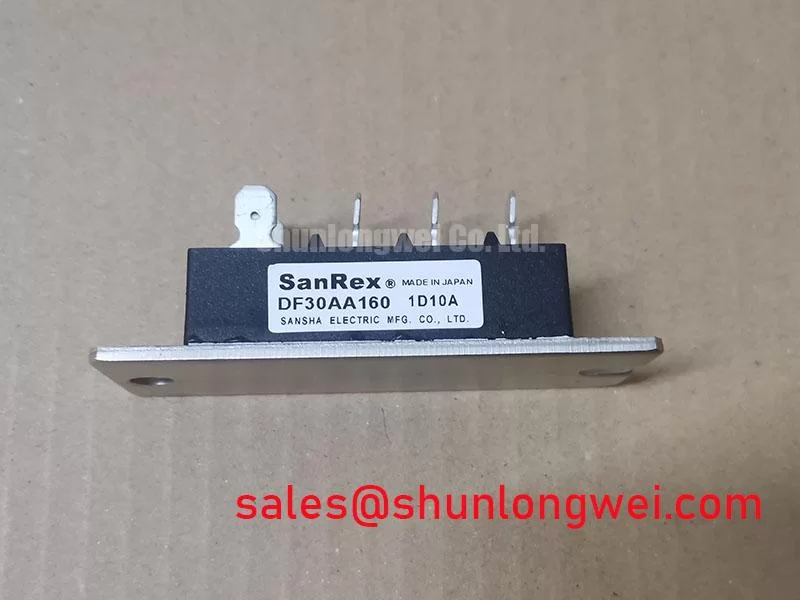
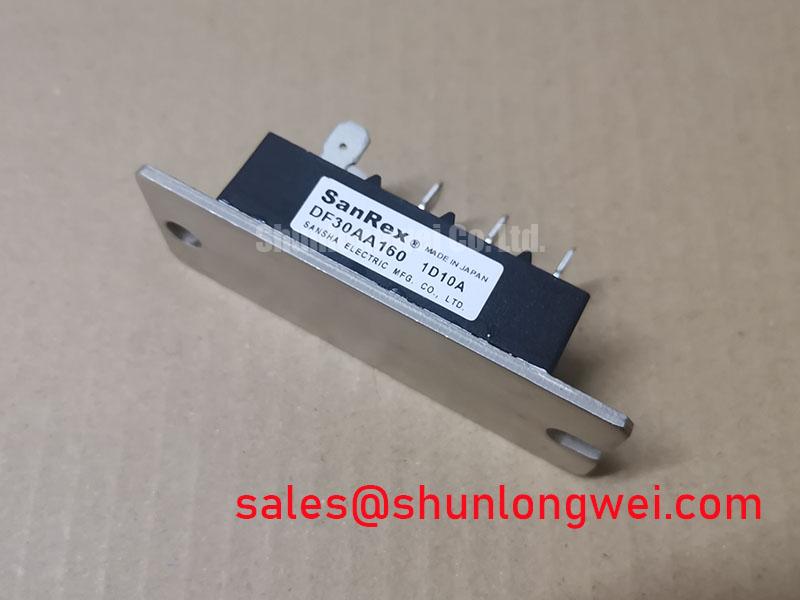
The SanRex DF30AA160 is a power diode module engineered for robust three-phase, full-wave rectification. Its key value is delivering high voltage tolerance and simplified thermal design through an integrated, electrically isolated package. This module provides a reliable foundation for the front-end AC-to-DC conversion stage in a wide range of industrial power systems. The high isolation voltage enhances system safety and resilience in electrically noisy environments.
- Core Specifications: 1600V VRRM | 30A ID | 2500V VISO
- Key Advantages: High safety margin against voltage transients; simplifies heatsink assembly.
For detailed electrical and thermal characteristics, you can Download the Official Datasheet (PDF).
Technical Analysis: Reliability and Thermal Efficiency
The DF30AA160 module’s high repetitive peak reverse voltage (VRRM) of 1600V provides a substantial safety margin for industrial equipment operating on 380V or 480V three-phase AC lines. This rating ensures the diodes can withstand common line voltage fluctuations and transients without degradation, a critical factor for long-term system reliability in demanding applications like Variable Frequency Drives (VFDs). The device’s reliability is further enhanced by a unique glass passivation process used on the semiconductor elements.
A standout feature is the module’s electrically isolated mounting base, rated for 2500V (RMS) for one minute. This isolation simplifies the overall mechanical and thermal design. It allows the module to be mounted directly to a common, grounded heatsink without the need for additional insulating pads, which can increase thermal resistance and assembly complexity. The thermal resistance from junction to case (Rth(j-c)) is specified at a maximum of 0.42 °C/W. You can think of thermal resistance like the width of a pipe; a lower value means heat can flow more easily from the active diode junction to the heatsink, preventing overheating and improving operational stability.
Optimized Application Scenarios
The DF30AA160 is well-suited for a variety of medium-power industrial applications requiring dependable three-phase rectification.
- AC Motor Drives: Its high voltage rating and robust construction provide a stable DC bus for VFDs and servo drives, ensuring precise motor control even with unstable AC power.
- Uninterruptible Power Supplies (UPS): The module’s efficient thermal performance is ideal for the continuously operating rectifier stage in online UPS systems.
- Industrial Battery Chargers: The 30A current rating enables consistent, high-rate charging cycles for equipment such as forklifts and automated guided vehicles (AGVs).
- Welding Power Supplies: Built to withstand harsh electrical conditions, the DF30AA160 reliably handles the pulsed, high-current loads found in welding applications.
This module is an optimal choice for systems needing a reliable front-end rectifier with high voltage tolerance and straightforward thermal assembly.
Key Specification Parameters for the DF30AA160
| Absolute Maximum Ratings | ||
|---|---|---|
| Parameter | Symbol | Value |
| Repetitive Peak Reverse Voltage | VRRM | 1600 V |
| Output Current (DC, Tc=117°C) | ID | 30 A |
| Surge Forward Current (60Hz, 1 cycle) | IFSM | 300 A |
| Operating Junction Temperature | Tj | -40 to +150 °C |
| Electrical & Thermal Characteristics | ||
| Forward Voltage Drop (max, IFM=30A) | VFM | 1.3 V |
| Repetitive Peak Reverse Current (max, at VRRM, Tj=150°C) | IRRM | 3.0 mA |
| Isolation Breakdown Voltage (RMS, 1 min) | VISO | 2500 V |
| Thermal Impedance (max, Junction to Case) | Rth(j-c) | 0.42 °C/W |
Engineer FAQ
- What are the recommended mounting procedures for the DF30AA160?
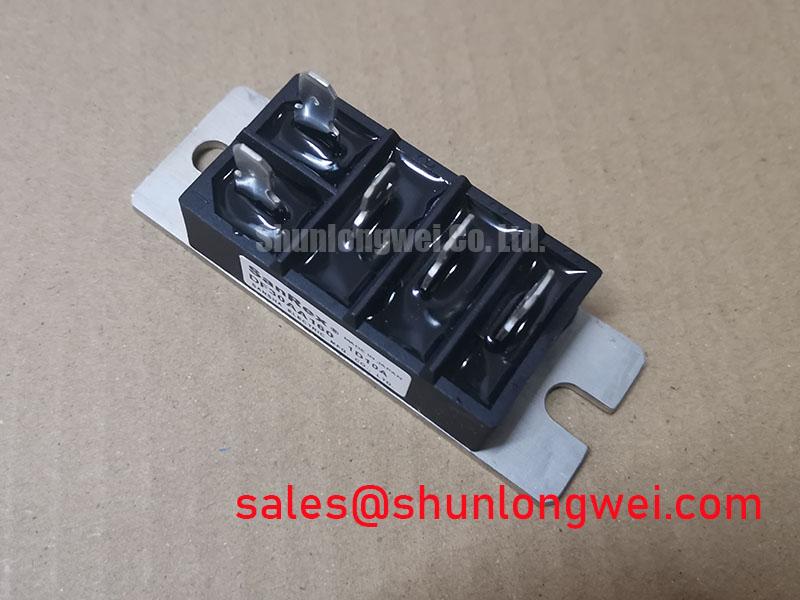
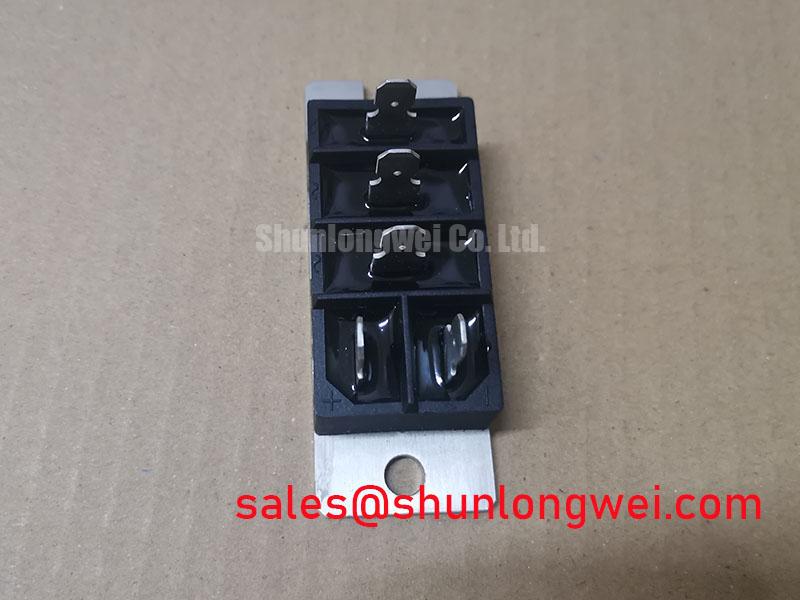
- According to the datasheet, the module should be mounted using M6 screws with a recommended torque of 2.5 to 3.9 N·m. It is essential to apply a thin, even layer of thermal grease between the module’s baseplate and the heatsink to ensure optimal heat transfer by eliminating air gaps. The terminals are designed for #250 tab connectors.
- How do I select an appropriate heatsink for a 1600V 30A rectifier bridge like this?
- Heatsink selection depends on calculating the total power dissipation and the maximum allowable junction temperature. First, determine the power loss from the forward voltage drop (VFM) at your operating current. Then, use the thermal resistance values (Rth(j-c) from the datasheet and Rth(c-s) for the thermal interface material) to calculate the required heatsink-to-ambient thermal resistance (Rth(s-a)) for your target case temperature. For in-depth guidance, refer to resources on power module thermal design.
- Can this module be used for single-phase applications?
- While the DF30AA160 is configured as a three-phase bridge, it can be adapted for single-phase full-wave rectification. This is typically done by using two of the three phase inputs, leaving one disconnected. However, it’s important to consult the datasheet and application notes to understand any potential de-rating or performance implications of such a configuration.
- What is the primary benefit of the isolated baseplate?
- The primary benefit is simplified mechanical assembly and improved safety. It allows multiple isolated-base modules to be mounted on a single, non-isolated (grounded) heatsink without needing separate, often fragile, insulating pads for each component. This reduces assembly time, lowers part count, and creates a more robust thermal system.
Enabling Robust Power Conversion
The SanRex DF30AA160 diode module provides engineers with a high-performance, integrated solution for AC-to-DC power conversion. Its combination of a high 1600V rating, 30A current capability, and an electrically isolated baseplate offers a direct path to creating reliable and thermally efficient power stages. This component streamlines system design by delivering a rugged foundation for industrial power electronics.