Sharp LM24P20: A Technical Review of a High-Clarity FSTN Monochrome Display
Sharp LM24P20 240×128 FSTN Monochrome LCD Module
Introduction and Core Highlights
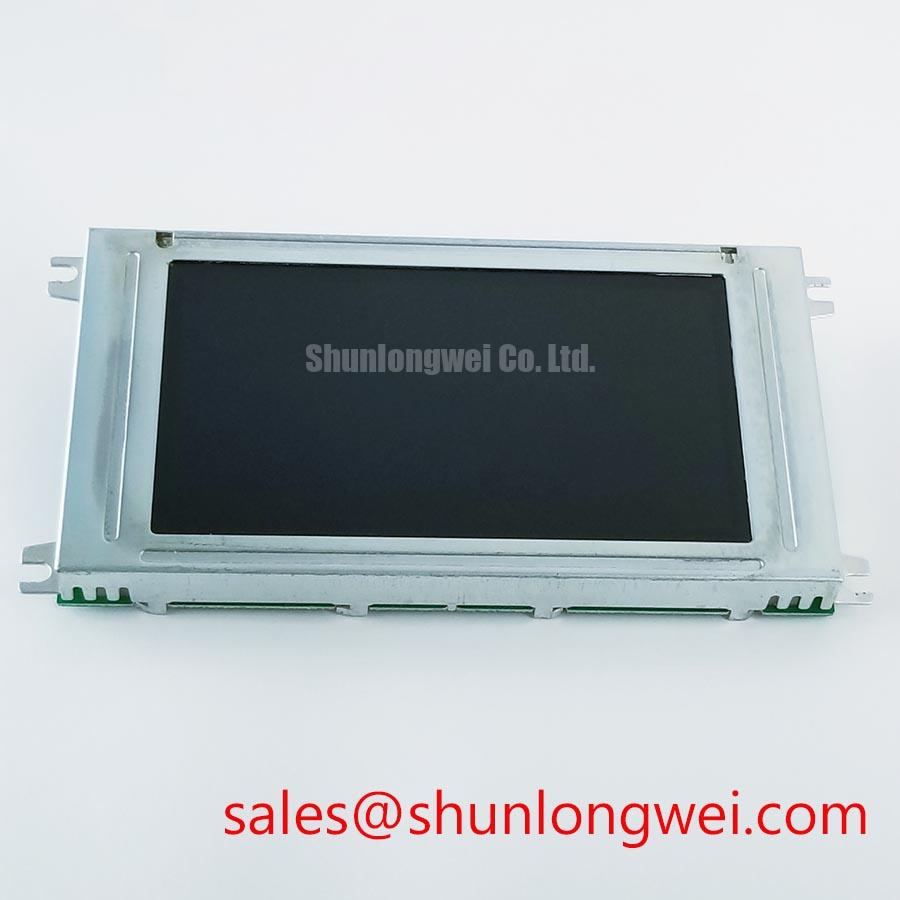
The Sharp LM24P20 is a 5.7-inch monochrome graphic display module delivering exceptional clarity for applications where data integrity is critical. Its core strength lies in its Film-compensated Super-twisted Nematic (FSTN) screen technology, which produces a high-contrast, true black-on-white image free from the color-shifting common in standard STN displays. This makes it a reliable choice for industrial instruments, medical devices, and legacy system upgrades that require unambiguous readability and long-term operational stability.
- Core Specifications: 240×128 Resolution | 20:1 Contrast Ratio | CCFL Backlight
- Key Advantages: Provides superior visual clarity for error-free data reading; parallel interface simplifies system integration.
- Integration Focus: The module’s standard parallel data bus allows for direct interfacing with a wide array of microcontrollers, streamlining firmware and hardware development.
Download Official Datasheet (PDF)
Technical Analysis
The engineering value of the Sharp LM24P20 is rooted in its display technology and straightforward integration. The use of FSTN technology provides a significant advantage in visual performance. An additional film layer is applied to the STN cell, which corrects for optical dispersion. This results in a highly uniform black-and-white display with a typical contrast ratio of 20:1, eliminating the yellowish or bluish tint found on older passive-matrix displays and ensuring data is easily legible from different angles. This level of contrast is essential in environments with variable ambient lighting.
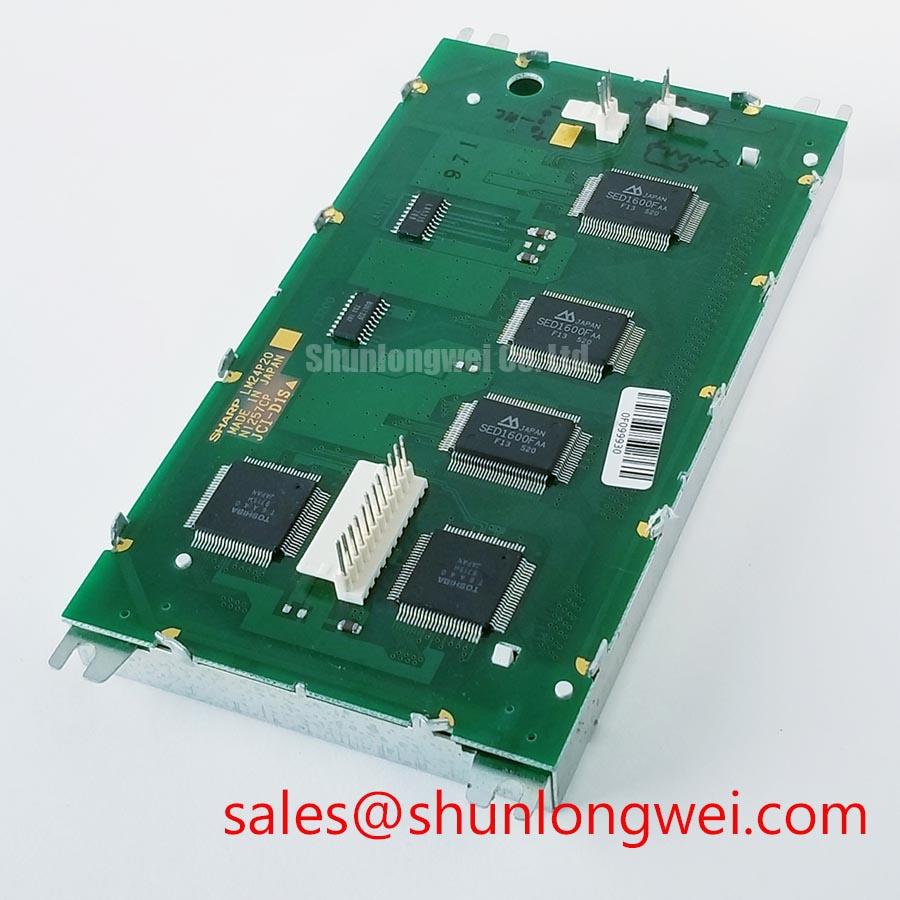
The module’s architecture simplifies system design. It operates on a standard parallel interface, which can be configured for 4-bit or 8-bit data transfers. This interface acts like a direct, multi-lane highway for pixel data, connecting straight to a microcontroller’s GPIO pins. This avoids the need for complex serializer/deserializer chipsets or protocol stacks associated with interfaces like LVDS, reducing both component count and software overhead. Further information on display technologies can be found in our section on LCD Core Technology.
The integrated Cold Cathode Fluorescent Lamp (CCFL) backlight system provides bright illumination across the 127.16 x 67.8 mm active area. While LED backlights are now common, the CCFL in this module is a proven, long-life solution that was standard for industrial-grade displays of its generation. The presence of an integrated backlight simplifies procurement and assembly, as it provides a complete, tested visual component ready for installation.
Optimized Application Scenarios
The LM24P20 is engineered for applications where clarity and reliability are paramount.
- Industrial Control Panels: Its 240×128 resolution is well-suited for displaying status menus, machine parameters, and simple diagnostic graphics. The high-contrast FSTN display ensures information is readable under factory floor lighting.
- Test and Measurement Equipment: In devices like oscilloscopes, spectrum analyzers, or network testers, the sharp monochrome output allows for precise visualization of waveforms and numerical data without the distraction of color.
- Medical Instrumentation: Ideal for patient monitoring systems, infusion pumps, and diagnostic equipment that require clear, unambiguous readouts of vital statistics and operational status.
- Legacy System Sustainment: The module’s mechanical footprint and standard parallel interface make it a suitable drop-in replacement for aging or failing displays in long-life industrial machinery, extending equipment lifespan.
This module is best matched for systems requiring a robust, high-contrast monochrome display with a straightforward parallel interface for long-term operational stability.
Key Specifications of the LM24P20
This data is derived from the official manufacturer’s datasheet for preliminary engineering reference.
| Display and Optical Characteristics | |
|---|---|
| Display Type | FSTN (Film-compensated STN) LCD, Black/White, Transmissive |
| Resolution | 240 x 128 Pixels |
| Active Area | 127.16(W) × 67.8(H) mm |
| Contrast Ratio | 20:1 (Typ.) |
| Response Time | 400 ms (Typ., Tr+Td) |
| Mechanical & Environmental | |
| Outline Dimensions | 194(W) × 96(H) × 19(D) mm |
| Weight | 430g |
| Operating Temperature | 0°C to +45°C |
| Storage Temperature | -25°C to +60°C |
| Backlight & Interface | |
| Backlight System | 1 pc CCFL, Edge light type |
| Data Interface | Parallel (4-bit / 8-bit) |
Engineer’s FAQ
- What are the data interface requirements for the LM24P20?
- The LM24P20 uses a parallel data interface. It requires a controller capable of managing signals such as data lines (DB0-DB7), Register Select (RS), Read/Write (R/W), and Enable (E). This direct connection is common for many 8-bit and 16-bit microcontrollers.
- What are the power supply considerations for the CCFL backlight?
- A separate high-voltage inverter is required to power the Cold Cathode Fluorescent Lamp (CCFL) backlight. The inverter must be capable of providing the specific starting and operating voltage and current required by the lamp, as detailed in the official datasheet. Care must be taken in routing high-voltage lines to prevent noise coupling into logic signals.
- What makes FSTN a good choice for industrial HMIs?
- FSTN technology provides superior contrast and wider viewing angles compared to older STN displays. This results in a true black-and-white image that is less fatiguing to the human eye and reduces the chance of misreading critical data, a key factor in ensuring operator safety and efficiency. This resilience is a core aspect discussed in our guides on industrial display reliability.
- How does the operating temperature range affect system design?
- The specified operating range of 0°C to 45°C means the LM24P20 is suitable for controlled indoor industrial environments. For systems that may experience temperatures outside this range, thermal management techniques—such as enclosure ventilation or heating elements for cold starts—must be considered to ensure display performance and longevity.
Enabling Data Clarity in System Design
The LM24P20 offers a stable and proven solution for presenting critical data with high clarity. By leveraging robust FSTN technology and a straightforward parallel interface, it allows engineers to build reliable human-machine interfaces for a range of industrial and instrumental applications. Its design prioritizes readability and ease of integration, providing a dependable component for new designs and legacy system support.