Hitachi LMG7401PLBC: A Technical Review of an Industrial Graphic LCD
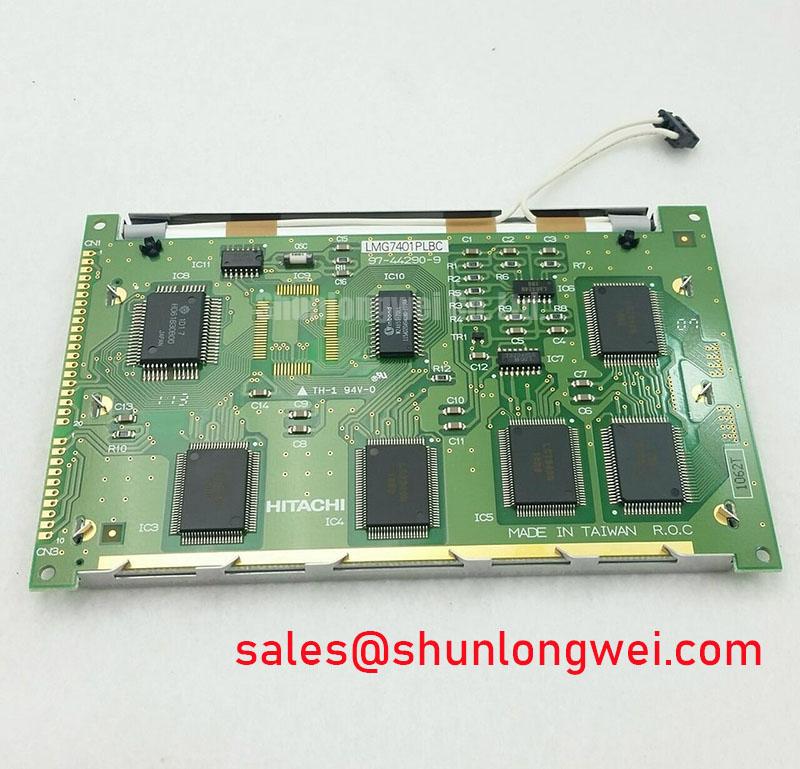
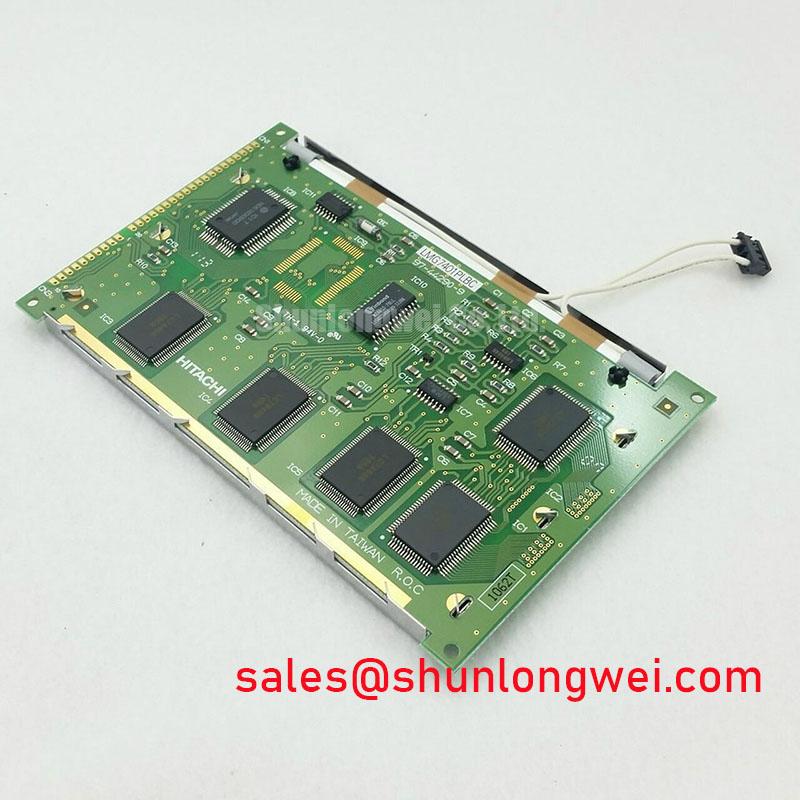
Hitachi LMG7401PLBC 240×128 F-STN Graphic LCD Module
Introduction and Core Highlights
The Hitachi LMG7401PLBC is a monochrome Film-compensated Super-Twisted Nematic (F-STN) LCD module engineered for high-clarity graphical and character displays in industrial environments. Its primary value stems from delivering excellent contrast and readability in a mechanically robust package with an integrated controller and backlight. This integrated design simplifies the engineering process for human-machine interfaces. The module’s data interface accepts a 4-bit parallel signal, a common standard for embedded systems.
- Core Specifications: 240×128 Resolution | 18:1 Contrast Ratio | Integrated CCFL Backlight
- Key Advantages: High-clarity text and graphic rendering, simplified system integration.
Download the LMG7401PLBC Datasheet (PDF)

Technical Analysis
The engineering value of the LMG7401PLBC is centered on its visual performance and integrated architecture. The use of F-STN technology directly addresses the need for clear readability in varied industrial lighting conditions. The datasheet specifies a typical contrast ratio of 18:1, a strong figure for this technology class. Think of contrast ratio as the legibility of ink on paper; a higher ratio means sharper, more defined pixels that reduce operator eye strain and minimize reading errors, which is explored further in discussions on HMI specifications. This is critical when displaying detailed graphical data or critical system alerts.
Furthermore, the module’s design incorporates an integrated Cold Cathode Fluorescent Lamp (CCFL) backlight. This provides a bright, uniform light source across the entire 119.95 mm x 63.95 mm active area. By including the CCFL and the necessary display controller ICs within the module, Hitachi simplified the implementation process. Engineers do not need to source and integrate separate controllers or design complex backlight driver circuits from scratch, which accelerates development and reduces potential points of failure. This integration is a key aspect of reliable LCD core technology.
Optimized Application Scenarios
This module is specified for systems where unambiguous monochrome graphical information is paramount.
- Industrial Control Panels: The 240×128 resolution provides ample space for displaying process schematics, status indicators, and soft key labels.
- Test and Measurement Equipment: Its high-contrast display is well-suited for rendering waveforms, measurement data, and spectral plots with precision.
- Medical Instrumentation: In devices like vital sign monitors or infusion pumps, the module’s clarity ensures that critical patient data is easily readable.
- Point-of-Sale (POS) Systems: The reliable and straightforward interface is ideal for displaying transaction details and operator prompts in retail environments.
Its proven F-STN technology and integrated design make it a best match for long-lifecycle industrial equipment requiring a dependable, high-clarity monochrome display.
Key Specifications of the LMG7401PLBC
| Parameter | Specification |
|---|---|
| Display Characteristics | |
| Display Technology | F-STN (Film-compensated Super-Twisted Nematic) LCD |
| Resolution | 240 x 128 Dots |
| Active Area | 119.95 (W) x 63.95 (H) mm |
| Dot Pitch | 0.50 (W) x 0.50 (H) mm |
| Optical Characteristics | |
| Contrast Ratio (Typ.) | 18:1 |
| Response Time (Tr+Tf, Typ.) | 310 ms |
| Backlight | CCFL (Cold Cathode Fluorescent Lamp) |
| Electrical & Mechanical | |
| Logic Supply Voltage (Vdd) | 5.0 V ±5% |
| Operating Temperature | 0°C to +50°C |
| Outline Dimensions | 147.0 (W) x 89.0 (H) x 12.0 (Max, D) mm |
| Weight | 145g (Max) |
Engineer’s FAQ
1. What is the data interface required for the LMG7401PLBC?
The LMG7401PLBC utilizes a 4-bit parallel data interface. The display is split into upper and lower sections, each addressed via this bus, along with control signals like Register Select (RS), Read/Write (R/W), and an Enable signal (E).
2. What are the key considerations for the CCFL backlight?
The CCFL backlight requires a separate inverter circuit to provide the necessary high-voltage AC power. The datasheet specifies a lamp voltage of 310 Vrms and a lamp current of 5.0 mArms. The rated life of the backlight is 20,000 hours, a crucial parameter for calculating system maintenance intervals and understanding long-term reliability in backlight lifespan management.
3. What is the specified operating temperature range?
The module is specified for operation in an ambient temperature range of 0°C to +50°C. For storage, the acceptable range is -20°C to +60°C. Operation outside these parameters is not specified and can affect performance and longevity.
4. How does the 310ms response time impact the display’s usability?
A typical response time of 310ms is characteristic of F-STN technology and is suitable for applications where information is updated moderately, such as status screens, menus, and static graphics. It is not intended for displaying full-motion video, where faster response times are necessary to avoid ghosting.
Enabling Clear and Reliable System Interfaces
The LMG7401PLBC provides a direct solution for engineers needing to implement a clear, graphical monochrome HMI. By combining a high-contrast F-STN panel with an integrated controller and a long-life CCFL backlight, this module delivers dependable visual performance for a wide array of industrial and instrumental applications.