Sharp LQ043Y1LX01: A High-Performance Industrial Display with Superior Viewing Angles
Sharp LQ043Y1LX01: 4.3-inch WVGA Industrial LCD Module
Introduction and Core Highlights
The Sharp LQ043Y1LX01 is a 4.3-inch a-Si TFT-LCD module engineered for applications demanding superior visual consistency and operational resilience. Its core value is delivering exceptional off-axis image clarity and steadfast performance across a wide industrial temperature range. This combination ensures that critical data is clearly legible from multiple perspectives and in environments where temperature is not consistently controlled. For engineers designing compact HMIs or portable devices, this display provides a robust and reliable visual interface.
- Core Specifications: 480×800 WVGA | 315 cd/m² Brightness | LVDS Interface
- Key Advantages: Symmetrical viewing cone for consistent readability, portrait-mode orientation for specific UI layouts.
Access Detailed Datasheet on Panelook

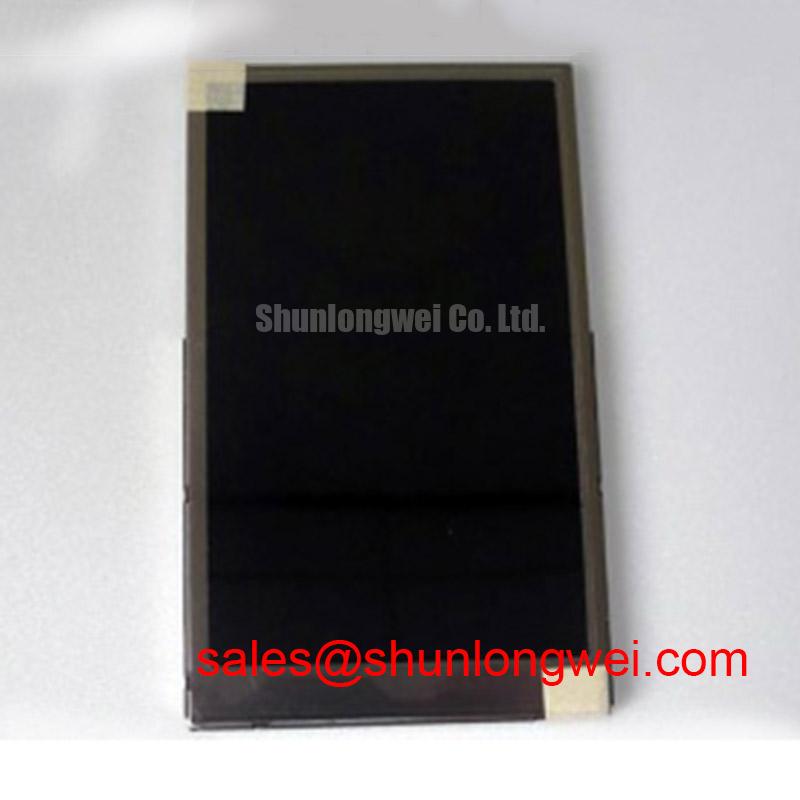
Technical Analysis for System Integration
A defining characteristic of the LQ043Y1LX01 is its ASV (Advanced Super View), normally black transmissive mode. This technology is the foundation of its symmetrical viewing performance. For a design engineer, this eliminates the common issue of color inversion or significant contrast degradation when an operator views a screen from an angle. Think of its viewing cone like a perfect sphere rather than a narrow spotlight; the visual data remains consistent whether the HMI is mounted at eye level, on a desk, or as part of a larger console. This feature is critical in environments where operators are mobile or where multiple personnel need to view a screen simultaneously.
The module’s physical construction is also optimized for integration. With an active area of 56.16 mm by 93.6 mm and a slim typical depth of 5.9 mm, the LQ043Y1LX01 is well-suited for space-constrained designs. Its portrait-mode orientation and 3:5 aspect ratio are aligned with the needs of many handheld diagnostic tools and vertical control panel layouts. The use of an LVDS (Low Voltage Differential Signaling) interface allows for higher data rates and reduced electromagnetic interference (EMI), a crucial consideration for maintaining signal integrity in electrically noisy industrial settings. To learn more about signal integrity, explore our guide on rugged connectivity solutions.

Optimized Application Scenarios
The specific parameter set of this display makes it a strong candidate for several demanding applications:
- Handheld Industrial Terminals: The 4.3-inch size, WVGA resolution, and portrait orientation are a natural fit for portable data collection and diagnostic devices.
- Compact Control Panels: In factory automation, its symmetrical viewing angles ensure that machine status and controls are clearly visible to operators from various positions on the factory floor.
- Medical Instrumentation: The normally black display mode provides deep blacks and high contrast, which is essential for the clear representation of vital signs and other critical medical data.
- Specialized A/V Equipment: The LVDS interface supports the clean transmission of video data required in professional audio/visual control surfaces and test equipment.
This module is an excellent match for systems that require a compact, portrait-oriented display with uncompromised off-axis viewing performance.
Key Specifications of the LQ043Y1LX01
| Feature | Specification |
|---|---|
| Manufacturer | Sharp |
| Screen Size | 4.3 inches |
| Resolution | 480(RGB)×800 (WVGA) |
| Display Technology | a-Si TFT-LCD, ASV, Normally Black, Transmissive |
| Luminance | 315 cd/m² (Typ.) |
| Viewing Direction | Symmetry |
| Interface Type | LVDS (1 channel, 8-bit) |
| Outline Dimensions | 64.66 × 108.48 × 5.9 mm (W×H×D) |
| Backlight System | WLED |
Engineer FAQ
What is the primary benefit of the ASV, normally black technology in the LQ043Y1LX01?
The primary benefit is superior viewing angle performance. Unlike standard TN panels that can show distorted colors and contrast when not viewed head-on, this module’s ASV technology provides a symmetrical viewing cone. This means the image quality remains high and colors stay true from left, right, up, or down, which is essential for industrial control panels.
How does the LVDS interface benefit an industrial design?
The LVDS interface uses low voltage differential signals to transmit data. This architecture is inherently more resistant to common-mode noise found in industrial environments. It allows for longer cable runs between the controller and the display and generates less EMI, simplifying system-level EMC compliance. For further reading, see our articles on solving EMI issues.
Is this display suited for battery-powered devices?
While the datasheet specifies the overall power consumption, which should be evaluated for any specific power budget, the use of a WLED backlight is generally more efficient than older CCFL technology. Engineers should carefully analyze the total power draw, including the display and its driving circuitry, to confirm its suitability for a specific battery life target.
What are the mechanical considerations for mounting this display?
The datasheet provides precise outline dimensions and the location of any mounting tabs. With a typical depth of 5.9 mm, it is relatively thin. It is crucial to design the enclosure or bezel to support the display without putting undue stress on the glass or the connection points of the flexible printed circuit (FPC).
Design Enablement
By providing a foundation of excellent visual performance from all angles within a compact and industry-standard interface, the Sharp LQ043Y1LX01 enables the design of effective and reliable human-machine interfaces. Its specified characteristics support the development of durable equipment where clear communication of data is paramount.