Sharp LM32K10: A High-Contrast Monochrome Display for Industrial Applications
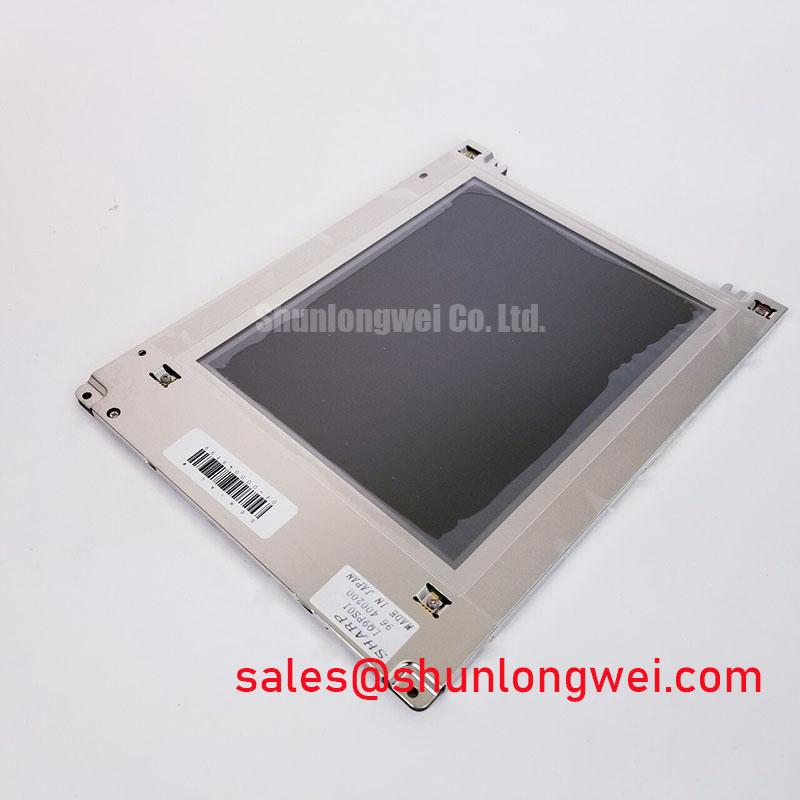
## Sharp LM32K10 5-Inch QVGA Monochrome STN LCD Module
The Sharp LM32K10 is an STN transmissive monochrome LCD module engineered to deliver high-contrast, black-and-white QVGA imaging for clear information display. This module integrates core display functions to support the design of robust human-machine interfaces. It is particularly suited for applications where data clarity and reliability are prioritized over color imaging. To meet its power requirements, the unit needs a +5V supply for logic and a distinct high-voltage AC source for its CCFL backlight.
* **Core Specifications**: 4.7-inch Diagonal | 320 x 240 Resolution | 12:1 Contrast Ratio
* **Key Engineering Advantages**: An integrated controller simplifies system design, and the high contrast ensures excellent readability for critical data.
* **Intended Use**: Optimized for industrial equipment and instrumentation that demand a clear, dependable display interface.
Download the LM32K10 Official Datasheet (PDF)

Technical Analysis for System Integration
A key performance metric of the LM32K10 is its typical contrast ratio of 12:1. For a passive-matrix STN display, this level of contrast is significant. It ensures that the black pixels appear distinctly against the white background, enhancing the legibility of text and graphical elements. Think of this contrast as the difference between reading crisp, dark text on a clean page versus deciphering faint gray characters. For an operator relying on an HMI, this clarity reduces eye strain and minimizes the chance of misreading critical information, a crucial factor in many industrial HMI applications.
The module’s architecture includes a built-in controller, which simplifies the engineering effort required for system integration. This integrated component manages the row and column drivers for the LCD panel based on timing and data signals from a host processor. By handling these low-level tasks, the controller negates the need for external driver ICs, thereby saving valuable printed circuit board (PCB) space and reducing the overall bill of materials (BOM). This allows engineers to focus on application-level software rather than complex display driving hardware.
Optimized Application Scenarios
The LM32K10’s feature set makes it a strong candidate for specific industrial and commercial systems.
* **Industrial Control Panels**: The display’s 320×240 resolution is well-suited for presenting status indicators, configuration menus, and diagnostic data with clarity.
* **Test and Measurement Equipment**: Its high-contrast monochrome screen enables the unambiguous display of numerical readouts and simple waveforms, which is essential for accurate data interpretation.
* **Medical Diagnostic Devices**: In instruments where essential parameters must be displayed with high legibility, the LM32K10 provides a reliable, no-frills visualization solution.
* **Legacy System Sustainment**: The module’s parallel interface and CCFL backlight are characteristic of established technologies, making it a viable component for repairing or extending the life of existing equipment.
This display is an optimal match for cost-effective industrial and medical devices that require clear, reliable, and straightforward monochrome data visualization.
Key Specifications of the LM32K10
| Parameter | Specification |
|---|---|
| Display Technology | STN (Super-twisted Nematic), Black/White Positive Mode |
| Screen Size | 4.7 inches (diagonal) |
| Resolution | 320 x 240 dots (QVGA) |
| Active Area | 95.97 mm (W) x 71.97 mm (H) |
| Contrast Ratio | 12:1 (Typical) |
| Backlight System | Cold Cathode Fluorescent Tube (CCFL) |
| Interface | 4-bit Parallel Data |
| Supply Voltage (Logic) | 5.0V (Typical) |
| Operating Temperature Range | 0°C to +45°C |
Frequently Asked Questions for Engineers
- What are the power supply requirements for the LM32K10?
- The module requires two separate power sources. A regulated +5V DC supply is needed for the logic circuits. Additionally, a dedicated high-voltage AC inverter is required to drive the CCFL backlight, as specified in the datasheet’s absolute maximum ratings and backlight sections.
- How can the lifespan of the CCFL backlight be maximized?
- To achieve optimal backlight longevity, it is crucial to operate the CCFL with an inverter that provides the lamp current and frequency specified in the datasheet. Proper thermal management to keep the ambient temperature within the specified 0°C to +45°C range is also essential for maximizing its operational life.
- What type of data interface does this module use?
- The LM32K10 utilizes a parallel data interface. It accepts 4-bit parallel data along with control signals for timing and synchronization (e.g., clock, horizontal and vertical sync). Refer to the interface pin description in the official datasheet for precise connection details.
- Is this module suitable for outdoor or high-ambient-light environments?
- As a transmissive display with a typical brightness of 50 cd/m², the LM32K10 is primarily intended for indoor use. It is not designed for direct sunlight readability. For those applications, a display with transflective properties or significantly higher brightness would be required.
This LM32K10 module offers a practical and efficient solution for engineers who need to integrate a highly readable monochrome display into their systems. Its combination of a clear, high-contrast screen and an integrated controller streamlines both the design process and the end-user experience.