CM100TU-24H IGBT Module: A Technical Analysis for High-Power Switching
CM100TU-24H IGBT Module Technical Analysis
Engineered for High-Power Switching Applications
The Mitsubishi CM100TU-24H is a six-element IGBT module specifically configured for three-phase inverter applications. It integrates six IGBTs and six corresponding super-fast recovery free-wheel diodes into a single, isolated package, delivering a robust solution for motor control and power conversion systems. This module’s key value is its balance of conduction efficiency, switching performance, and simplified thermal management.
- Core Specifications: 1200V | 100A | VCE(sat) 2.7V (max)
- Key Advantages: Low VCE(sat) minimizes conduction losses, and the integrated isolated baseplate simplifies heatsink mounting.
- Design Consideration: The module’s thermal resistance data allows engineers to accurately calculate heatsink requirements for reliable operation under various load conditions.
Download the Official CM100TU-24H Datasheet (PDF)
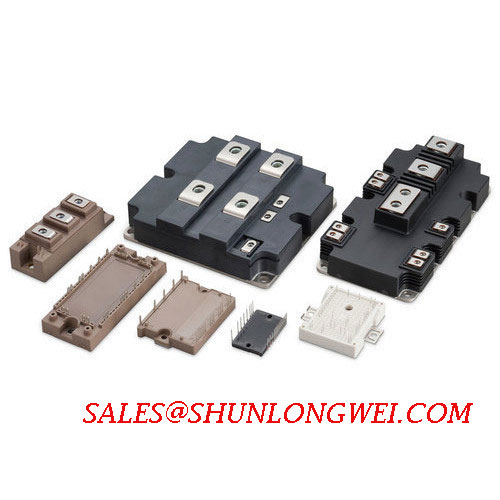
Technical Analysis for System Integration
The engineering value of the CM100TU-24H is evident in its electrical and thermal characteristics, which are detailed in the official datasheet. A primary feature is its low collector-emitter saturation voltage (VCE(sat)), with a maximum rating of 2.7V at a 100A collector current. This parameter is crucial as it directly impacts conduction power loss; a lower VCE(sat) means less energy is dissipated as heat during the on-state, leading to higher overall system efficiency and reduced thermal stress on the component.
Efficient thermal management is further enabled by the module’s design. The thermal resistance from junction to case (Rth(j-c)) is specified as 0.192 °C/W per IGBT. Think of thermal resistance as the width of a pipe for heat flow; a lower value signifies a wider pipe, allowing heat to escape more easily from the semiconductor junction to the heatsink. This predictable thermal performance is essential for designing a cooling system that maintains the junction temperature below its 150°C maximum limit, a critical factor for long-term reliability. For further reading on thermal design, see our guide on mastering the IGBT Zth curve.
The module also incorporates discrete super-fast recovery free-wheel diodes, which are essential for handling the inductive loads found in motor drives. The fast reverse recovery time (trr) of these diodes minimizes switching losses during the commutation phase, which is particularly important in systems that operate at higher frequencies. This integration simplifies the power stage design by providing a matched diode within the same package.
Optimized Application Scenarios
The characteristics of the CM100TU-24H make it well-suited for several demanding applications:
- AC Motor Controls & Servo Drives: Its three-phase configuration and 100A rating are ideal for driving induction or servo motors. The low saturation voltage directly contributes to better drive efficiency.
- Uninterruptible Power Supplies (UPS): The module’s robust 1200V rating and reliable switching performance are critical for the inverter stage in online UPS systems, ensuring stable power delivery.
- Welding Power Supplies: The ability to handle high peak currents (ICM rated at 200A) makes it suitable for the demanding pulsed-power requirements of modern welding equipment.
- General Purpose Inverters: The all-in-one, isolated package simplifies assembly and thermal design for a wide range of power conversion tasks.
This module’s specifications are best matched for applications requiring efficient and reliable three-phase power switching up to 100A with a 1200V bus.
Key Specifications of the CM100TU-24H
| Absolute Maximum Ratings | |
|---|---|
| Collector-Emitter Voltage (VCES) | 1200V |
| Collector Current (IC) | 100A |
| Peak Collector Current (ICM) | 200A |
| Maximum Power Dissipation (Pc) | 650W |
| Junction Temperature (Tj) | -40 to +150°C |
| Electrical & Thermal Characteristics | |
| Collector-Emitter Saturation Voltage (VCE(sat)) max. | 2.7V (@ IC=100A, VGE=15V) |
| Gate-Emitter Threshold Voltage (VGE(th)) | 5.5V to 7.5V |
| Thermal Resistance, Junction-to-Case (Rth(j-c)) – IGBT | 0.192 °C/W |
| Thermal Resistance, Junction-to-Case (Rth(j-c)) – Diode | 0.34 °C/W |
Engineer’s FAQ for CM100TU-24H
What are the primary factors to consider when designing a heatsink for the CM100TU-24H?
The key is to use the thermal resistance values (Rth(j-c)) provided in the datasheet to calculate the maximum allowable case-to-ambient thermal resistance for your heatsink. You must account for total power dissipation from all six IGBTs and diodes under worst-case operating conditions to ensure the junction temperature (Tj) remains below the 150°C maximum rating.
How does the isolated baseplate benefit my design?
The electrically isolated baseplate simplifies the mechanical and thermal assembly process. It allows you to mount the module directly to a common grounded heatsink without needing additional insulating layers, which can add thermal resistance and complexity. This reduces assembly time and potential points of failure. More on this topic can be explored in our article about the role of isolated baseplates in reliability.
What is the significance of the gate-emitter threshold voltage (VGE(th)) range?
The VGE(th) range of 5.5V to 7.5V defines the gate voltage required to begin turning the IGBT on. Your gate drive circuit must provide a voltage significantly higher than the maximum 7.5V to ensure the device is fully saturated (fully on) to achieve the low VCE(sat) specification. A common practice is to use a 15V gate drive voltage. For robust design, learn about optimizing gate drive design.
Can this module be used for high-frequency switching applications?
Yes, the datasheet specifies it is intended for “High Frequency Operation”. The switching characteristics, such as turn-on (ton) and turn-off (toff) times (typically 0.4µs and 1.0µs respectively), allow it to operate effectively in applications like switching power supplies and high-frequency motor drives, though total switching losses must be calculated for the target frequency.
Enabling Efficient Power Conversion
The Mitsubishi CM100TU-24H IGBT module provides a functionally integrated and thermally efficient component for developers of three-phase power systems. By combining a low conduction loss profile with a practical, isolated package, this module allows engineers to achieve compact and reliable designs for motor controls, UPS systems, and welding power supplies. Its well-defined thermal characteristics empower precise and effective cooling system design.