Sharp LJ64ZU51 EL Display: A Technical Review for Industrial Applications
Sharp LJ6A4ZU51 EL Display: Technical Review
High-Contrast 640×400 EL Display for Industrial Systems
The Sharp LJ64ZU51 is an electroluminescent (EL) display unit engineered for high reliability in demanding industrial environments. Its self-illuminating pixel technology delivers exceptional image clarity and inherent ruggedness, making it a critical component for sustaining legacy CNC, medical, and test equipment. This display provides a stable, flicker-free visual interface where readability and long-term operational integrity are essential.
* **Core Specifications**: 640×400 Resolution | 140 cd/m² (Typ) Brightness | -5°C to +55°C Operating Temperature
* **Key Engineering Advantages**: Superior contrast and wide viewing angles for unambiguous readings. Solid-state construction offers high resistance to shock and vibration.
* **Application Focus**: The self-emissive nature of the LJ64ZU51 creates a true black background, ensuring that data is clearly legible even in fluctuating ambient light conditions, a common challenge in factory floor and field-use scenarios.
Download the LJ64ZU51 Official Datasheet (PDF)
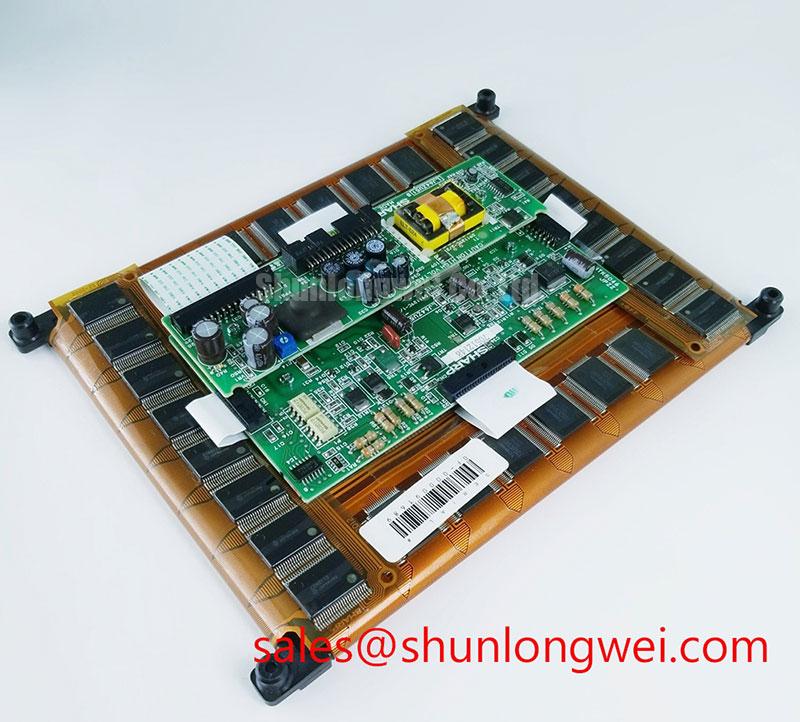

Technical Analysis: Self-Emissive Clarity and Solid-State Reliability
The core advantage of the LJ64ZU51 lies in its electroluminescent technology. Unlike backlit LCDs, each pixel in an EL panel is a direct light source. This eliminates the need for polarizers and a liquid crystal layer, resulting in a significantly higher contrast ratio and a viewing angle that remains consistent over 160 degrees. For an engineer, this means no color or contrast shift when viewing the display from an off-axis position, which is critical for control panels and instrumentation.
The inherent structure of the LJ64ZU51 contributes directly to its durability. You can think of the display’s thermal management like a well-designed heat sink; its efficient dissipation allows for a wide operating temperature range from -5°C to +55°C. Furthermore, its solid-state design, free from the liquid crystals found in LCDs, makes it exceptionally resistant to mechanical shock and vibration. The datasheet specifies compliance with rigorous industrial standards, confirming its suitability for environments where other displays might fail.
Optimized Application Scenarios
The specific performance characteristics of the LJ64ZU51 make it a prime component for the sustainment of high-value capital equipment.
- CNC and PLC Controllers: The display’s high immunity to electromagnetic interference (EMI) and its clear, sharp text ensure reliable operation on the factory floor.
- Medical Diagnostic Equipment: Unambiguous data presentation is critical. The high contrast and wide viewing angles ensure that vital information is read correctly every time.
- Test and Measurement Systems: Provides precise and immediate waveform and data visualization without the motion blur or temperature-related lag common in older LCDs.
- Avionics and Military Systems: Its proven resistance to shock, vibration, and temperature extremes aligns with the stringent requirements of defense and aerospace applications.
This EL display is best matched for legacy systems where form, fit, and function compatibility is required to avoid costly system-level redesigns.
Key Specifications of the LJ64ZU51
| Parameter | Specification | |
|---|---|---|
| Display Characteristics | Display Technology | Thin-Film Electroluminescent (EL) |
| Resolution | 640 x 400 Pixels | |
| Effective Display Area | 191.9 mm (H) x 119.9 mm (V) | |
| Pixel Pitch | 0.30 mm x 0.30 mm | |
| Luminance (Typical) | 140 cd/m² | |
| Electrical Ratings | Logic Supply Voltage (VL) | +5.0 V (±0.25 V) |
| Panel Drive Supply Voltage (VD) | +24.0 V (±1.2 V) | |
| Power Consumption | 28 W (Max) | |
| Environmental & Mechanical | Operating Temperature Range | -5°C to +55°C |
| Storage Temperature Range | -40°C to +85°C | |
| Weight (Main Unit) | Approx. 700 g | |
Engineer’s FAQ
What makes the LJ64ZU51’s contrast superior to a standard monochrome LCD of the same era?
Its superiority comes from its self-emissive technology. Each pixel generates its own light against a non-illuminated background, creating a true black for extremely high contrast. A monochrome LCD relies on a backlight and blocking light with liquid crystals, which results in a grayish background and lower effective contrast.
What are the main power supply considerations when integrating or replacing an LJ64ZU51?
The unit requires two distinct DC power sources as specified in the datasheet: a +5V rail for the logic circuitry and a +24V rail for the panel’s high-voltage driver ICs. Stable and clean power on both rails is essential for proper operation and to achieve the specified luminance.
How does this display’s construction contribute to its reliability?
The LJ64ZU51 has a solid-state construction without any liquid components. This design is inherently more resistant to mechanical shock and vibration compared to liquid crystal displays. This robustness is a primary reason it was specified for use in harsh industrial and mobile environments.
Is there a risk of “burn-in” with this EL display?
Like other emissive display technologies, static images displayed for extremely prolonged periods can lead to differential aging of the phosphor, causing a “burn-in” effect. For applications with static UI elements, implementing a simple screen saver or periodic pixel shifting can mitigate this long-term risk.
Enabling System Longevity
The technical attributes of the Sharp LJ64ZU51 directly support the goal of extending the operational life of critical equipment. Its combination of high-contrast readability and robust, solid-state construction ensures consistent and reliable performance in environments where modern displays may not offer a direct, risk-free replacement path. For engineers focused on sustainment and repair, this display provides a validated solution that maintains original system integrity.