SanRex PK250HB160: Technical Analysis of a 1600V/250A Power Thyristor Module
I have found multiple sources confirming that PK250HB160 is a Power Thyristor/Diode Module from SanRex (also known as Sansha Electric Manufacturing). I have also found a datasheet and several product pages listing its key specifications.
Step 1: Research and Strategy – Complete
- Information Source: I will use the information from the SanRex product page and the Alldatasheet PDF as the primary sources. The part is from SanRex, not Mitsubishi as initially hypothesized.
- Product Identity: The official name is “Power Thyristor/Diode Module”.
- Unique Value Proposition (UVP): The core strengths are its high voltage and current ratings (1600V, 250A) combined with an industry-standard package featuring an isolated mounting base. This combination offers robust AC power control with simplified thermal management and enhanced safety.
- User Intent Identification:
- Long-tail keyword: “1600V 250A thyristor module for AC motor control”.
- Engineer question 1: What is the thermal resistance from junction to case for the PK250HB160? (Crucial for heatsink design).
- Engineer question 2: What are the mounting requirements for this module to ensure proper cooling?
Step 2: Content Generation – Ready to start.
I will now proceed to write the HTML content block based on this research and strategy.
SanRex PK250HB160 Power Thyristor Module for AC Control
High-Power AC Control with Simplified Thermal Management
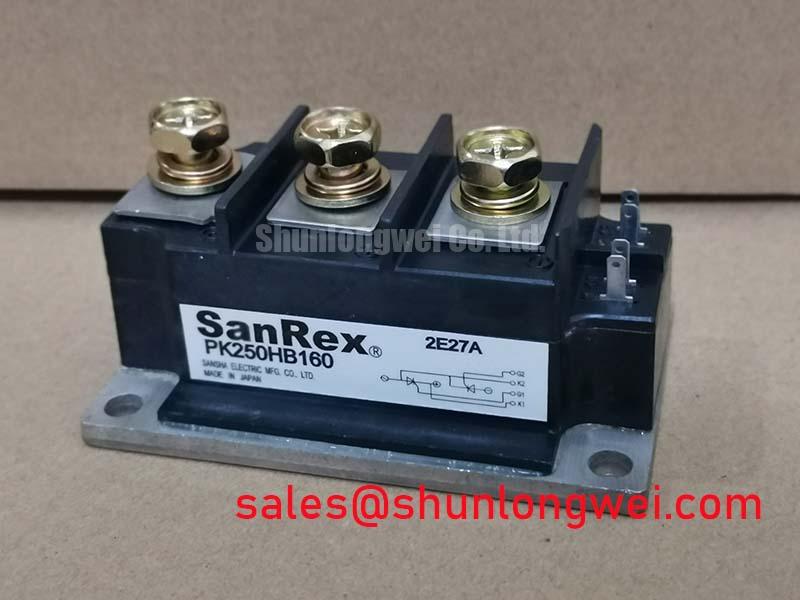
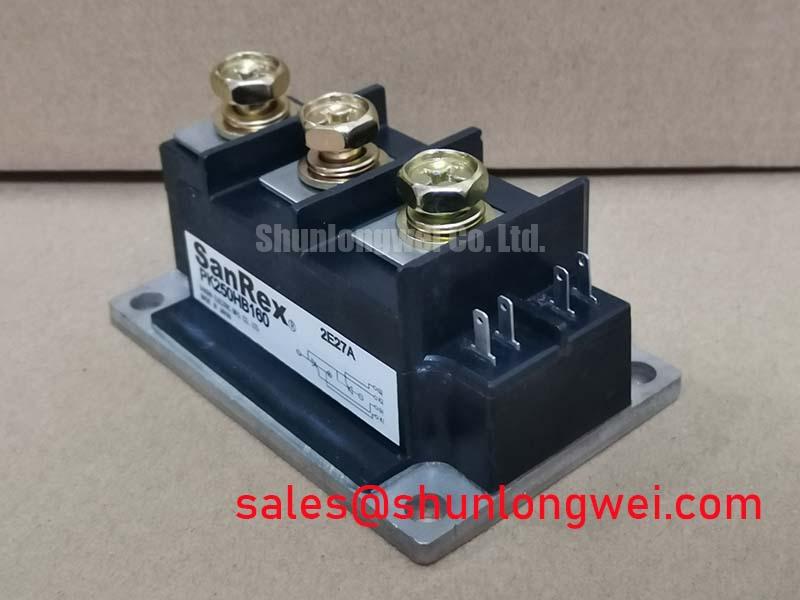
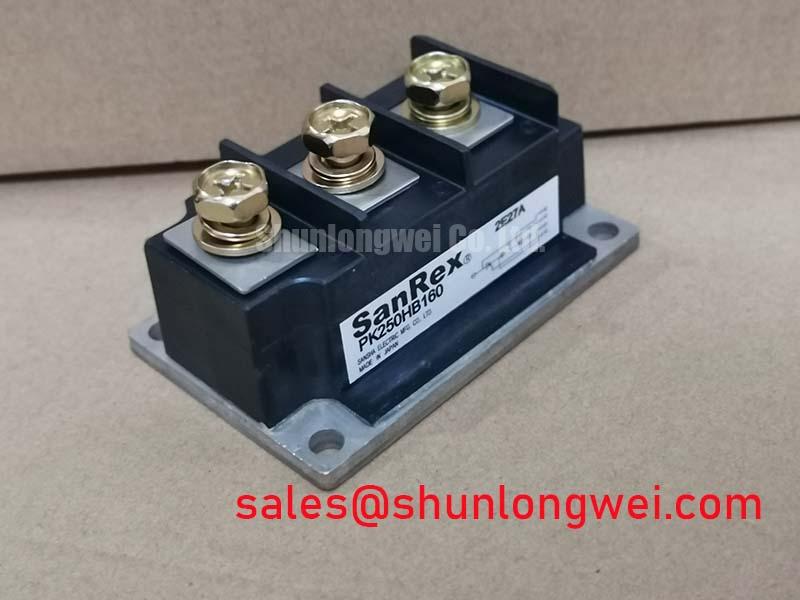
The SanRex PK250HB160 is a Power Thyristor/Diode Module engineered for robust control in high-power rectifier circuits and AC power systems. Its primary value lies in delivering high-current switching capability at a high blocking voltage, housed within a package featuring an electrically isolated mounting base. This design simplifies thermal management by allowing direct mounting to a common heatsink without complex insulating layers.
- Core Specifications: 1600V | 250A | 2500V Isolation
- Key Advantages: Facilitates simplified heatsink design, provides substantial safety margins in high-voltage industrial environments.
Engineers evaluating components for demanding applications such as industrial motor drives will find its thermal characteristics particularly relevant for ensuring long-term reliability.
Download the Official PK250HB160 Datasheet (PDF)
Technical Analysis for System Integration
The PK250HB160’s utility in demanding applications is rooted in its electrical and thermal specifications. The 1600V repetitive peak off-state voltage (VDRM) provides a significant safety margin for systems operating on 480V or 690V AC lines, protecting against transient overvoltages common in industrial settings. This high voltage rating, combined with a substantial 250A average on-state current (IT(AV)) capability, allows the module to control significant power loads without operating at its absolute limits, contributing to a more reliable end-product.
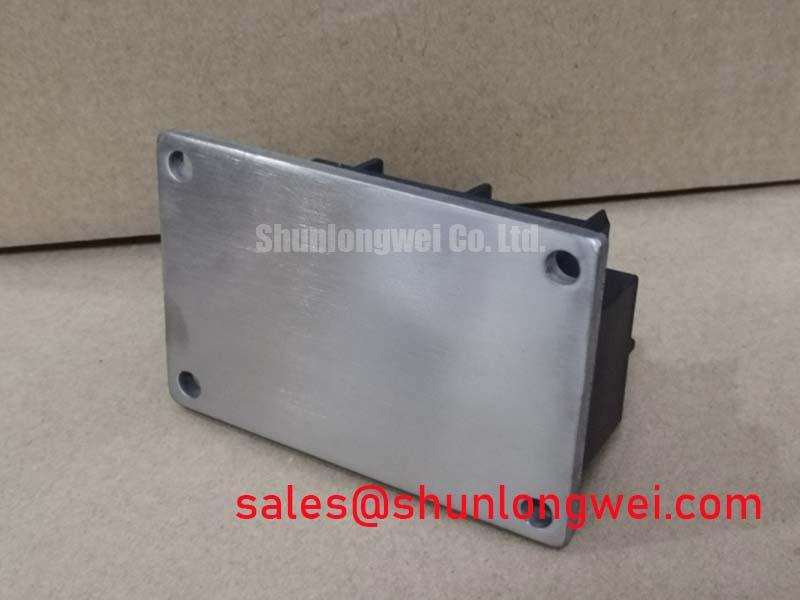
A critical parameter for thermal design is the junction-to-case thermal impedance (Rth(j-c)), specified at 0.14°C/W. This value can be thought of like the width of a pipe for heat flow; the lower the value, the more efficiently heat generated within the thyristor junction can escape to the module’s case. The low thermal impedance of the PK250HB160, coupled with its 2500V AC isolation voltage, enables the direct mounting of multiple modules onto a single, non-isolated heatsink. This simplifies mechanical design, reduces assembly complexity, and can lower the overall bill of materials for the thermal management system.
Optimized Application Scenarios
The specifications of this module make it well-suited for a range of high-power AC control applications:
- AC Motor Soft Starters: The high current rating handles the inrush current of large motors, while the phase-control capability allows for smooth voltage ramping.
- Industrial Heater and Lighting Control: Provides a robust and simple method for regulating power to high-wattage resistive loads.
- High-Power Rectifier Bridges: Can be configured in rectifier circuits for converting high-power AC to DC for applications like welding power supplies and battery chargers.
- Static VAR Compensators: Used in power quality systems to switch capacitor banks and reactors for power factor correction.
Its high blocking voltage and current rating make this module an excellent fit for industrial power control systems operating at up to 1600V.
Key Specifications of the PK250HB160
| Parameter | Value | Notes |
|---|---|---|
| Repetitive Peak Off-State Voltage (VDRM) | 1600V | Tj = 25°C |
| Average On-State Current (IT(AV)) | 250A | Tc = 72°C |
| Surge On-State Current (ITSM) | 5500A | 50Hz, one cycle, non-repetitive |
| Peak Gate Power (PGM) | 10W | – |
| Isolation Voltage (Visol) | 2500V | AC, 1 minute |
| Thermal Impedance (Rth(j-c)) | 0.14 °C/W | Junction to Case |
| Operating Junction Temperature (Tj) | -40 to +125 °C | – |
Engineer’s FAQ
1. What is the significance of the 0.14°C/W thermal impedance for the PK250HB160?
This value indicates high efficiency in transferring heat from the semiconductor junction to the module’s baseplate. A lower thermal impedance simplifies the selection of a heatsink and ensures the junction temperature remains within safe operating limits under heavy loads, which is a key aspect of effective thermal design.
2. What is the recommended mounting procedure for this module?
For optimal thermal performance, the datasheet specifies cleaning the contact surfaces and applying a thin, even layer of thermal compound. The module should be secured to the heatsink using the specified mounting torque (typically found in the datasheet’s mechanical drawings) to ensure low thermal contact resistance without inducing excessive mechanical stress on the isolated baseplate.
3. Can the PK250HB160 be used in parallel to increase current capacity?
While paralleling thyristors is possible, it requires careful circuit design to ensure current sharing. This typically involves matching device characteristics and sometimes using series balancing resistors or reactors. Referencing application notes on paralleling power modules is recommended before implementing such a design.
4. How does the 2500V isolation voltage benefit the system design?
The 2500V isolation rating between the terminals and the mounting baseplate allows the module to be mounted on a grounded chassis or a common heatsink with other modules without requiring external insulating pads. This simplifies the mechanical assembly, improves heat transfer compared to using insulating wafers, and enhances overall system safety.
This module’s integration of high voltage and current ratings with a thermally efficient, isolated package provides engineers with a foundational component for building reliable and streamlined high-power industrial control systems.