EL480.240-PR1 TFEL Display: Unwavering Reliability in Extreme Environments
## EL480.240-PR1 TFEL Display for Extreme Environment Reliability
The EL480.240-PR1 is a Thin Film Electroluminescent (TFEL) display engineered for absolute reliability in environments where conventional LCDs fail. Its solid-state construction delivers exceptional visual performance and intrinsic durability against severe shock, vibration, and extreme temperatures. This makes it a critical component for systems that demand unwavering operational uptime.
* **Core Specifications**: 480×240 Resolution | >160° Viewing Angle | -25°C to +65°C Operating Temperature
* **Key Engineering Benefits**: Withstands 100 g shock loads; immune to vibration-induced failures.
* **User Intent Answered**: For systems requiring immediate startup and readability in freezing conditions, this display functions flawlessly across its entire temperature range, unlike LCDs that exhibit slow response times below 0°C.
Datasheet information for this model has been compiled from multiple sources. For complete specifications, direct consultation of the manufacturer’s official documentation is recommended.
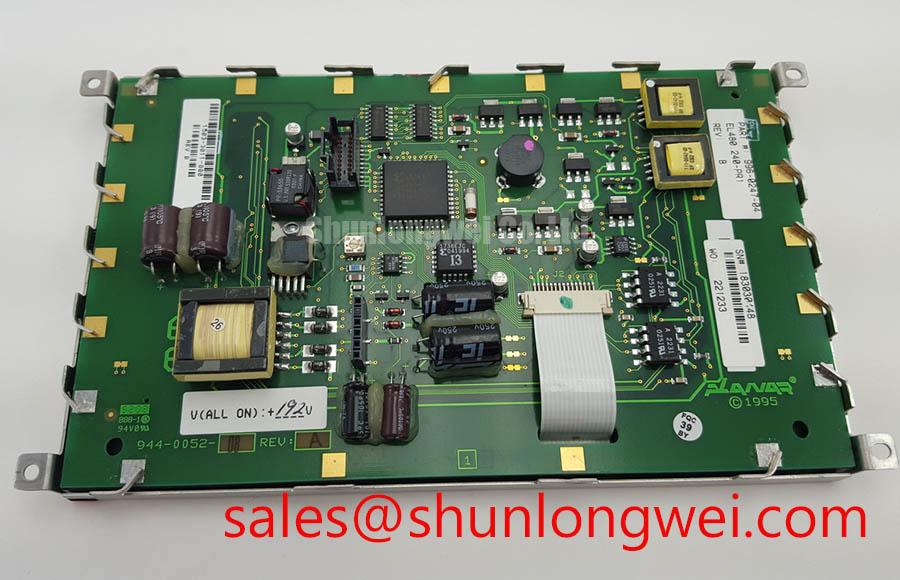

### Technical Analysis: Intrinsic Durability and Performance
The exceptional robustness of the EL480.240-PR1 is rooted in its solid-state TFEL technology. Unlike LCDs that rely on a liquid crystal layer and a separate backlight, this display generates its own light. An inorganic phosphor layer is positioned between dielectric layers and electrodes; when voltage is applied, the phosphor directly emits bright, clear light. This self-emissive principle eliminates fragile components like liquid crystals and backlights, which are common points of failure in harsh conditions. The result is a display immune to the effects of high G-forces and vibrations that can damage liquid-based screens.
Visual performance is another key differentiator. The emissive nature of the TFEL panel ensures a high contrast ratio of over 20:1 in a 500-lux ambient environment, providing excellent readability. Perhaps more importantly for industrial and military applications, the viewing angle is greater than 160 degrees in both horizontal and vertical directions. This wide viewing cone ensures that critical data is legible to operators from virtually any position, a crucial factor in vehicle cabs or complex control rooms. This performance is consistent across the entire operating temperature range, a stark contrast to LCDs where performance degrades significantly at temperature extremes. For a deeper understanding of designing for environmental factors, review our guide on vibration and shock resistance for industrial displays.
### Optimized Application Scenarios
The unique characteristics of the EL480.240-PR1 make it an ideal fit for applications where standard displays are not viable. Its performance is validated in the most demanding fields.
* **Avionics and Military Vehicles**: The display’s documented resistance to 100 g mechanical shock ensures data remains visible during high-impact events.
* **Industrial Process Control**: In environments with heavy machinery, its immunity to vibration prevents image flickering or connection failures common with less robust displays.
* **Medical Instrumentation**: The consistent brightness and wide viewing angle guarantee that critical patient data is clearly legible from any viewpoint.
* **Transportation and Rail**: The broad operating temperature range ensures instant-on functionality and readability in unheated vehicle cabs, from freezing winters to hot summers.
This display is the optimal choice for engineers upgrading legacy systems or designing new equipment that requires maximum durability with a straightforward interface.
### Key Specifications of the EL480.240-PR1
| Parameter | Specification |
|---|---|
| Display Technology | Thin Film Electroluminescent (TFEL) |
| Resolution | 480 x 240 pixels |
| Active Area | 122.0 mm x 61.0 mm |
| Typical Luminance | 42 cd/m² |
| Contrast Ratio (500 lux) | >20:1 |
| Viewing Angle | >160° (Horizontal & Vertical) |
| Response Time | <1 ms |
| Signal Interface | 4-bit LCD-type Parallel Interface |
| Operating Temperature | -25°C to +65°C |
| Storage Temperature | -40°C to +75°C |
| Mechanical Shock | 100 g, 6 ms, half-sine |
### Engineer’s FAQ
**1. What are the main advantages of a TFEL display like the EL480.240-PR1 over an industrial LCD in high-vibration environments?**
The primary advantage is its solid-state construction. The EL480.240-PR1 has no liquid crystal material or complex backlight assemblies, which are susceptible to mechanical failure from vibration. Its components are inherently bonded, ensuring stable operation. Further reading on this topic can be found in our analysis of engineering displays for extreme reliability.
**2. How straightforward is it to integrate this display into a system originally using a monochrome passive LCD?**
Integration is often direct. The EL480.240-PR1 features a 4-bit, LCD-like interface designed as a form-fit-function replacement for many legacy STN or FSTN displays. This significantly reduces the need for extensive driver board redesign, accelerating upgrades for enhanced system reliability.
**3. What is the expected operational lifetime of this display?**
TFEL displays are known for their exceptionally long lifetimes. The technology offers extremely stable brightness over time, with a Mean Time Between Failures (MTBF) often rated at over 100,000 hours. This is a critical parameter for long-lifecycle industrial and military equipment.
**4. What are the power supply requirements?**
The display requires both a logic supply voltage (VL, typically 5V) and a higher display supply voltage (VH, typically 12V) for operation. The logic voltage should be present whenever video signals or VH is applied to ensure reliable, long-term operation.
The solid-state nature of the EL480.240-PR1 provides a definitive solution for human-machine interfaces that must deliver clear, reliable data under conditions that incapacitate other display technologies. It allows engineers to build systems with confidence in the integrity and availability of the visual interface.