Fuji 7MBR50SB120-60 V-Series IGBT Module Technical Analysis
Fuji 7MBR50SB120-60 V-Series IGBT Module Technical Analysis
High-Integration 7-in-1 Power Module for Efficient Motor Drives
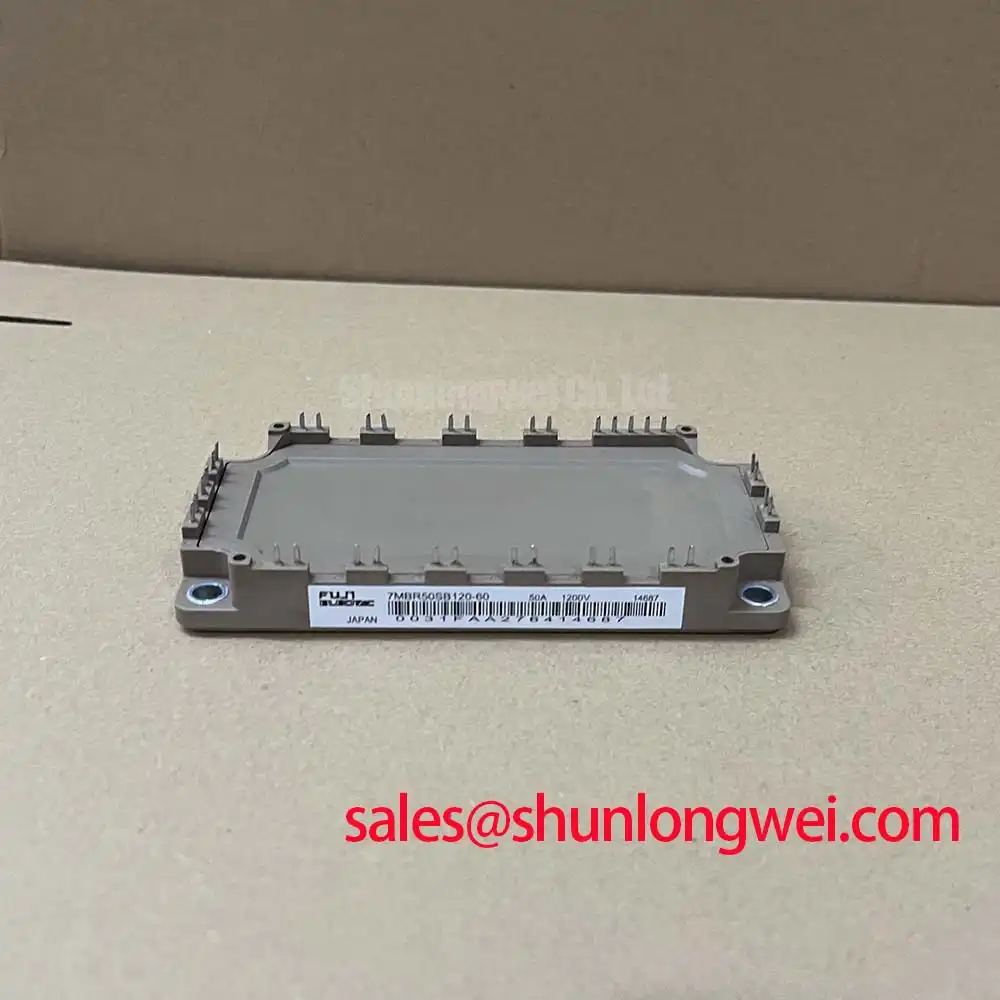
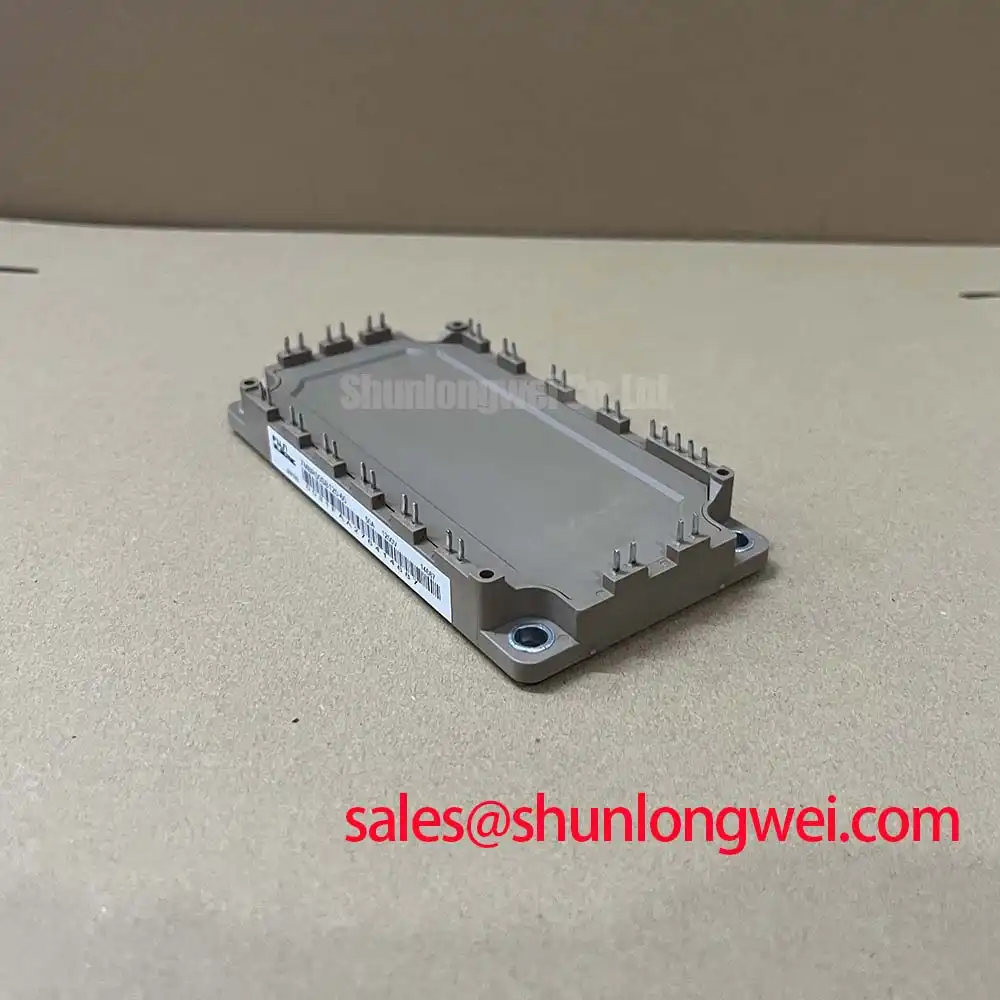
The Fuji Electric 7MBR50SB120-60 is a highly integrated 7-in-1 Power Integrated Module (PIM) from their V-Series, engineered to streamline the design of compact and efficient motor drive systems. This module consolidates a three-phase converter, brake chopper, and a three-phase inverter into a single package, reducing component count and simplifying PCB layout. By leveraging Fuji’s advanced V-Series technology, it delivers a balance of low conduction losses and robust performance, making it a strategic component for modern power conversion applications.
- Core Specifications: 1200V | 50A | VCE(sat) 1.70V (typ)
- Key Advantages: Simplifies power stage design, reduces overall system losses.
- Integrated Protection: Features an internal NTC thermistor for real-time temperature monitoring.
Download Official Datasheet (PDF)

Technical Analysis: Integration and Thermal Efficiency
The primary engineering value of the 7MBR50SB120-60 lies in its 7-in-1 integration. By incorporating the input rectifier, brake IGBT/FWD, and output inverter into one module, designers can significantly reduce the complexity and footprint of their power stage. This PIM vs. discrete IGBT approach minimizes parasitic inductance between stages, which can lead to lower voltage overshoots and improved EMI performance. The consolidated package also simplifies manufacturing and assembly processes compared to managing multiple discrete components.
Efficiency is driven by the V-Series IGBT and FWD chip technology. The typical collector-emitter saturation voltage (VCE(sat)) of 1.70V at the nominal current directly translates to lower conduction losses. Think of thermal resistance (Rth(j-c)) as the width of a pipe for heat; this module’s low junction-to-case thermal resistance allows heat to be evacuated efficiently from the semiconductor chips to the heatsink. This thermal efficiency, combined with lower power losses, reduces the demand on the cooling system, potentially allowing for a smaller heatsink and a more compact overall system design.

Optimized Application Scenarios
The specific characteristics of the 7MBR50SB120-60 make it highly suitable for several applications:
- AC Motor Drives: The all-in-one topology is a perfect fit for compact Variable Frequency Drives (VFDs), especially in the 7.5 kW to 15 kW class, where space and cost are critical factors.
- Servo Drive Amplifiers: The module’s performance supports the precise control needed in servo systems. The integrated brake chopper is essential for managing regenerative energy during rapid deceleration cycles.
- Uninterruptible Power Supplies (UPS): Its robust 1200V rating and reliable V-Series technology provide the durability needed for critical power backup systems.
- HVAC Systems: The module’s efficiency contributes directly to energy savings in fan and pump control applications, helping systems meet stricter energy consumption standards.
This module is an optimal match for power systems requiring a compact, highly integrated, and thermally efficient solution for three-phase power conversion.
Key Specifications of the 7MBR50SB120-60
| Absolute Maximum Ratings (Tj = 150°C, Tc = 25°C unless otherwise specified) | ||
|---|---|---|
| Parameter | Symbol | Value |
| Collector-Emitter Voltage (Inverter & Brake) | VCES | 1200V |
| Continuous Collector Current (Inverter, Tc=80°C) | IC | 50A |
| Total Power Dissipation (Inverter, Tc=25°C) | PC | 320W |
| Short Circuit Withstand Time | tsc | ≥ 10µs |
| Electrical & Thermal Characteristics (Inverter Part, Tj=125°C unless specified) | ||
| Collector-Emitter Saturation Voltage (IC=50A, VGE=15V) | VCE(sat) | 1.70V (Typ) / 2.10V (Max) |
| Forward Voltage of FWD (IF=50A) | VF | 1.65V (Typ) / 2.15V (Max) |
| Total Switching Loss (IC=50A, VCC=600V, RG=15Ω) | Esw | 6.2 mJ (Typ) |
| Thermal Resistance (Junction to Case, IGBT) | Rth(j-c) | 0.39 °C/W (Max) |


Engineer’s FAQ
What are the main thermal design considerations for the 7MBR50SB120-60?
Effective thermal management is crucial. The datasheet specifies a maximum thermal resistance (Rth(j-c)) of 0.39°C/W for the inverter IGBTs. Your design must use an appropriately sized heatsink and a quality thermal interface material to keep the junction temperature below the 150°C maximum rating. The integrated NTC thermistor should be used by the control system to actively monitor temperature and trigger protective measures if needed.
How does the 7-in-1 integration simplify motor drive design?
This module significantly streamlines the design process by combining the three main power stages into one component. This eliminates the need for a separate rectifier bridge and brake chopper circuit, reducing PCB complexity, minimizing interconnects, lowering assembly time, and creating a more compact final product.
What is the engineering implication of a low VCE(sat)?
The collector-emitter saturation voltage, or VCE(sat), is the voltage drop across the IGBT when it is fully turned on. A lower VCE(sat), like the typical 1.70V for this module, directly reduces conduction power loss (P_loss ≈ VCE(sat) × IC). This means less energy is wasted as heat, leading to higher overall inverter efficiency and a reduced thermal load on the cooling system. Exploring the evolution towards lower VCE(sat) is key to modern power electronics.
Is a negative gate voltage required for reliable turn-off?
The datasheet characterizes switching performance using a gate drive voltage of +15V/-15V. While the module could be operated with a 0V turn-off, using a negative gate voltage is a recommended practice. It provides a larger noise margin against dv/dt induced parasitic turn-on, ensuring more reliable operation in electrically noisy environments typical of motor drives.
Enabling Compact and Reliable Power Conversion
The Fuji Electric 7MBR50SB120-60 provides a robust, all-in-one foundation for mid-power motor control and inverter applications. Its high level of integration simplifies the engineering process, while the efficiency of the V-Series silicon reduces both power loss and thermal management requirements. This allows design teams to achieve higher power density and system reliability in their final products.