A Technical Analysis of the DMF-50997 FSTN Graphic LCD Module
## DMF-50997 Graphic LCD Module for Industrial Controls
Technical Analysis of the Optrex DMF-50997 FSTN Display
The Optrex DMF-50997 is a monochrome graphic Liquid Crystal Display (LCD) module engineered for sustained performance in industrial applications. It delivers a crisp 240 x 64 dot matrix display, leveraging Film-compensated Super-twisted Nematic (FSTN) technology to present high-contrast text and graphics. This makes it a reliable component for Human-Machine Interfaces (HMIs), measurement tools, and legacy system maintenance where clear readability is essential.
* **Core Specifications**: 240 x 64 Dots | FSTN Positive Mode | CCFL Backlight
* **Key Advantages**: High-contrast readability, integrated display controller simplifies design.
* **Addresses Design Needs**: Provides a straightforward solution for adding a graphical interface without requiring extensive host processor resources.
Download the Official DMF-50997 Datasheet (PDF)
Engineered for Clarity and Simplified Integration
A defining characteristic of the DMF-50997 is its FSTN positive mode display. This technology adds a retardation film to the standard STN structure, which neutralizes color dispersion and results in a highly uniform black-on-white display. The practical benefit for an engineer is superior contrast and wider viewing angles compared to older STN types, ensuring the display is legible from various operational positions.
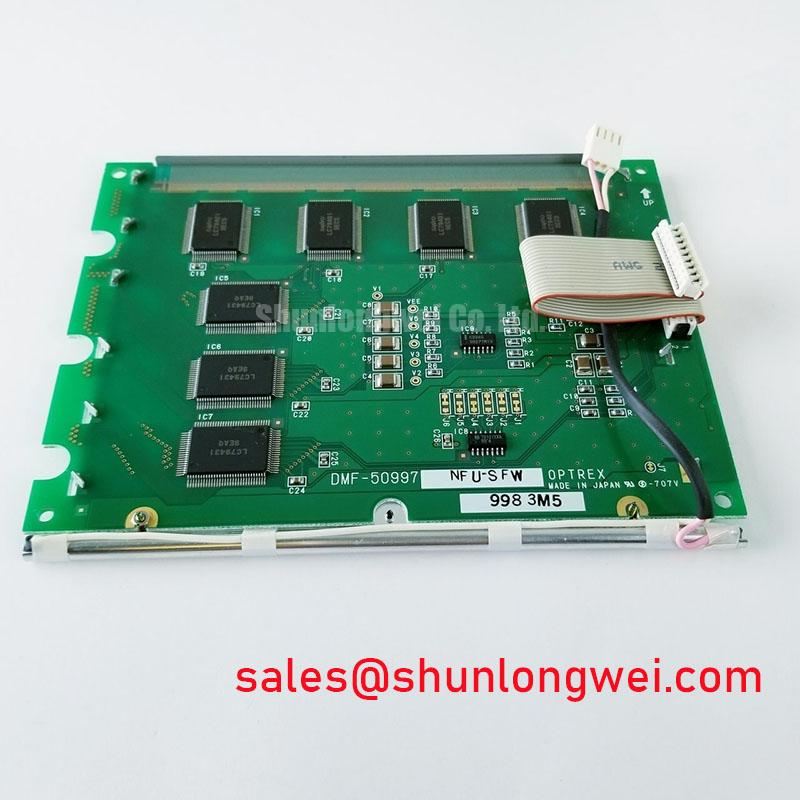
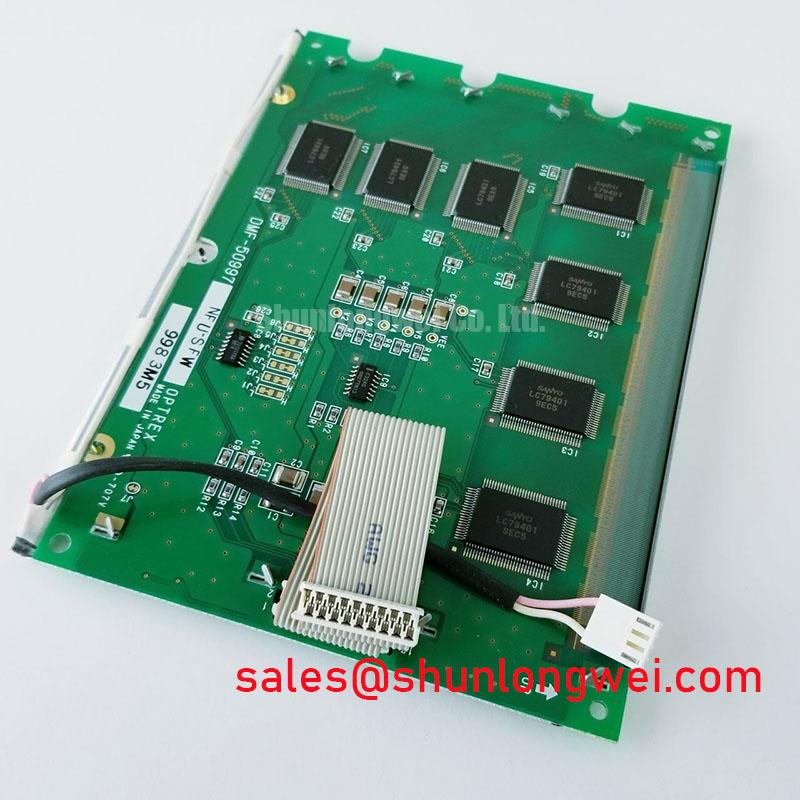
Furthermore, the module incorporates an onboard Toshiba T6963C display controller. This integrated circuit is a significant advantage as it manages the display RAM, character generation, and pixel-level control. Think of the integrated controller as a dedicated graphics co-processor; it handles the complex task of drawing pixels, freeing the main system’s microprocessor to focus on its primary functions. This simplifies the hardware interface to a standard 8-bit parallel bus and reduces software development overhead, accelerating the design cycle for industrial HMI systems.
Optimized Application Scenarios
The specific feature set of the DMF-50997 makes it a strong candidate for several distinct applications:
- Industrial Control Panels: The robust construction and clear monochrome readout are ideal for displaying machine status, alarms, and operator menus. The integrated controller simplifies connection to industrial PLCs and microcontrollers.
- Test and Measurement Equipment: Its 240×64 resolution is well-suited for rendering basic waveforms, numerical data, and system settings in benchtop or portable diagnostic tools.
- Point-of-Sale (POS) Terminals: Provides a reliable, cost-effective display for showing transaction details or operator prompts where a full-color screen is unnecessary.
- Legacy System Repair: Serves as a direct or suitable replacement for aging displays in equipment where maintaining the original user interface is critical for operational continuity.
This module’s combination of a standard interface, onboard controller, and high-clarity FSTN screen makes it best matched for applications needing a dependable, easily integrated graphic display.
Key Specifications of the DMF-50997
| Mechanical & Display Specifications | |
|---|---|
| Part Number | DMF-50997 |
| Display Format | 240 x 64 Dots |
| Overall Dimensions | 180.0(W) x 65.0(H) x 11.0(D) mm |
| Viewing Area | 132.0(W) x 39.0(H) mm |
| Dot Size / Pitch | 0.49(W) x 0.49(H) mm / 0.53(W) x 0.53(H) mm |
| LCD Technology | FSTN (Film-compensated Super-twisted Nematic), Positive |
| Backlight | Cold Cathode Fluorescent Lamp (CCFL) |
| Electrical & Environmental Ratings | |
| Power Supply (Logic) | +5.0V DC |
| Controller IC | Toshiba T6963C or Equivalent |
| Interface | 8-bit Parallel |
| Operating Temperature | 0°C to +50°C |
| Storage Temperature | -20°C to +60°C |
Engineer’s FAQ
1. What is the interface protocol for the DMF-50997?
The module uses a standard 8-bit parallel interface to communicate with the integrated T6963C controller. This involves connecting to an 8-bit data bus along with control signals like Chip Select (CS), Read (RD), Write (WR), and Address line 0 (A0) to switch between data and command registers.
2. Does the CCFL backlight require an external inverter?
Yes, a critical design consideration is the need for a separate inverter module. The CCFL backlight requires a high-voltage AC supply for operation, which must be provided by an external inverter circuit connected to the display’s backlight terminals. Careful management of the backlight lifespan is key to system longevity.
3. What is the typical contrast adjustment method?
Contrast is adjusted by supplying a variable negative voltage to the VEE pin (LCD driving voltage). Typically, this is achieved using a potentiometer configured as a voltage divider between the VDD (+5V) or GND and the negative voltage supply output from the display’s built-in power circuit.
4. How much RAM is available for the display bitmap?
The T6963C controller manages the display data RAM. For a 240×64 display, the bitmap requires 1,920 bytes (240 dots / 8 bits-per-byte * 64 lines). The controller’s internal RAM accommodates this graphic data as well as character generator RAM for text modes.
Enabling Clear and Reliable System Interfaces
The DMF-50997 provides a robust and field-proven solution for designers who require a clear, high-contrast monochrome display. Its integration of FSTN technology and an onboard controller streamlines the engineering process, enabling the development of reliable and easy-to-read HMIs for a wide range of industrial equipment. This focus on functional clarity and design efficiency makes it a valuable component for both new systems and long-term product support.