A Technical Analysis of the SEMIKRON SKD 25/02 Three-Phase Bridge Rectifier
SKD 25/02 SEMIKRON 200V 25A Three Phase Bridge Rectifier
Introduction and Core Highlights
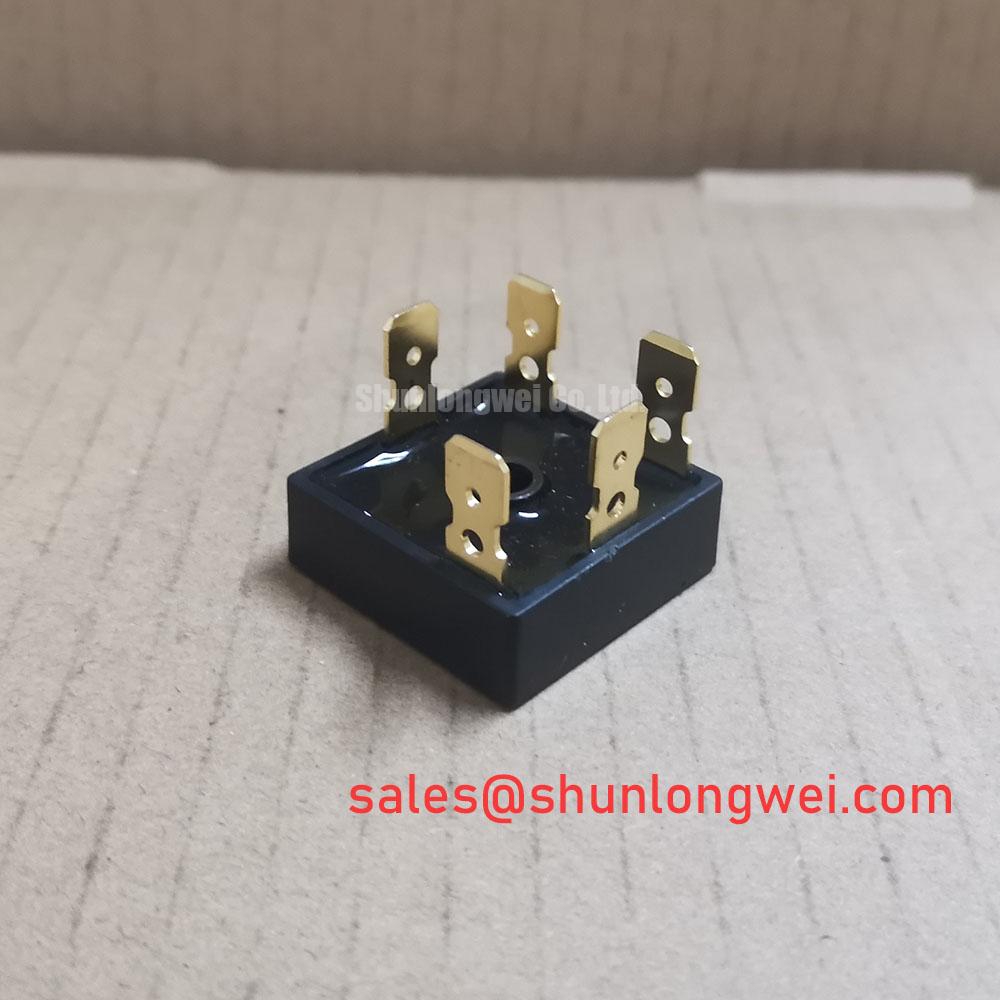
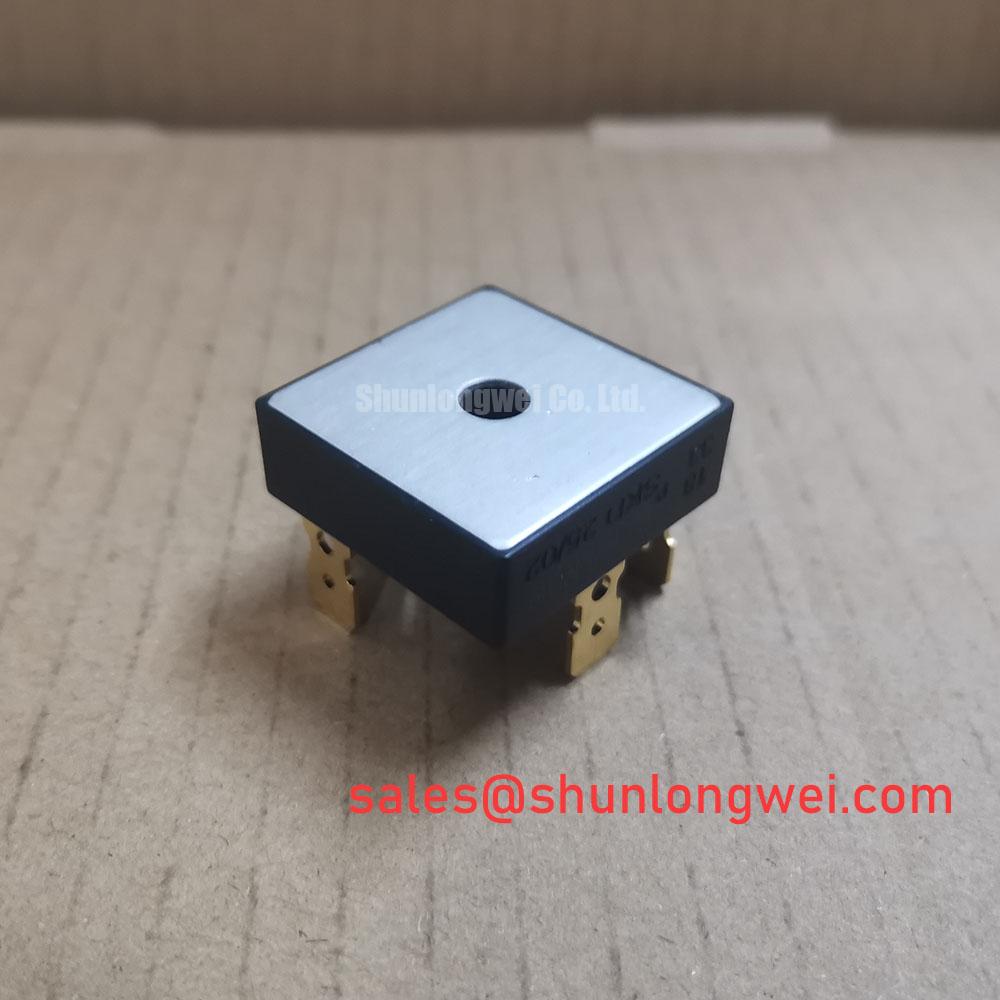
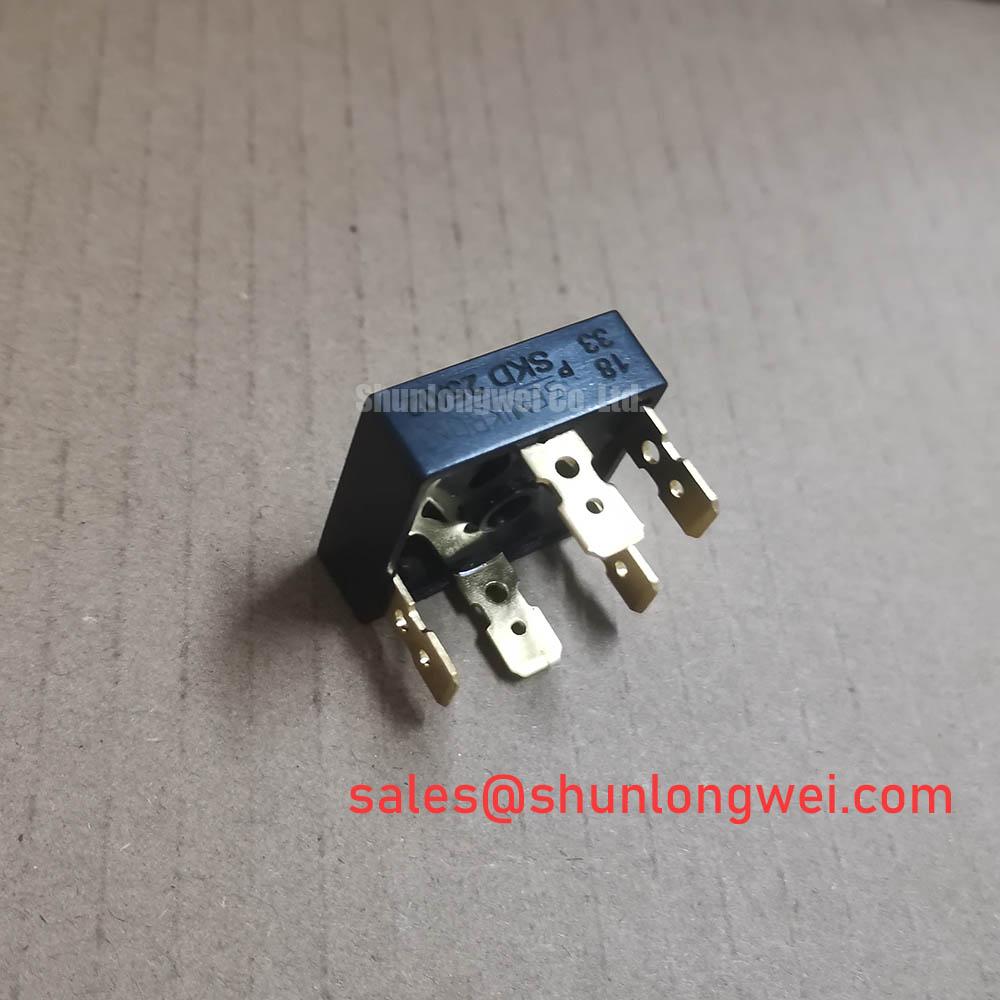
The SEMIKRON SKD 25/02 is a three-phase bridge rectifier offering a dependable AC-to-DC conversion solution in a robust, isolated package. This module is engineered for reliability and manufacturing simplicity, integrating a high 3000V isolation voltage with a significant surge current capability. This makes it a strong candidate for the input stage of various industrial power systems.
- Core Specifications: 200V VRRM | 25A ID | 3000V~ Isolation
- Key Advantages: Ensures high electrical safety and simplifies thermal design by allowing direct mounting to a heatsink. Its robust construction with screw terminals facilitates straightforward and secure installation.
- Design Intent: The well-documented thermal characteristics, including a low thermal resistance, allow engineers to perform accurate thermal modeling for effective heatsink selection.
Download the Official SKD 25/02 Datasheet (PDF)

Technical Analysis for System Integration
The SKD 25/02 is built around two key engineering principles: electrical safety and thermal reliability. The specified 3000V RMS isolation voltage between the terminals and the baseplate is a critical feature. It allows the module to be mounted directly onto a grounded chassis or heatsink without requiring additional, costly, and thermally inefficient insulating materials. This simplifies the mechanical assembly, reduces component count, and creates a more efficient thermal path for heat dissipation, contributing to overall system reliability and a more compact design.
From a thermal management perspective, the module’s ability to handle heat is fundamental to its performance. The thermal resistance from junction to case (Rth(j-c)) is rated at 0.3 K/W per rectifier. Think of thermal resistance as the width of a pipe; a lower value means heat can flow more easily from the active silicon to the heatsink. This efficient heat transfer, combined with a high surge current rating (IFSM) of 500A (at 10 ms), indicates the device is well-equipped to survive the significant inrush currents common in applications with large capacitive loads or motor starts.
Optimized Application Scenarios
- Power Supplies for Drives: The 25A continuous current rating and high surge capability are well-suited for handling the inrush current of DC bus capacitors in small to medium-sized motor drives.
- AC Motor Controllers: Its three-phase bridge configuration serves as a straightforward front-end AC-to-DC converter for variable frequency drives (VFDs) and servo systems.
- Industrial Battery Chargers: The robust electrical and thermal characteristics ensure a reliable DC power source, which is critical for industrial battery charging equipment.
- General-Purpose Power Conversion: The module’s standard footprint and screw terminals make it a versatile component for a wide array of industrial AC-to-DC rectification tasks.
This module is an excellent match for systems requiring robust, isolated, and easy-to-install three-phase rectification for continuous loads up to 25 amperes.
Key Specifications of the SKD 25/02
| Parameter | Value | Conditions |
|---|---|---|
| Absolute Maximum Ratings | ||
| Repetitive Peak Reverse Voltage (VRRM) | 200 V | – |
| DC Output Current (ID) | 25 A | Tc = 80 °C |
| Surge Forward Current (IFSM) | 500 A | 10 ms, Tvj = 25 °C |
| I²t Value | 1250 A²s | 10 ms, Tvj = 25 °C |
| Electrical & Thermal Characteristics | ||
| Forward Voltage (VF) | max. 1.3 V | IF = 25 A, Tvj = 25 °C |
| Thermal Resistance, Junction to Case (Rth(j-c)) | 0.3 K/W | Per Rectifier |
| Operating Junction Temperature (Tvj) | -40 to +150 °C | – |
| Isolation Test Voltage (Visol) | 3000 V~ | r.m.s., 1 minute |
| Mounting Torque | 2.5 Nm (± 15%) | For heatsink mounting |
Engineer’s FAQ
What is the correct mounting torque for the SKD 25/02 and its terminals?
The official datasheet specifies a mounting torque of 2.5 Nm for the heatsink mounting holes and 2.0 Nm for the electrical screw terminals. Adhering to these torque values is essential for ensuring both effective thermal transfer to the heatsink and a secure, low-resistance electrical connection.
Do I need an insulating thermal pad when mounting this module?
No, an external insulating pad is not required. The SKD 25/02 features an integrated isolated metal baseplate with an isolation rating of 3000V~. This allows for direct mounting to a grounded heatsink. A thin layer of thermal grease should be applied to minimize contact thermal resistance.
How can I estimate the power dissipation for heatsink selection?
Power dissipation can be approximated by using the forward characteristics from the datasheet. A simplified formula is Ploss ≈ V(TO) * Iavg + rT * Irms², where V(TO) is the threshold voltage and rT is the slope resistance. For the SKD 25/02, these values are typically 0.8V and 16 mΩ, respectively. For accurate thermal design, refer to the power dissipation curves in the datasheet.
What is the primary benefit of the module’s high I²t rating?
The I²t rating of 1250 A²s indicates the module’s ability to withstand significant, non-repetitive surge energy without failing. This is a critical parameter for power semiconductor reliability in applications like motor drives or power supplies, where high inrush currents during startup can occur. It provides a quantifiable metric for fuse coordination and system protection.
Design and Reliability
The SKD 25/02 integrates essential rectification performance with features that simplify manufacturing and enhance system safety. Its high isolation voltage and robust thermal design empower engineers to build reliable and cost-effective power conversion stages for a variety of industrial applications. The use of an industry-standard package ensures it can be sourced and integrated into designs with confidence.