A Technical Review of the Semikron SKB52/04 Power Bridge Rectifier
SKB52/04 Semikron Power Bridge Rectifier | 400V 52A
Robust AC/DC Conversion for Industrial Power Systems
The Semikron SKB52/04 is a single-phase power bridge rectifier engineered for high reliability in demanding AC/DC conversion applications. It provides a robust solution centered on high surge current tolerance and effective thermal performance. This module’s low thermal resistance simplifies heatsink selection, contributing to efficient and reliable power system design for industrial environments.
- Core Specifications: 400V VRRM | 52A ID (at Tc = 99°C) | 870A IFSM
- Key Advantages: High tolerance to inrush currents, simplified thermal management.
Download the Official SKB52/04 Datasheet (PDF)
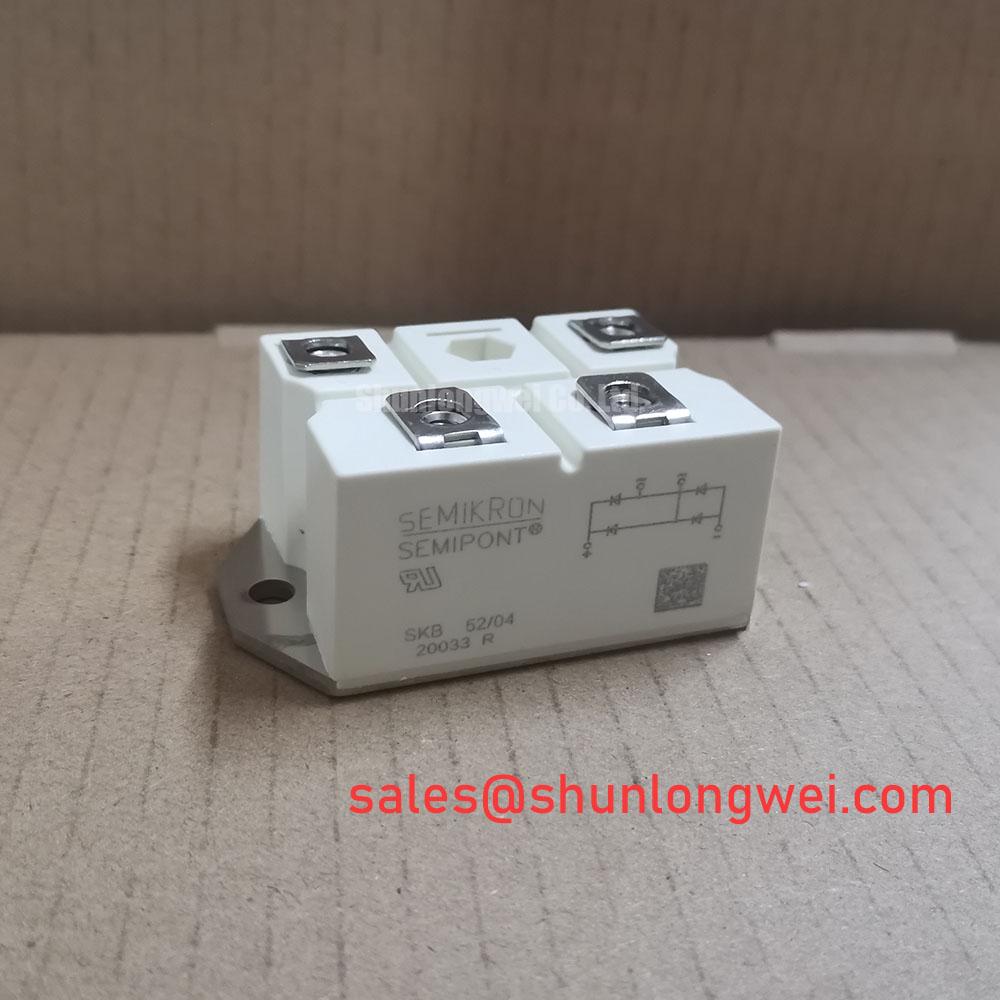
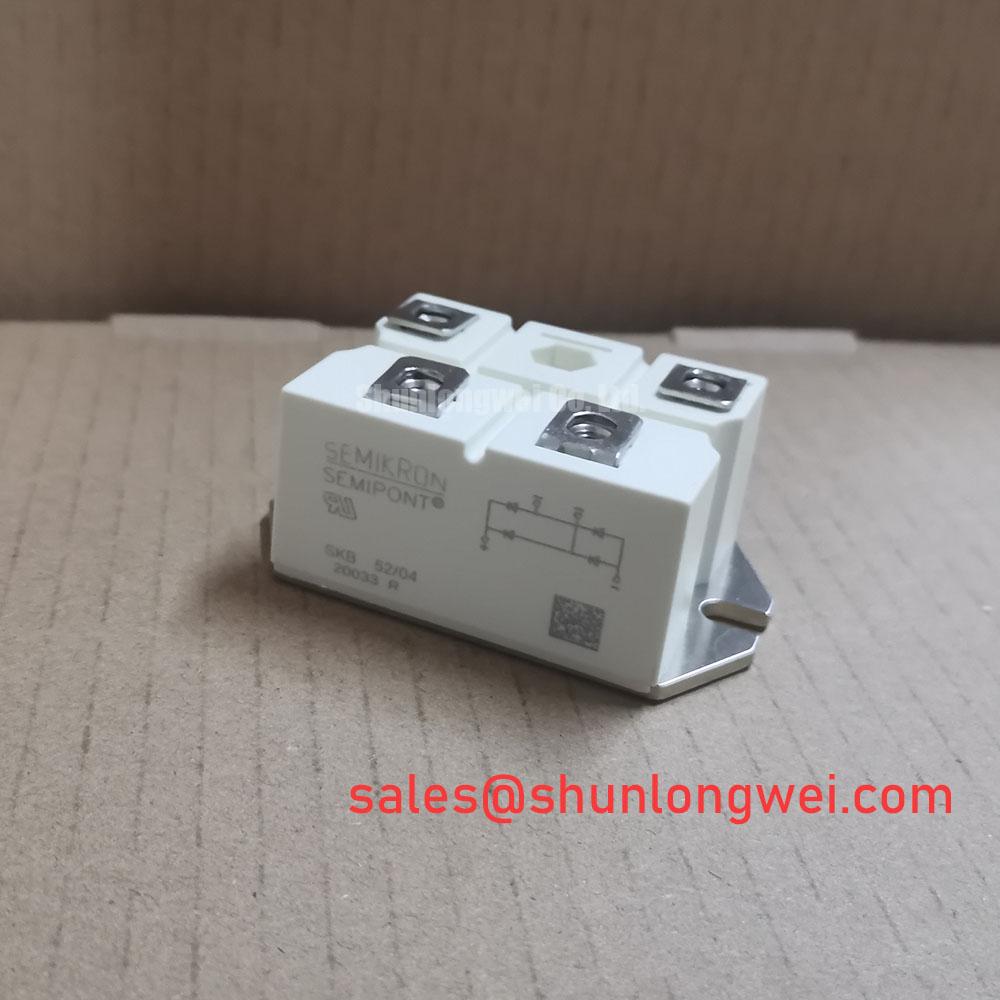
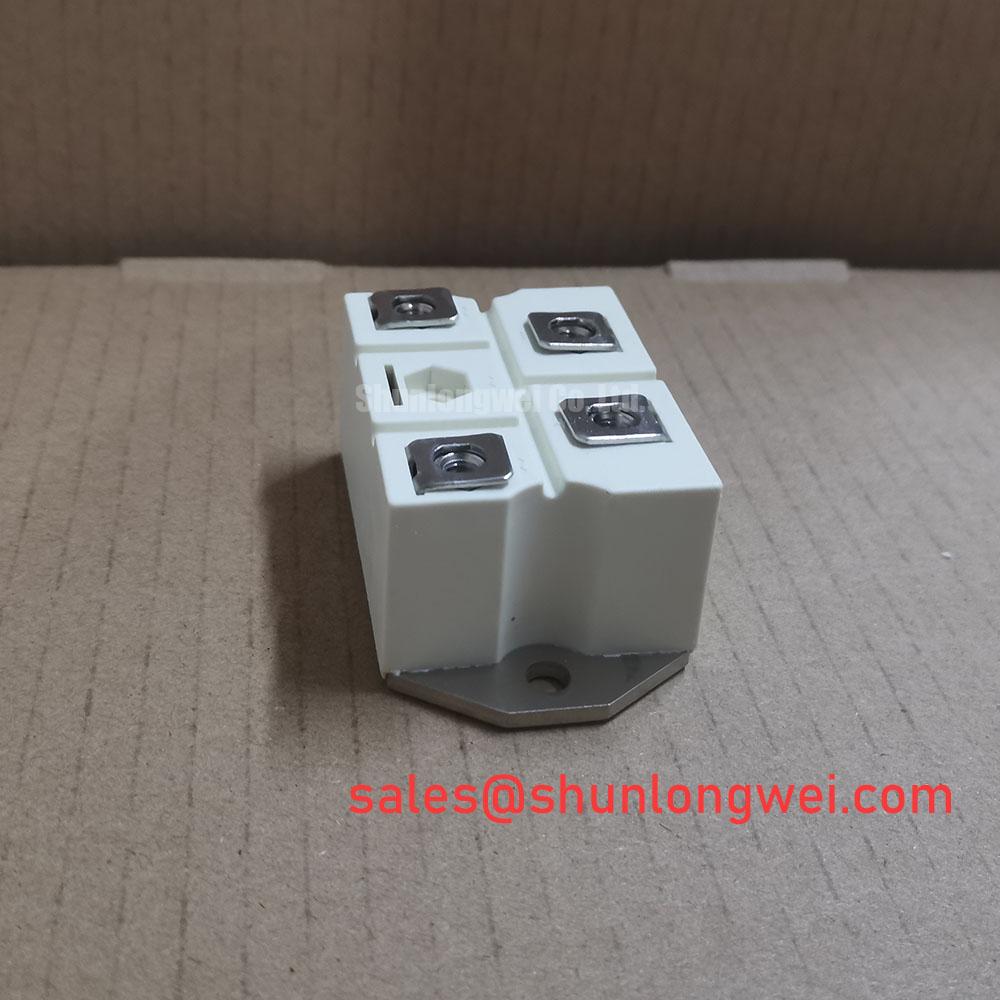
Technical Analysis for System Reliability
Two core features of the SKB52/04 are fundamental to its performance in industrial applications: its surge current handling and thermal efficiency. The forward surge current rating (IFSM) is 870 A for a 10 ms half-sine wave at 50 Hz (Tj = 25°C). This high rating provides a critical safety margin, allowing the rectifier to withstand the significant inrush currents often seen when starting motors or charging large capacitor banks. This capability directly enhances the reliability of the end equipment by preventing rectifier failure during stressful startup conditions.
Effective thermal management is addressed by the module’s low thermal resistance from junction to case (Rth(j-c)), specified at ≤ 0.5 K/W per diode. Think of thermal resistance as the width of a pipe for heat flow; a lower value signifies a wider pipe, allowing heat to escape more easily. This efficient heat transfer from the semiconductor junction to the heatsink is crucial for maintaining operational stability and longevity, especially when the module is operating near its maximum rated current of 52 A.
Optimized Application Scenarios
The specifications of the SKB52/04 make it highly suitable for specific industrial roles:
- Industrial Power Supplies: Its robust plastic case and high electrical isolation (3000V) ensure safe and reliable operation as the main input rectifier.
- AC Motor Drives: The exceptional surge current handling is ideal for the front-end rectifier in inverters and variable frequency drives, managing demanding motor startup currents.
- Battery Charging Systems: Provides efficient and durable AC-to-DC rectification for industrial-scale battery chargers where reliability is paramount.
- Welding Power Sources: The ability to withstand high current pulses makes it a strong candidate for the power stages of welding equipment.
This rectifier is best matched for systems requiring a durable, high-current AC-to-DC front-end with substantial built-in safety margins for transient events.
Key Specifications of the SKB52/04
| Electrical and Thermal Characteristics (Tcase = 25°C unless otherwise specified) | ||
|---|---|---|
| Parameter | Symbol | Value |
| Repetitive Peak Reverse Voltage | VRRM | 400 V |
| DC Output Current (Tc = 99°C) | ID | 52 A |
| Forward Surge Current (10 ms, 50 Hz) | IFSM | 870 A |
| Forward Voltage (IF = 150 A, Tj = 25°C) | VF | ≤ 1.8 V |
| I²t Value (10 ms) | I²t | 3800 A²s |
| Thermal Resistance, Junction to Case (per diode) | Rth(j-c) | ≤ 0.5 K/W |
| Isolation Test Voltage (1 min.) | Visol | 3000 V~ |
| Operating Junction Temperature | Tj | -40 to +150 °C |
Engineer’s FAQ
1. How is heatsink performance calculated for the SKB52/04?
To determine the required heatsink, first calculate the total power dissipation (Ptot), which is approximately the total forward voltage drop across two diodes multiplied by the average DC current. Then, use the thermal resistance from junction to case (Rth(j-c)) from the datasheet to find the maximum allowable case temperature. The required heatsink thermal resistance can then be calculated based on the maximum ambient operating temperature. Proper thermal management is essential.
2. What are the specified mounting torques?
For reliable operation, the datasheet specifies a mounting torque for the heat sink mounting screw (M6) of 5 ± 15% Nm. For the electrical terminals (M5), the recommended torque is also 5 ± 15% Nm. Adhering to these values ensures optimal thermal transfer and secure electrical connections without causing mechanical stress to the module.
3. What is the primary benefit of the module’s packaging?
The SKB52/04 uses a robust plastic case with an isolated metal baseplate. This design offers high electrical isolation (3000V), simplifying mounting onto a common chassis or heatsink without requiring additional insulating layers. The screw terminals provide a secure and reliable connection method suitable for industrial settings where vibration may be present.
The SKB52/04 delivers a dependable and straightforward power rectification stage. Its architecture enables engineers to build power systems with high resilience to electrical transients and simplified, effective thermal design, directly supporting the goal of creating reliable industrial equipment.