An Engineer’s Guide to the Optrex DMF50262NB-FW Industrial Display
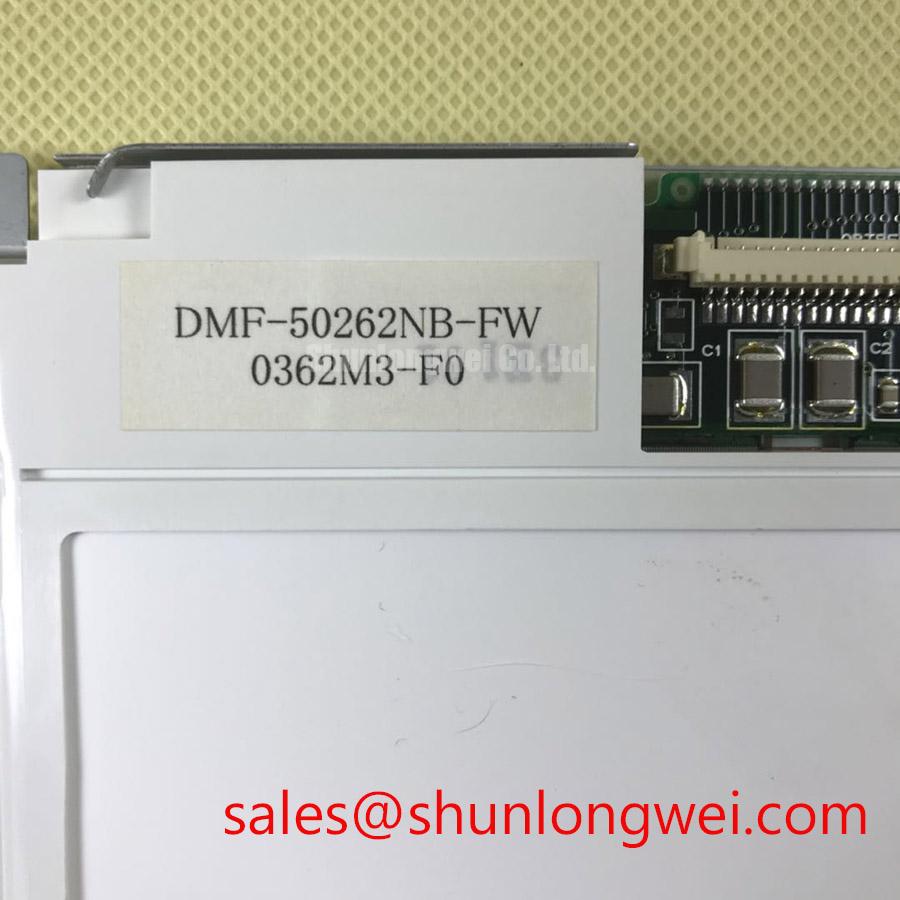
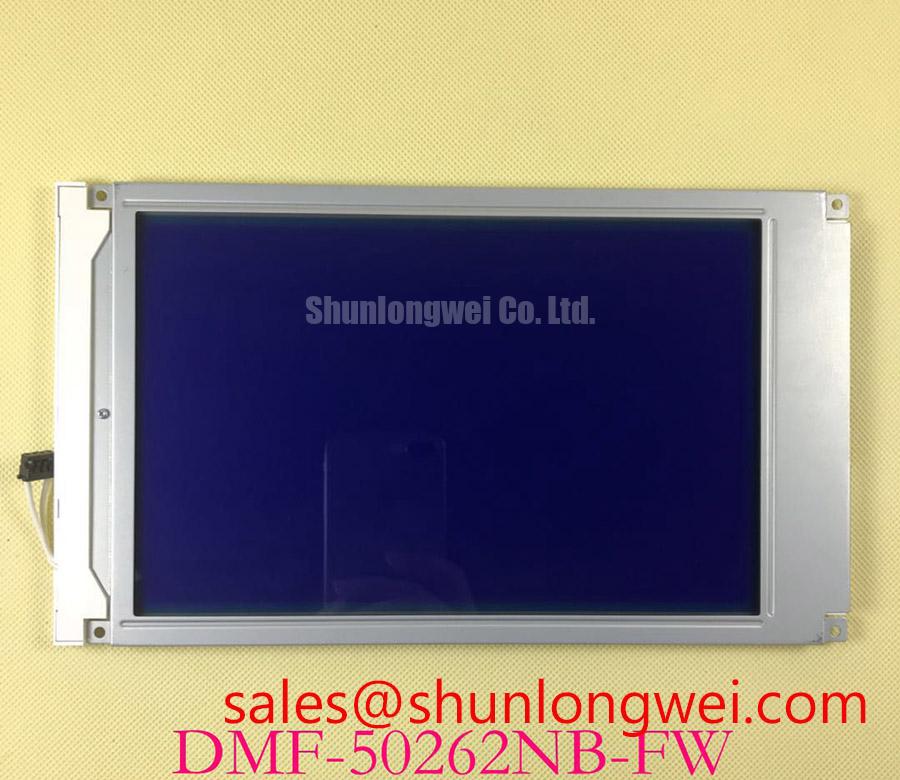
DMF50262NB-FW: Optrex 320×240 FSTN Graphic LCD Module
High-Contrast Monochrome Display for Industrial HMIs
The Optrex DMF50262NB-FW is a 5.7-inch FSTN graphic LCD module engineered for robust performance in industrial applications. It delivers exceptional black-and-white image clarity, a critical requirement for interfaces where immediate readability is paramount. This module integrates a T6963C controller, which significantly simplifies the design process by managing display logic and memory, allowing system engineers to interface directly with an 8-bit parallel bus.
- Core Specifications: 320×240 Resolution | FSTN Monochrome | CCFL Backlight
- Key Advantages: High-contrast text and graphics, integrated display controller simplifies CPU overhead.
- System Integration: The onboard controller reduces the need for external display RAM and complex timing generation from the host MCU.
Official datasheet information for this legacy component may be limited. Technical specifications presented are aggregated from historical documentation.

Technical Analysis for System Integration
The DMF50262NB-FW’s primary engineering value lies in its combination of visual performance and simplified integration, a hallmark of display modules from its era designed for longevity. The Film-compensated Super-twisted Nematic (FSTN) technology provides a sharper, higher-contrast image with better viewing angles compared to older STN technologies. This is essential for industrial control panels where operators may view the screen from various positions and under different lighting conditions.
The integrated T6963C controller is a significant benefit for embedded systems. Think of this controller as a dedicated graphics co-processor for the display. It manages the pixel data, character generation, and command execution, freeing the main system’s microprocessor to concentrate on core tasks. This architecture simplifies the hardware interface to a standard 8-bit parallel bus and reduces the software complexity, accelerating development time for new designs and facilitating easier repairs for legacy systems.
Optimized Application Scenarios
The specific feature set of the DMF50262NB-FW makes it a strong candidate for several targeted applications:
- Industrial Control Panels: Its high-contrast monochrome output is excellent for displaying critical process data, status indicators, and simple menus where readability is the priority.
- Test and Measurement Equipment: Well-suited for devices like oscilloscopes, power supply readouts, and spectrum analyzers that require clear, unambiguous presentation of numerical and waveform data.
- Legacy System Sustainment: Serves as a form-fit-function replacement for aging 5.7-inch QVGA displays in machinery, extending the operational life of valuable equipment without requiring a complete HMI redesign.
- Medical Devices: A reliable choice for patient monitors or diagnostic equipment that displays vital signs or simple graphical data, benefiting from its proven and stable technology.
This module is best matched for systems requiring a robust, processor-efficient monochrome graphic interface with a proven record of industrial reliability.
Key Specification Parameters
| Mechanical & Display Specifications | |
|---|---|
| Part Number | DMF50262NB-FW |
| Display Technology | FSTN (Film-compensated Super-twisted Nematic) LCD |
| Resolution | 320 x 240 dots |
| Active Area | 122.0(W) x 92.0(H) mm |
| Module Size | 167.0(W) x 109.0(H) x 11.0(D) mm |
| Display Mode | Negative, Transmissive |
| Backlight | Cold Cathode Fluorescent Lamp (CCFL) |
| Controller IC | T6963C or equivalent |
| Operating Temperature | 0°C to +50°C |
Engineer’s FAQ
What are the primary considerations when interfacing with the DMF50262NB-FW’s T6963C controller?
The T6963C communicates via an 8-bit parallel interface. Key signals include data lines (D0-D7), Read (RD), Write (WR), and Command/Data (C/D) select. You must ensure your host processor’s logic levels are compatible (typically 5V for these modules) and that timing requirements for control signals are met. The controller’s internal memory simplifies programming as you are writing commands or data directly to the controller, not managing row/column scanning.
What is required to power the CCFL backlight?
The CCFL backlight requires a separate, dedicated high-voltage AC inverter. This inverter takes a DC input (commonly 5V or 12V) and generates the high voltage (several hundred volts) needed to ignite and sustain the lamp. The module itself does not include this inverter. It is a critical external component for which power and control (e.g., enable pin) must be accounted for in the system design. More information can be found in our resources on LCD core technology.
Is this display suitable for outdoor use?
Based on its specified operating temperature range of 0°C to 50°C and standard brightness, the DMF50262NB-FW is intended for indoor industrial environments. Operation outside this range, or in direct sunlight, would require additional thermal management and optical enhancements not native to the module.
How can I ensure the long-term reliability of this display module?
Proper mounting is key to preventing mechanical stress. Ensure that the PCB is not flexed and that the bezel provides even pressure. For the CCFL backlight, its lifespan is finite; managing its on-time (e.g., screen-saver functions) can extend its operational life. For more on this, see our guides to industrial LCD reliability.
Enabling Clear and Reliable System Interfaces
For engineers tasked with designing or maintaining systems where data clarity and operational uptime are non-negotiable, the DMF50262NB-FW provides a dependable graphic interface. Its integration of a high-contrast FSTN panel with an onboard T6963C controller delivers a solution that is both straightforward to implement and proven in the field, ensuring a stable HMI foundation for focused industrial applications.