AUO G238HAN01.0: A Technical Review of the FHD AHVA Industrial Display
AUO G238HAN01.0 | 23.8″ FHD AHVA Industrial LCD Module
Introduction to the G238HAN01.0 Full HD Display
The AUO G238HAN01.0 is a 23.8-inch a-Si TFT-LCD module that delivers exceptional off-axis image fidelity and seamless integration through its AHVA wide-viewing-angle technology and slim-bezel mechanical design. This display provides the visual consistency and clarity required for complex industrial and commercial applications where data integrity is paramount from any perspective. Engineers can leverage this panel’s stable performance to build more effective and ergonomic human-machine interfaces.
- Core Specifications: 1920×1080 Full HD | 178°/178° Viewing Angle | 1000:1 Contrast Ratio.
- Key Engineering Advantages: Consistent color and brightness from any operator viewpoint, and a slim bezel that simplifies multi-panel system design.
Download Official G238HAN01.0 Datasheet (PDF)
Technical Analysis for System Integration
A primary technical advantage of the G238HAN01.0 is its implementation of AUO’s Advanced Hyper-Viewing Angle (AHVA) technology. This panel structure provides symmetrical viewing angles of 89 degrees in all directions (left, right, up, and down) with a contrast ratio greater than 10. For an engineer, this specification is crucial because it guarantees that mission-critical information—such as process parameters or medical data—remains accurate and legible without color inversion or significant contrast shift, even when viewed from a sharp angle. This is vital in collaborative control rooms or at information kiosks where multiple users view the same screen simultaneously.
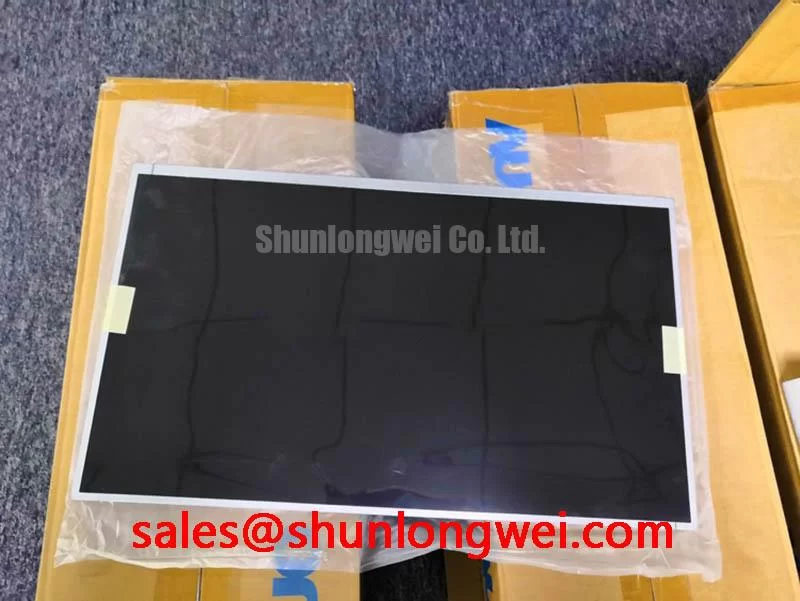

The display’s mechanical design further enhances its suitability for professional environments. With an active area of 527.04 mm x 296.46 mm and a bezel opening of 530.2 mm x 299.6 mm, the inactive border is minimized. This slim-bezel construction is a key enabler for creating tiled display arrays or video walls with minimal disruption between adjacent screens. Think of the thermal resistance in a power module as a bottleneck for heat; similarly, a wide bezel on a display is a bottleneck for visual information in a multi-screen setup. The G238HAN01.0’s slender frame reduces this “bottleneck,” allowing for more continuous and immersive visual dashboards, a concept explored in engineering seamless displays.
Optimized Application Scenarios
- Industrial Control Panels: The anti-glare surface and wide viewing angles ensure clear readability on a factory floor where lighting conditions and operator positions vary.
- Digital Signage & Information Displays: Full HD resolution and a 1000:1 contrast ratio deliver crisp, high-impact visuals, while the slim bezels are ideal for building larger video walls.
- Test and Measurement Equipment: The 1920×1080 pixel matrix allows for precise rendering of complex data, graphs, and waveforms without downscaling.
- Medical Review Stations: The stable color and contrast performance of AHVA technology is well-suited for non-diagnostic image review stations where multiple clinicians may need to consult the same screen.
Its combination of AHVA image stability and Full HD resolution makes it an excellent fit for multi-viewer industrial and information display systems.
Key G238HAN01.0 Specifications
| Display Characteristics | |
|---|---|
| Panel Size | 23.8 inches |
| Resolution | 1920(RGB) x 1080, FHD |
| Panel Technology | a-Si TFT-LCD, AHVA, Normally Black |
| Viewing Angle (L/R/U/D) | 89/89/89/89 degrees (Typ.) |
| Surface Treatment | Anti-Glare, Hard coating (3H) |
| Optical & Electrical Characteristics | |
| Brightness | 250 cd/m² (Typ.) |
| Contrast Ratio | 1000:1 (Typ.) |
| Display Colors | 16.7M (6-bit + Hi-FRC) |
| Interface | LVDS (2 ch, 8-bit), 30 pins |
| Logic Supply Voltage (VDD) | 5.0V (Typ.) |
| Mechanical & Environmental | |
| Outline Dimensions (W x H x D) | 543.0 x 317.4 x 11.65 mm |
| Operating Temperature | 0°C to +50°C |
| Storage Temperature | -20°C to +60°C |
Engineer’s FAQ
- What makes the G238HAN01.0’s viewing angle suitable for collaborative workstations?
- The display uses AHVA (Advanced Hyper-Viewing Angle) technology, which functions similarly to IPS. It maintains color and contrast integrity even at off-axis angles up to 178 degrees total. This prevents the color distortion and brightness shift seen on standard TN panels, ensuring that all viewers see the same accurate image, which is critical for collaborative analysis of data.
- What are the primary thermal management considerations for this display?
- The G238HAN01.0 has a typical total power consumption of 16.5 watts, with the WLED backlight being the primary heat source. While this is efficient, the specified operating range is 0°C to 50°C. The system enclosure must allow for adequate ventilation to dissipate this heat and prevent the panel’s surface temperature from exceeding its maximum rating, which is crucial for long-term reliability as discussed in guides on thermal management for displays.
- How do I connect the G238HAN01.0 to a single-board computer (SBC) or custom controller?
- The module uses a standard 30-pin LVDS (2 channel, 8-bit) interface for video signals. The datasheet specifies the connector as a JAE FI-X30SSL-HF or equivalent. Engineers should verify that their host system’s LVDS output matches this pinout and connector type for direct compatibility. For more complex integrations, a dedicated LVDS driver board may be required.
- Does this display’s anti-glare surface impact image clarity?
- The panel features an anti-glare surface treatment with a 3H hardness rating. This diffuses ambient light to significantly reduce reflections, improving viewability in typical office or factory lighting. While any anti-glare treatment can have a minor effect on perceived sharpness compared to a glossy screen, it is essential for usability in environments where light sources cannot be controlled, preventing operator eye strain and ensuring data is always readable.
Enabling High-Clarity Visual Systems
By providing consistent, wide-angle viewing in a slim, integration-friendly format, the AUO G238HAN01.0 enables designers to create advanced visual systems that prioritize both data accuracy and user experience. Its foundation of Full HD resolution and AHVA technology offers the performance necessary for demanding, modern HMI applications.